EU Regulation on the Protection of Dogs and Cats
In a historic step, the Council and the European Parliament have reached a political agreement on the first EU-wide regulation for the protection of dogs and cats. The aim is to regulate the booming pet market, curb the suffering in puppy mills, and more effectively combat illegal trade.


“Ceasefire”
It is estimated that more than 72 million dogs and 83 million cats live in the EU.
The trade in pets is estimated at around 1.3 billion euros per year. At the same time, according to the Eurobarometer, a clear majority of Europeans believe that the protection of pets needs to be improved.
Until now, only fragmentary regulations existed at EU level, for example for animals used in experiments or during transport. Breeding, sale, and keeping of dogs and cats were governed primarily by national rules, which varied considerably and created loopholes for unscrupulous traders.
Key Points of the New Regulation
The political compromise now reached establishes minimum standards for the breeding, keeping, and trade of dogs and cats for the first time, and introduces a strict traceability system.
The central elements include:
- Mandatory Identification and Registration
All dogs and cats that are placed on the market, sold, or given away must be identified with a microchip and registered in a national database. The databases are to be interoperable across the EU and made accessible online for inspections. - Minimum Standards for Breeding Establishments and Sales Outlets
The regulation sets out rules on the age and number of litters per animal, intervals between pregnancies, and conditions of keeping. Certain practices such as inbreeding, the breeding of hybrids with wild animals, and painful procedures such as ear and tail docking are prohibited unless medically indicated. - More Space, Exercise, and Expert Care
Breeders, traders, and shelters must guarantee minimum space requirements, access to fresh water, and appropriate housing. Dogs must either have daily access to an outdoor enclosure or be walked daily. Each facility is required to have at least one trained caretaker whose qualifications are recognized by the competent authorities. - Ban on breeding extreme traits
Animals with extreme physical traits associated with a high risk of suffering are to be excluded from breeding. They may also no longer be presented in competitions and exhibitions. With this measure, the EU is responding, among other things, to the breeding of animals with suffering-inducing traits, such as extremely flat-nosed dogs with breathing difficulties or cats with deformed skulls. - Traceability for imports as well
Dogs and cats brought into the EU from third countries must meet comparable standards. Establishments in third countries must be officially recognized, and imported animals must be registered in EU databases.
The regulation draws on modern concepts such as the “Five Domains of Animal Welfare,” which take into account not only the health and care of animals but also their behaviour and mental states.
Historic progress with significant gaps
Animal welfare organizations broadly welcome the step as a long-overdue breakthrough. Eurogroup for Animals describes it as a “milestone” that at least partially crowns decades of work against illegal puppy traders and animal-abusive breeding practices.
At the same time, associations criticize the fact that the scope of the regulation has been restricted at critical points:
- Exemptions for hunting dogs, livestock guardian dogs, and farm cats
Certain groups, such as hunting dogs, livestock guardian dogs, and dogs and cats on agricultural holdings, currently fall largely outside the scope of the regulation. According to calculations by Eurogroup for Animals, around 18 million cats and 2 million dogs in the EU could thus continue to remain without adequate legal protection. - Weaker rules for smaller breeding operations
The system of mandatory official approval applies primarily to larger breeding establishments. Facilities with fewer than five litters per year are in many cases not subject to the stricter regime. Animal welfare organizations doubt that this will effectively capture the numerous “backyard breeders.” - Other pet species remain excluded
Rodents, reptiles, birds, and other pet species commonly available in trade are not covered by the regulation, even though their husbandry requirements are at least equally complex. Organisations therefore call for an EU-wide positive list specifying which species are at all suitable as pets.
Sensitive implications from a hunting and agricultural perspective
Particularly controversial is the sweeping exemption for hunting, guard, and farm dogs. Precisely those animals that are intensively used by humans and whose keeping conditions are closely tied to economic interests are not set to benefit fully from the new protection standards.
Hunting associations had already warned during the legislative process that strict requirements could interfere with traditional hunting practices. Statements reference approximately seven million recreational hunters in Europe who frequently keep entire packs of dogs, for example for driven hunts.
From an animal welfare perspective, however, this exemption means that abuses in the treatment of hunting and farm dogs will continue to be difficult to sanction. Where minimum space requirements, exercise opportunities, and inspections are lacking, chaining, inadequate care, or excessive breeding for performance traits at the expense of health remain a real danger. The price is paid not only by the animals themselves, but also by the general public, when neglected dogs and feral cat populations are subsequently “managed” at the expense of municipalities.
Illegal trade remains the true test
A central promise of the regulation is the fight against illegal puppy trade. The obligation to mark and register all animals placed on the market is intended to make it harder to sell puppies from large-scale breeding operations in Eastern Europe anonymously via online portals within the EU. Already today, up to 60 percent of dogs and cats are offered online, a significant proportion of them with incomplete or falsified documentation.
Whether the new rules actually lead to a change in practice depends on implementation in the member states. The regulation sets minimum standards, but explicitly allows states to enact stricter national regulations.
Next steps
The political compromise reached must now be formally confirmed by Parliament and the Council. Only after publication in the Official Journal and a transitional period will the new regulations apply directly in all member states. Until then, there is still time to demand improvements in the ongoing detailed negotiations, for example regarding exceptions for working dogs and hunting dogs.
For animal welfare organisations, the regulation sends a dual signal: on the one hand, it demonstrates that the EU takes the protection of companion animals seriously in principle and no longer relies solely on national rules. On the other hand, it becomes clear how strongly economic and traditional interests shape the legislative process.
From the perspective of consistent animal welfare, much therefore remains to be done. The new rules can be an important step if they are interpreted strictly, monitored rigorously, and further developed swiftly — towards comprehensive protection of all dogs and cats, regardless of whether they lie on the sofa, guard herds, or are used in hunting.
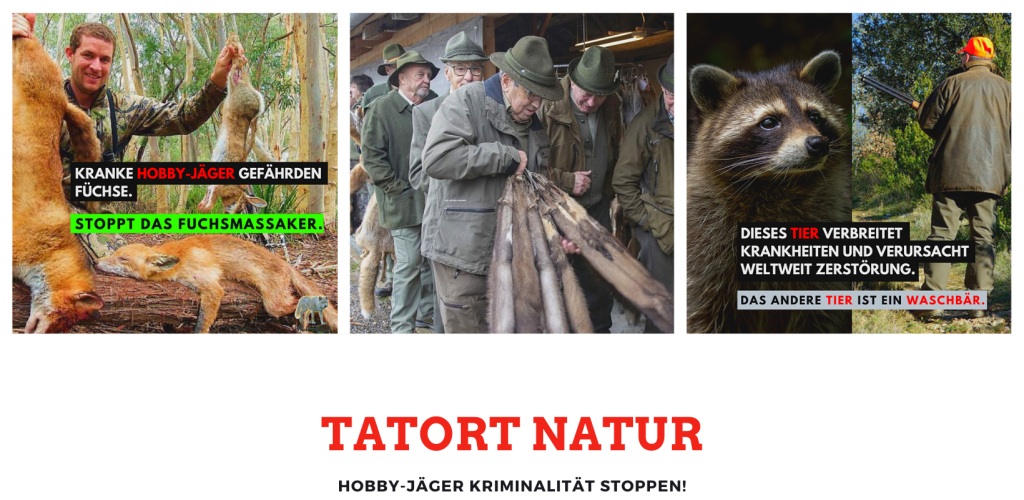
More on the subject of recreational hunting: In the dossier The Role and Criticism of Recreational Hunters we shed light on the training, power and self-image of recreational hunters. The scientific evidence is presented in the overview Studies on the Effects of Recreational Hunting.
The position of IG Wild beim Wild: IG Wild beim Wild rejects recreational hunting. Our model is the canton of Geneva, which has managed without recreational hunting since 1974: without hunting seasons, without hunting dogs, without driven hunts, without high seats, without the animal cruelty and crime that go hand in hand with hunting season elsewhere. What has worked there for over fifty years disproves every position paper by JagdSchweiz. An association that bases its policy on claims it refutes in its own documents is not a professional organisation, but a factory for misinformation.