
ECJ: Veggie burger allowed to be called a “burger”
In 2024, the Court of Justice of the European Union allowed terms such as “burger” and “steak” to be used for plant-based products; in 2026, the EU has reserved designations for animal species and cuts of meat, while the veggie burger remains permitted.
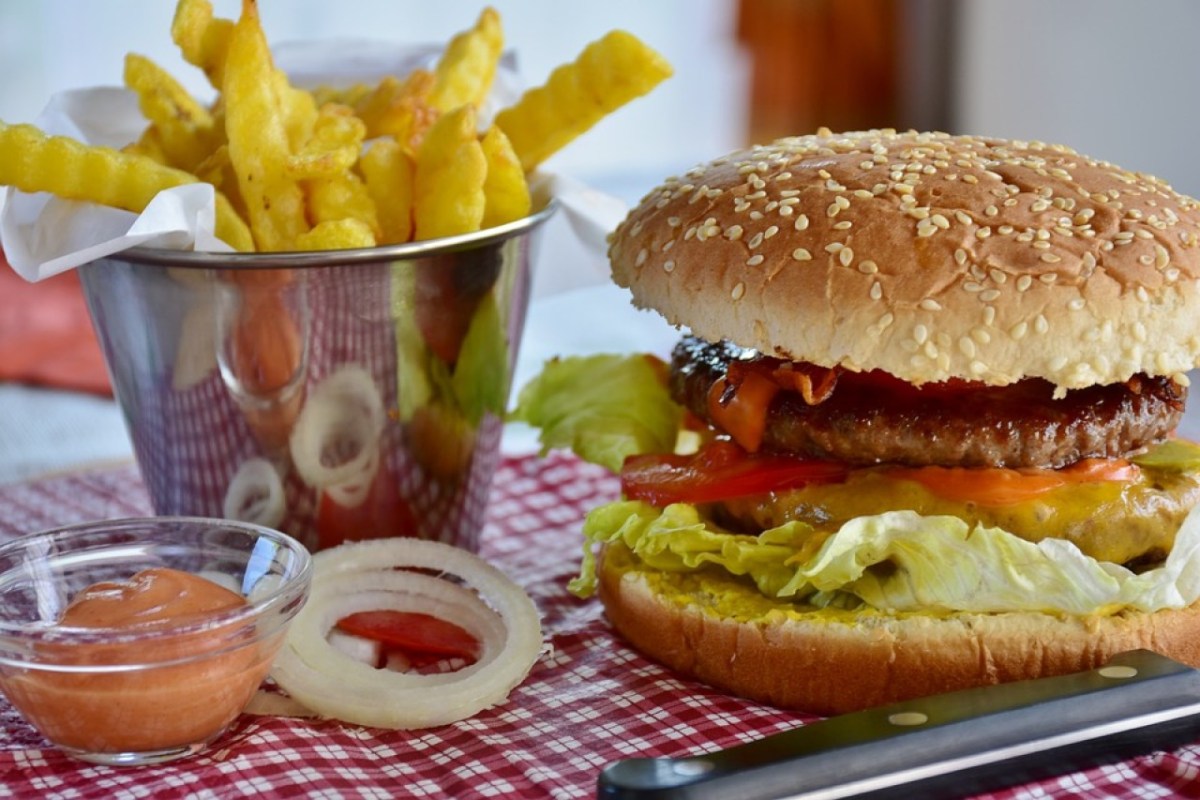
EU member states cannot prevent food manufacturers from labelling vegetarian foods with names traditionally associated with meat.
This ruling was handed down by the Court of Justice of the European Union (CJEU) on 4 October 2024. The condition is that the actual ingredients must be clearly labelled.
Common names such as steak, sausage, schnitzel and burger may be used to market vegetarian foods, as long as a country has not introduced a specific legal designation for a food based on plant protein, the Court ruled.
A French law from 2021, intended to improve transparency for consumers, bans the use of terms such as “veggie burger” or “vegan sausages” when marketing foods made from plant proteins.
Interest groups such as the European Vegetarian Union (EVU) and the Association Végétarienne de France (AVF) challenged the decree, arguing that it violated EU law.
In August 2023, the French Council of State, a government body that advises both the executive and the judiciary, referred the case to the Court of Justice of the European Union, the highest authority for interpreting EU law.
The EU judges have now ruled that, while member states can create legal designations for foods, including plant-based meat alternatives, they cannot prevent manufacturers of plant-based protein foods from using common names to label their products.
The Court emphasised that its decision does not affect the right of a Member State to enforce consumer protection rules if it considers the marketing to be misleading.
«By ensuring clarity in food labelling, we can promote plant-based alternatives and work towards achieving environmental goals, as well as strengthen competitiveness and innovation in the EU,» said Rafael Pinto, EU policy manager at the European Vegetarian Union, in a press release responding to the ruling.
Far-reaching implications
Plant-based protein products are becoming increasingly popular in the EU, but uncertainty remains over how these products should be labelled and marketed within the single market.
The EU court's ruling is likely to have far-reaching consequences, as countries such as Belgium and Italy consider introducing a law similar to France's.
A comparable legal question arose in 2017, when the EU's highest court was asked to address the use of dairy product designations for plant-based products such as soya and oat drinks.
At the time, the CJEU ruled that only products actually containing milk may use terms such as milk, butter or yoghurt. This led to plant-based alternatives being labelled as "drinks" on European shelves.
Food labelling in the EU has been regulated since the early 1990s, with trading rules for most products sold in Europe falling under the EU's Common Market Organisations (CMOs) within the framework of the Common Agricultural Policy (CAP). This framework governs the production and trade of both animal-based and plant-based foods in the EU.
In 2020, during deliberations on the most recent reform of EU agricultural subsidies, the European Parliament rejected an attempt to reserve meat product designations exclusively for products made from animal-derived ingredients. This decision followed a vote by MEPs against a series of amendments aimed at introducing stricter labelling rules for plant-based products.
What happened next: the EU reserves meat terms
The ruling of the ECJ concerned national bans such as the one in France. At EU level, the situation has since changed fundamentally. Following the 2025 proposal, which Wild beim Wild reported on in the article EU wants to ban meat-related terms on plant-based products, Parliament, Council and Commission agreed on a compromise at the beginning of March 2026. The European Parliament approved it on 16 June 2026 by 560 votes to 75, and at the end of June the Member States confirmed the amendment to the regulation on the Common Market Organisation.
Around 30 terms referring to animal species or cuts of meat may no longer be used for plant-based products, including «steak», «bacon», «chicken», «ribs» and «cutlet». The ban also applies to cultivated meat. General terms describing the shape of a product, such as «burger», «sausage» or «nuggets», remain permitted. The veggie burger may therefore continue to be called that, whereas the veggie steak may no longer. Manufacturers have three years to adapt packaging and sell off stock.
In Switzerland, EU law does not apply. Here, on 2 May 2025 the Federal Supreme Court ruled that plant-based products may not bear the name of an animal species, as in the case of planted.chicken. General terms such as «steak» or «fillet», which do not name an animal species, remain permitted in Switzerland, however.
From the perspective of non-human animals, the new EU rule is a step backwards: it does not protect consumers, who are hardly likely to confuse an item clearly labelled as plant-based, but rather the sales interests of the meat industry. Further articles on this topic can be found in the category animal rights.
| You can help all animals and our planet with compassion. Choose compassion on your plate and in your glass. Go vegan. |
More on the subject of recreational hunting: What the research says about this is shown by Hunting fact-checked: the state of research.
The position of IG Wild beim Wild: IG Wild beim Wild rejects recreational hunting. Our model is the canton of Geneva, which has managed without recreational hunting since 1974: without hunting seasons, without hunting dogs, without driven hunts, without high seats, without the animal cruelty and crime that go hand in hand with hunting season elsewhere. What has worked there for over fifty years disproves every position paper by JagdSchweiz. An association that bases its policy on claims it refutes in its own documents is not a professional organisation, but a factory for misinformation.

All articles are written by IG Wild beim Wild as well as by external co-authors. Research, structuring and editorial processes may be supported by AI-assisted tools.
Support our work
With your donation you help protect animals and give their voice a hearing.
Donate now →