
The Alpine Ptarmigan in Switzerland: Ice Age Relic Between Climate Crisis, Tourism and Shotgun Blast
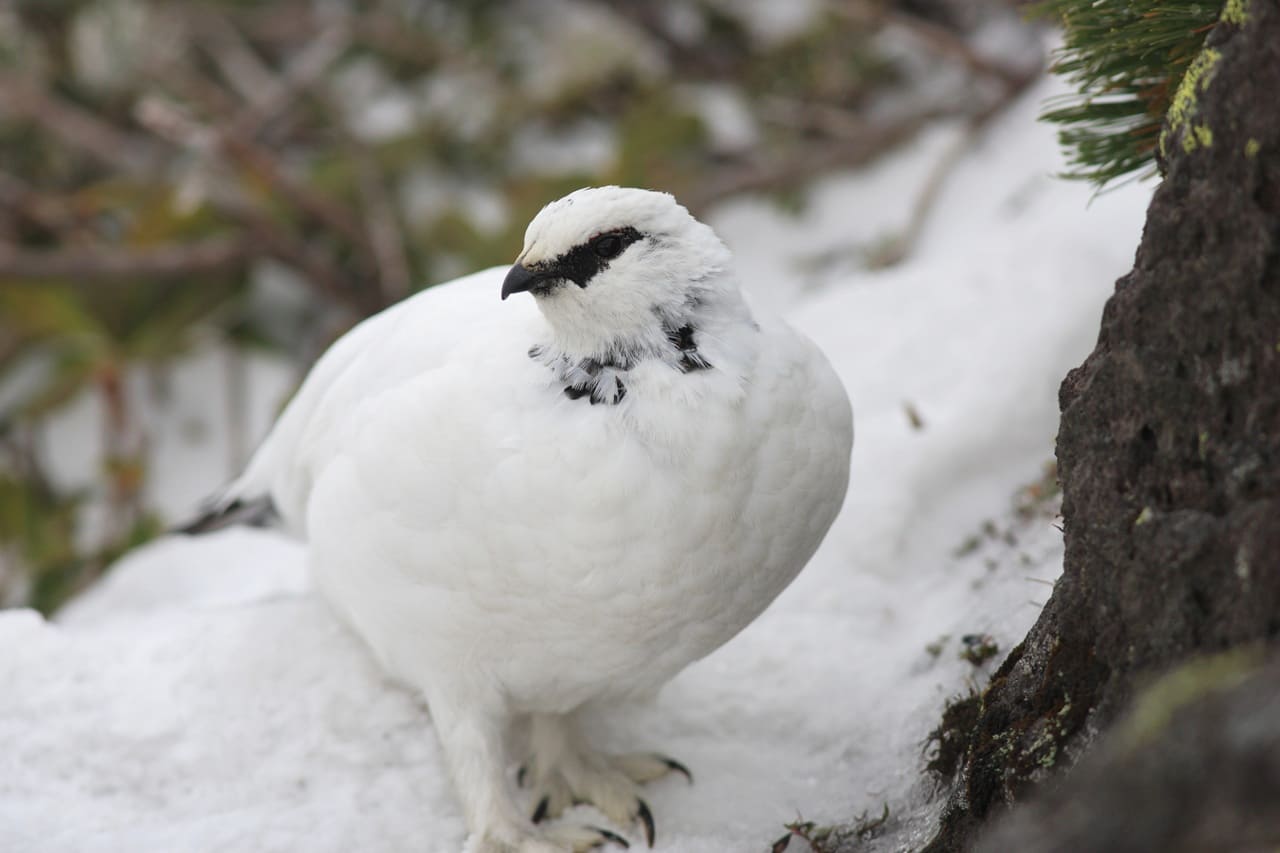
The Alpine ptarmigan (Lagopus muta helvetica) is a living relic of the last ice age. Perfectly adapted to the hostile cold above the tree line, it inhabits the alpine zone between 1,900 and 2,700 meters in Switzerland. At 15 degrees Celsius it begins to pant and must seek shade. Switzerland bears extraordinarily high responsibility: 40 percent of the entire Central European population breeds in the Swiss Alps. The Swiss Ornithological Institute Sempach estimates the population at 12,000 to 18,000 breeding pairs. Since the mid-1990s, this population has declined by about one third. In Switzerland, the Alpine ptarmigan is considered "potentially endangered" (NT), with species conservation priority at B1: high international responsibility. Nevertheless, it continues to be shot in three cantons. In the hunting year 2023/24, 282 Alpine ptarmigans fell victim to recreational hunting. There is no ecological reason for this hunting. There is no human-animal conflict. What there is, is a tradition of killing that asserts itself against all scientific evidence.
Profile and biology
Characteristics and adaptation
The Alpine ptarmigan belongs to the order of gallinaceous birds (Galliformes) and to the genus of ptarmigans (Lagopus). It measures 34 to 36 centimeters in length, has a wingspan of 54 to 60 centimeters and weighs 400 to 600 grams. It reaches its maximum weight in autumn, minimum in summer. Banded animals have been documented to reach a maximum age of 9 years. Its most distinctive feature is the triple molt per year. In winter it wears completely white plumage with particularly dense feathers that reach down to the toes and function as natural 'snowshoes'. In summer the plumage is speckled grey-brown, perfectly camouflaged among rocks and dwarf shrubs. This camouflage is so effective that the birds remain motionless when approached until one almost steps on them.
Lifestyle and Reproduction
The rock ptarmigan is a pronounced resident bird. It does not migrate to warmer regions, but merely undergoes seasonal altitudinal shifts. In winter it stays on exposed slopes that thaw earlier. During extreme cold it digs snow chambers about 25 centimeters below the surface that serve as natural insulation. Its diet is almost exclusively vegetarian: buds, shoots, fresh leaves, berries and seeds. Chicks additionally eat small invertebrates. Courtship takes place in April and May. As a ground-nester it builds its nest hidden between stones or under shrubs, with a typical clutch comprising 5 to 8 eggs.
Temperature Sensitivity
The physiological temperature threshold lies at approximately 15 to 16 degrees Celsius. Above this threshold the bird begins to pant and must seek out cooler, shady places. Research by the Swiss Ornithological Institute has shown that rock ptarmigans on warm days specifically choose microclimatically cool locations: north-facing depressions, moist sand, rock crevices, occasionally even flowing water. This extreme heat sensitivity makes the rock ptarmigan one of the few birds whose distribution is directly dependent on ambient temperature.
Habitat: High Mountains Under Pressure
Distribution in Switzerland
The rock ptarmigan inhabits the entire Swiss Alpine region, including Alpstein and Churfirsten. Its territories lie in open, structurally diverse areas: dwarf shrub heaths, scree slopes, morainic landscapes and dry mountain grasslands between 1,900 and 2,600 m above sea level. Habitats with ski slopes, trees, dense vegetation or forest are barely colonized. Between the 1970s and 1990s the distribution area remained largely stable. Since then a clear trend has emerged: the average altitude of observation sites is measurably rising. In Ticino the proportion of chance observations south of Biasca dropped from 17 percent (1990 to 1999) to just 11 percent (2000 to 2010). In the western pre-Alps formerly occupied marginal areas have increasingly been abandoned.
Climate Change as Existential Threat
Global warming is causing the tree line to rise and displacing open alpine habitats. The population declined by over 30 percent between 1990 and 2010. Ecological models by the Swiss Ornithological Institute and the University of Potsdam predict that due to increased average temperatures during breeding season alone, potential habitat will decrease by up to two-thirds by 2070. Less available habitat and declining populations lead to isolation of populations from one another. The Swiss Ornithological Institute states: This is 'an ideal recipe to accelerate extinction'.
More on this: Dossier: Hunting and Biodiversity
Recreational Disturbance: Stress That Kills
Tourism and Energy Consumption
Ski touring, snowshoe hiking, paragliding, mountain biking and alpine hiking disturb animals in their refuge areas. Disturbances are particularly energetically fatal in winter: every escape costs calories that cannot be replaced in an environment with scarce food supply. A ZHAW study has proven that ptarmigan droppings in heavily touristed areas contain elevated levels of the stress hormone cortisol. Cable installations from transport systems additionally cause collision deaths. The expansion of winter sports facilities to ever higher altitudes directly destroys habitat.
Cumulative burden
The cumulative effect of climate stress, recreational disturbance and hunting can be the straw that breaks the camel's back, even if each individual factor would not be lethal on its own. Recreational hunting takes place precisely in normally little-frequented areas, often using free-running dogs. Even animals that are not shot are massively disturbed by hunting activity.
More on this: Animal welfare problem: Wildlife dies agonizingly because of hobby hunters
The hunting: Folklore hunting of an Ice Age relic
Legal situation
The Alpine ptarmigan is listed as a huntable species according to Art. 5 Para. 1 of the Federal Act on Hunting (JSG). Hunting is currently practiced in three cantons: Graubünden, Valais and Uri (all patent hunting). Canton Ticino stopped hunting in 2019 as the first Swiss canton, explicitly citing endangerment by climate change. In all other cantons, the Alpine ptarmigan is not hunted.
The dimension of the kill
In 2005, 1,666 Alpine ptarmigan were shot nationwide. In 2019 it was 247 animals. In 2022, 319 ptarmigan fell victim to recreational hunting. In the 2023/24 hunting year it was 282 animals. The leader by far is Canton Graubünden with 168 ptarmigan, followed by Valais (58) and Uri (18). Since 2010, an average of over 400 Alpine ptarmigan have been killed annually in low hunting, with well over half of them in Canton Graubünden. According to the Valais government council (2016), grouse hunting (Alpine ptarmigan and black grouse) generates around 75,000 francs annually in patent revenue in Canton Valais, particularly through foreign hunting tourists.
The absurdity: hunting climate victims
The hunting of Alpine ptarmigan cannot be ecologically justified. Wildtierschutz Schweiz states: Hunting Alpine ptarmigan is a purely sporting and recreational activity. There is no necessity for population regulation, as there are no conflicts between humans and animals. The Alpine ptarmigan causes no damage to agriculture, forestry or infrastructure. The only reason for hunting it is the tradition of high mountain hunting, a recreational pleasure of the hobby hunters. That a potentially endangered species, which is already under massive pressure from climate change, habitat loss and recreational disturbance, is additionally hunted, violates the precautionary principle. The Fondation Franz Weber states: The hunt is 'unjustifiable and can counteract conservation efforts'.
More on this: Dossier: Hunting myths
The Uri referendum: narrow no, open questions
On May 18, 2025, the cantonal popular initiative 'Let ptarmigan and mountain hare live!' was rejected in Canton Uri with 52.9 percent No votes. The result was extremely close: 4,652 Yes votes faced 5,219 No votes. In the main town of Altdorf, the initiative was clearly accepted with almost 60 percent Yes votes. Voter turnout was 37.4 percent. The SP Uri criticized that the opposition had reinterpreted the initiative 'in Trumpesque fashion' as a fundamental question about abolishing hunting. The Ecological Hunting Association had campaigned for a Yes vote and emphasized: 'Hunting must adapt to changing situations to remain contemporary.' Councilor Eveline Lüönd criticized that there are no reliable population figures for Canton Uri. Recreational hunting operates blind in Uri and justifies continued shooting with data that simply does not exist.
Ecological significance: prey animal, fertilizer, seed disperser
Food web
The alpine ptarmigan is a key element in the alpine food web. It serves as important prey for the golden eagle, particularly in winter when other prey animals are scarce. It is also a relevant food source for foxes and ermine in the alpine zone.
Seed dispersal and soil fertilization
As a herbivore that consumes buds, shoots and berries, the alpine ptarmigan contributes to the dispersal of alpine plant seeds. Its droppings fertilize nutrient-poor alpine soils. The ecological function of the alpine ptarmigan cannot be replaced by recreational hunting. There is no wildlife damage, no browsing damage, no conflict with agriculture. Hunting alpine ptarmigan is purely a recreational activity without any ecological justification.
What would need to change
- Immediate and nationwide hunting ban on alpine ptarmigan: A potentially endangered species that is existentially threatened by climate change, habitat loss and recreational disturbance, causes no wildlife damage and does not need to be regulated, must not be hunted. What Canton Ticino implemented in 2019 must apply under federal law for all of Switzerland.
- National alpine ptarmigan monitoring: The Swiss Ornithological Institute has conducted population surveys on 40 areas since 1995, but comprehensive monitoring is lacking. In Canton Uri there are no reliable population figures. Without solid data, any statement about 'sustainable' hunting is scientifically untenable.
- Effective wildlife refuges in high mountains: Alpine ptarmigan need undisturbed retreat areas in winter. Wildlife refuges above the tree line must be designated on a large scale and enforced. Snowshoeing, ski touring and freeriding off marked routes must be prohibited in these areas.
- Moratorium on tourism development in core habitats: The last remaining natural spaces in the high mountains must not be sacrificed for the expansion of winter sports facilities. The Swiss Ornithological Institute warns: That would be 'fatal'.
- Consistent leash requirements for dogs in alpine ptarmigan habitats: Free-running dogs, whether hunting dogs or companion dogs of hikers, are a massive source of disturbance. A leash requirement in designated habitat areas is urgently needed.
- Inclusion of alpine ptarmigan on the list of nationally protected species: The species protection priority B1 and the documented population decline justify full protection. Species protection is a federal responsibility (Art. 78 Federal Constitution) and must not fail due to cantonal hunting interests.
Arguments
'Hunting provides valuable data for monitoring and helps observe populations long-term.' This was the argument of the former president of the Uri Hunters' Association during the referendum campaign. The claim is misleading: monitoring data can also be collected without killing. The Sempach Bird Observatory has been conducting systematic population surveys on 40 areas since 1995, using counts of displaying males and visual observations. Not a single bird has to die for this. The thesis that an animal must be killed in order to count it is scientifically absurd.
«The population is stable, a connection between shooting numbers and population is not proven.» This was the argument of the Uri cantonal government. The statement ignores the decline of over 30 percent since the 1990s documented by the Bird Observatory. The fact that no further declines have been observed in recent years does not mean that the population is stable at a healthy level. It is stagnating at a massively lower level than 30 years ago. Moreover, Uri canton lacks proper cantonal monitoring.
«If we want to help these animals, we must protect their habitat, not ban hunting.» So stated the president of the Uri Hunters' Association after the vote. The argument is a classic diversionary tactic: habitat protection and abstaining from hunting do not exclude each other, but complement each other. It is cynical to put forward habitat protection as an alternative while recreational hunters simultaneously take no political initiative for habitat protection. The species protection action plan for the ptarmigan demands both: habitat protection and clarification of hunting influence.
«Hunting the ptarmigan has a long tradition and belongs to mountain culture.» Tradition is no argument for hunting a potentially endangered species in the climate crisis. Bullfighting in Spain, fox hunting in England and bird trapping in Malta also had «tradition». Switzerland did not stop shooting Ticino ptarmigan in 2019 due to lack of tradition, but because the facts required it.
«The ptarmigan is only killed in small numbers, this has no measurable impact.» In South Tyrol, between 2005 and 2008, 300 to 350 ptarmigan were shot annually from an estimated population of around 2,100, that is 15 percent of the total population. The precautionary principle dictates: For a species under multiple pressure (climate, tourism, habitat loss), hunting must not be the additional factor that accelerates decline. The Fondation Franz Weber states: Hunting is «not justifiable and can counteract conservation efforts».
Quicklinks
Articles on Wild beim Wild:
- Studies on the impact of recreational hunting on wildlife
- Why recreational hunting fails as population control
- Animal welfare problem: Wild animals die agonizing deaths due to hobby hunters
- Rejected: Let ptarmigan and mountain hare live
Related dossiers
- The Alpine ptarmigan in Switzerland: Ice age relic between climate crisis, tourism and gunshot
- The ibex in Switzerland: Smuggled, saved and again degraded to trophy
- The beaver in Switzerland: Exterminated, reintroduced and newly released for shooting
- The woodcock in Switzerland: Endangered, hunted and politically ignored
- Waterfowl in Switzerland: Winter guests in the line of fire
- Pigeons in Switzerland: Between peace symbol, mass shooting and official starvation
- Corvids in Switzerland: The most intelligent animals in the crosshairs
- The jay in Switzerland: Forest gardener in the crosshairs of small game hunting
- The marmot in Switzerland: Ice age relic under climate stress, tourist attraction and mass shooting
- The wild rabbit in Switzerland: severely endangered, still huntable
- The mountain hare in Switzerland: Ice age relic between climate crisis and gunshot
- The raccoon in Switzerland: Released for shooting because it has the wrong origin
- The Stone Marten in Switzerland: Cultural follower between attic and gunshot
- The Pine Marten in Switzerland: Shy forest dweller under hunting pressure
- The Badger in Switzerland: Ecosystem engineer in the crosshairs of ground hunting
- The Red Deer in Switzerland: Exterminated, returned and degraded to shooting target
- The Roe Deer in Switzerland: most shot wild animal and victim of misguided hunting policy
- The Wild Boar in Switzerland: Why hobby hunting exacerbates the problem instead of solving it
- The Chamois in Switzerland: Between alpine hunting, climate stress and the myth of overpopulation
- The Brown Hare in Switzerland: Endangered, hunted and politically ignored
References
- Federal hunting statistics, FOEN/Wildlife Switzerland: www.jagdstatistik.ch (shooting data Alpine Rock Ptarmigan)
- Furrer, R. et al. (2016): Variable decline of Alpine Rock Ptarmigan (Lagopus muta helvetica) in Switzerland between regions and sites. Journal of Ornithology
- Bossert, A. & R. Isler (2018): Population monitoring of Black Grouse and Alpine Rock Ptarmigan in selected areas of the Swiss Alps 1995–2017. Ornithologischer Beobachter 115: 205–214
- Visinoni, L. et al. (2015): Microclimate and microhabitat selection by the Alpine Rock Ptarmigan during summer. Journal of Ornithology
- Revermann, R. et al. (2012): Habitat at the mountain tops: how long can Rock Ptarmigan survive rapid climate change in the Swiss Alps? Journal of Ornithology
- Marti, C. (2022): Alpine Rock Ptarmigan, Black Grouse and climate change in the Swiss Alps. Carinthia II, Klagenfurt
- Swiss Ornithological Institute Sempach (2023): It's getting tight for the Alpine Rock Ptarmigan. Press release
- Swiss Ornithological Institute Sempach (2024): Bird hunting in Switzerland. Position paper
- Bird Species Promotion Switzerland: Action plan Alpine Rock Ptarmigan (artenfoerderung-voegel.ch)
- BirdLife Schweiz (2021): The current hunting statistics and the revised hunting law
- BirdLife Schweiz (2021): New Red List of European birds shows Switzerland's responsibility
- Fondation Franz Weber (2020): Alpine Rock Ptarmigan: Priority species for species conservation. Fact sheet
- Wildlife Protection Switzerland: Initiative «For nature-compatible and ethical hunting» (Canton Graubünden, 2021)
- Canton Uri (2025): Voting message on the popular initiative «Let the ptarmigan and mountain hare live!»
- Government Council of Canton Valais (2016): Response to the Grand Council regarding grouse hunting and license revenues
- ZHAW study: Cortisol levels in ptarmigan droppings as indicator for tourist stress (cited in: FFW, Fact sheet 2020)
- Federal Act on Hunting and the Protection of Wild Mammals and Birds (HPA, SR 922.0)
- Animal Welfare Act (AWA, SR 455)
Our mission
The Alpine Rock Ptarmigan is a living relic of the Ice Age, a bird that has survived in the Swiss Alps since the end of the last glaciation. It has endured millennia of climate change, but the speed of current warming is unprecedented. Its habitat is shrinking, its populations are fragmenting, its distribution range is shifting to ever higher elevations where area naturally decreases. In this situation, it is treated by recreational hunters as leisure prey: around 300 animals per year, shot in the retreat area of a species that has nowhere left to escape. The Alpine Rock Ptarmigan causes no damage. It conflicts with no human interest. The only reason for hunting it is tradition, and tradition is the weakest of all arguments when a species is under pressure. The consequence is clear: Alpine Rock Ptarmigan hunting must be stopped immediately and nationwide. What science recommends and the precautionary principle demands must no longer fail due to resistance from the hobby hunting lobby. This dossier will be continuously updated when new figures, studies or political developments require it.
More on the topic of hobby hunting: In our hunting dossier we compile fact-checks, analyses and background reports.