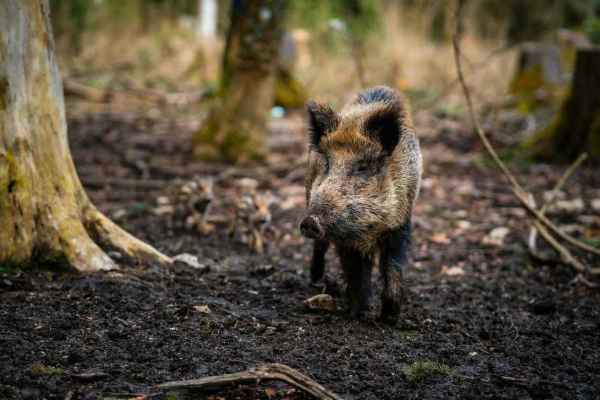
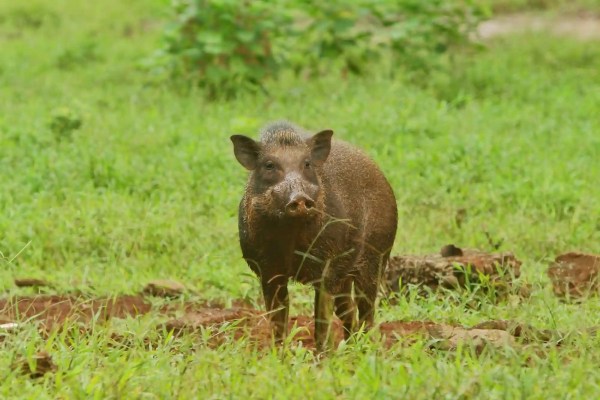
Wild boar damage in Bern: almost twice as many applications as in 2020
The Bernese Farmers' Association is demanding higher compensation; the published figures do not show any success for recreational hunting to date.
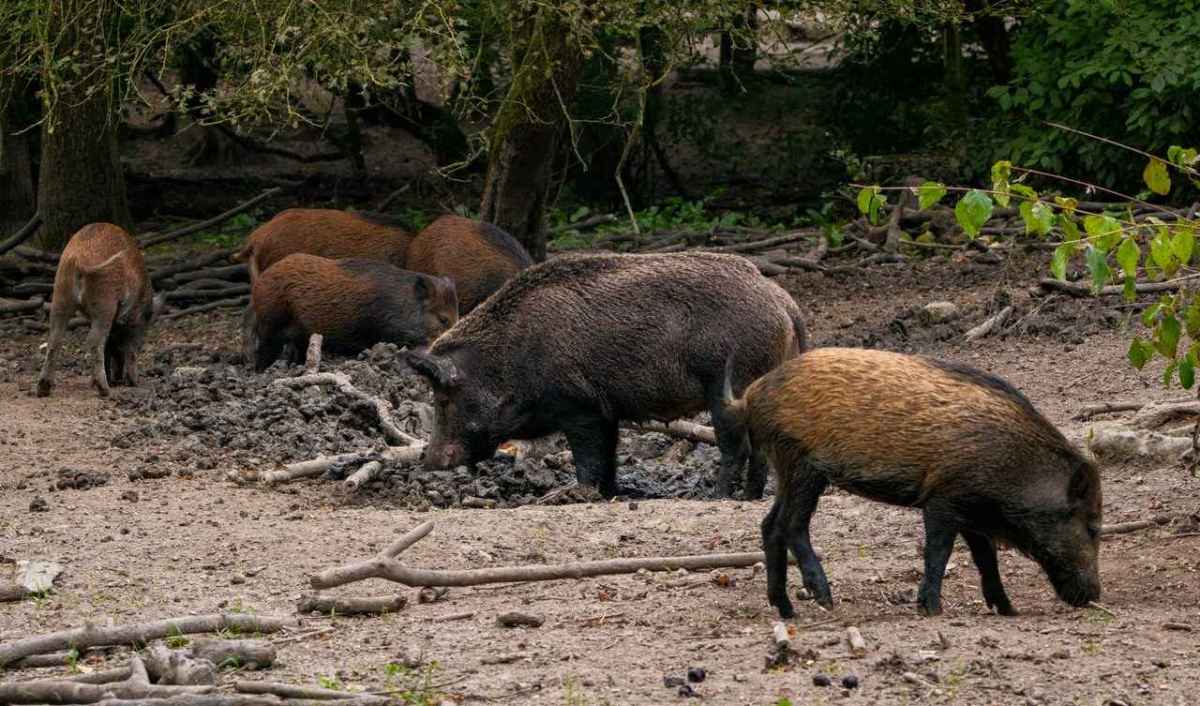
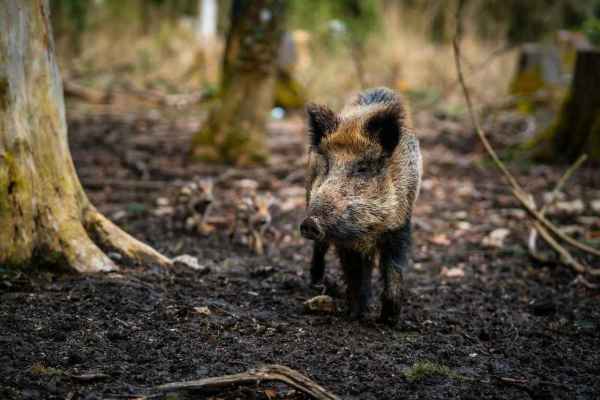
Illustrative image. Photo: Haberdoedas / Unsplash
The Bill
The Bernese Farmers' Association (BEBV) is calling on farmers to consistently report damage caused by wild boars, beavers, wolves or lynx, and is demanding higher compensation. This was reported by the Bernese agricultural platform «Plattform J» on 7 November 2026. Damage caused by huntable wild animals is paid from a fund that is fed, among others, by recreational hunters through a surcharge on their licence. The canton's figures show that applications for wild boar damage have almost doubled since 2020, even though wild boars are hunted without a kill quota.
What the farmers' association is demanding
According to the BEBV, it fundamentally makes no difference for compensation whether damage is caused by a huntable or a protected species. Damage caused by huntable wild animals such as wild boars is covered by the cantonal wildlife damage fund, «which is financed by levies paid by hunters». Damage caused by protected species such as wolves, lynx or beavers is compensated by the canton. Those affected are asked to document damage with photographs and report it to the wildlife wardens; above a minimum threshold of 100 francs, an application can be submitted to the hunting inspectorate. The prerequisite is that «all reasonable measures to prevent wildlife damage» have been taken beforehand.
The association wants more: the labour involved in restoring damaged areas should also be compensated to a greater extent. The costs caused by wild animals must «not be borne by landowners and farmers».
Who fills the wildlife damage fund
The basis is set out in the cantonal Act on Hunting and Wildlife Protection (JWG). Under Article 13, in addition to the regalian levy for the basic licence, "a surcharge of up to 150 francs is levied to prevent and cover wildlife damage". Article 24 regulates the wildlife damage fund as a special financing arrangement: it is funded by these surcharges, by federal contributions towards compensation and by contributions from the canton "in extraordinary situations". The surcharges paid by recreational hunters may only be used for damage caused by huntable wild animals.
The system thus ties compensation for agriculture closely to recreational hunting. Anyone who contributes financially can present themselves as an indispensable partner of farmers, and Article 3 of the Act explicitly requires that intolerable wildlife damage be avoided "through hunting". How federal and cantonal law work together is explained in the overview "What is the hunting act in Switzerland?".
More claims despite wild boar hunting without a quota
The Bern hunting inspectorate gave concrete figures in July 2026 to the "BauernZeitung". For 2025 it reports a rising population of 1,730 wild boars. 451 wild boars were deliberately killed, 366 of them in the regular recreational hunt. Together with 128 animals found dead, 60 per cent of them in road traffic, this gives a total loss of 579 wild boars, almost the same as the previous year's 578.
In Bern, wild boars may be hunted from 2 August to 31 January; there are no kill quotas, and all categories are open. The number of claims for wild boar damage rose from 116 in 2020 to 218 in 2025. The trend was not steady: compensation payments fluctuated between 84,500 francs (2022) and 196,000 francs (2024) and, at around 163,000 francs in 2025, were below the previous year despite more claims.
The fact that hunting takes place without a quota is therefore not proof of effective damage limitation. Conversely, these figures alone do not reveal what share hunting practice has in the trend. Research has shown that wild boars respond to high hunting pressure by reproducing earlier: in a comparative study of two wild boar populations, the generation time fell to 2.3 years in the heavily hunted population, compared with 3.6 years in the lightly hunted one (Servanty et al. 2011). Kills are thus partly offset by offspring, which makes it harder to control numbers through recreational hunting. More on this in the article «Wild boars in Swiss towns and cities: why recreational hunting makes the situation worse».
What the hunting inspectorate itself recommends
According to the «BauernZeitung», the hunting inspectorate still names electric fencing as the most effective method, provided it is correctly installed and regularly checked. The wildlife damage fund generally covers 70 per cent of the material costs. There are also recommendations on field planning: nutrient-rich, tall crops should not border directly on forest edges, hedges or watercourses; a distance of 5 to 10 metres is advisable, 20 metres ideal. Smaller, varied plots of under five hectares reduce the risk. In the end, the agency stresses, it is a question of combining measures: only the interplay of different measures has a real effect. It also counts targeted kills of individual wild boars among them.
How laborious protection is in everyday practice is shown by a farm in Rosshäusern, reported on by the "BauernZeitung" in July 2026: within a few days the family put up more than ten kilometres of wire, and the lowest strand has to be cleared of grass every two weeks. The fund contributes to the material costs. Whether this ongoing effort for monitoring and maintenance is also adequately compensated is an open question, and one that goes beyond the farmers' association's demand for more money to restore damaged areas.
The damage assessment is also an issue in the Grand Council. In March 2026 the parliament passed a postulate under which «qualified specialists with appropriate training» rather than the wildlife wardens are in future to assess damage, as Keystone-SDA reported.
Zurich: a model that has missed its goal
At the beginning of November, Zurich admitted that its wildlife damage regime «has not worked out»: prevention contributions, damage totals and workload are all rising at once, even though recreational hunters there kill 1,300 to 1,500 wild boars every year. High kill figures alone are no proof of successful damage limitation. The details are in the article «Zurich wants to change its hunting legislation: wildlife damage regime ‹has not worked out›».
It is not only wild boars that are at the centre of the compensation debate. In the case of the beaver, too, damage is used as an argument to justify kills, even though the beaver's ecological services are well documented. More on this in the article «Beavers curb forest fires, yet Switzerland releases them for culling».
Commentary: a reckoning instead of more money
The farmers' association's appeal is understandable: anyone who suffers wildlife damage despite reasonable protective measures should report it and be compensated. At the same time, a verifiable assessment of past damage prevention is needed. The published figures show markedly more applications for wild boar damage in 2025 than in 2020, even though hunting takes place without a kill quota. They do not demonstrate that recreational hunting has been successful to date. This is not a one-off in Bern: in decades, recreational hunting has nowhere shown that it reduces wildlife damage in the long term, even though this is precisely its main justification. The fact that recreational hunters co-finance the fund through their surcharges does not make them the solution.
The canton should therefore disclose how much money flows into protective measures, their maintenance and compensation for remaining damage. It should likewise examine what measurable contribution each individual measure makes to reducing damage, fences as much as kills. What matters is not the number of wild boars killed, but whether damage is prevented lastingly and with as little burden on wild animals as possible.
Sources
- Plattform J, 7 November 2026: Wild boar, beaver or wolf: wildlife damage in Bern
- BauernZeitung, 13 July 2026: Wild boar damage is rising sharply: what is the canton of Bern doing about it?
- BauernZeitung, 5 July 2026: Wild boar plague: over 100,000 francs already paid out in the canton of Bern
- Canton of Bern: Act on Hunting and Wildlife Protection (JWG), BSG 922.11, Art. 3, 13 and 24
- Servanty, S. et al. (2011): Influence of harvesting pressure on demographic tactics: implications for wildlife management, Journal of Applied Ecology
- Keystone-SDA via swissinfo.ch, 9 March 2026: Canton of Bern to take a closer look at wildlife damage
More on the subject of recreational hunting: The scientific evidence is presented in the overview Studies on the Effects of Recreational Hunting.
The position of IG Wild beim Wild: IG Wild beim Wild rejects recreational hunting. Our model is the canton of Geneva, which has managed without recreational hunting since 1974: without hunting seasons, without hunting dogs, without driven hunts, without high seats, without the animal cruelty and crime that go hand in hand with hunting season elsewhere. What has worked there for over fifty years disproves every position paper by JagdSchweiz. An association that bases its policy on claims it refutes in its own documents is not a professional organisation, but a factory for misinformation.
Wild animals need a voice
Once a week: research, petitions and background information on recreational hunting. Free of charge and can be unsubscribed from at any time.

All articles are written by IG Wild beim Wild as well as by external co-authors. Research, structuring and editorial processes may be supported by AI-assisted tools.
Support our work
With your donation you help protect animals and give their voice a hearing.
Donate now →