Tipping Point of Wolf Regulation
Why the planned kill quota, combined with diseases, could endanger the species in Switzerland.
With its so-called baseline regulation, Switzerland is pursuing a risky concept in dealing with wolves.
The aim is to preventively shoot 66% of a year's pups in order to curb conflicts with agriculture and allegedly to maintain acceptance of the wolf. Yet from the perspective of conservation biology, this approach raises serious concerns – particularly when natural mortality and disease outbreaks in the population are taken into account.
Reproduction and natural mortality
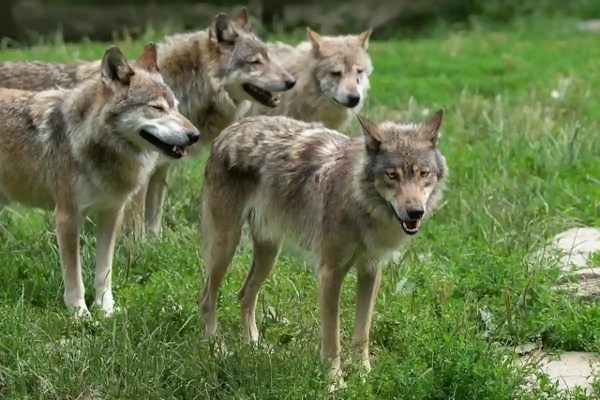
A typical wolf pack produces around 4–6 pups per year. Even under natural conditions, only about 30–50% survive their first year of life. Causes of death are diseases, accidents, food shortages or intraspecific competition.
However, if two-thirds of the pups are deliberately shot, at best 1–2 animals remain, of which in turn a considerable proportion additionally die from natural factors. This means that many packs no longer achieve any reproductive growth at all.
Additional threat from diseases
The situation becomes even more critical when epidemics such as distemper (CDV) or sarcoptic mange occur – diseases that are regularly detected in wildlife populations in Switzerland. These illnesses are particularly dangerous for young animals and social units such as wolf packs:
- Distemper can cause mortality rates of over 80% in pups.
- Mange leads to physical weakening, secondary infections and the social disintegration of packs.
- Both diseases are highly contagious and spread rapidly across packs.
If these factors take effect in addition to regulation, sometimes no offspring at all survive per pack – which can lead to a collapse of the population in the medium term.
Scientific assessment
According to internationally recognised studies (e.g. Chapron et al., 2015, Science) an annual removal of more than 30–40 % of a wolf or predator population is considered unsustainable. The IUCN (International Union for Conservation of Nature) also warns that large-scale interventions in socially structured animal species can lead to reproductive disruptions, behavioural changes and population collapse.
Further studies confirm:
- Boitani & Mech (2010) emphasise that stable pack structures are crucial for the survival of the species. If young or parent animals are shot out, many wolves lose the ability to hunt naturally, which in turn intensifies conflicts with livestock.
- A study by Treves et al. (2016) even shows that intensive hunting does not increase acceptance of the species, but rather entrenches conflicts within the population.
Federal Councillor Albert Rösti's wolf policy: An ecological flight blind!
The planned 66 % quota cannot be justified from a species conservation standpoint if natural losses and disease risks are not factored in at the same time. It risks the permanent destabilisation of an animal species that is not protected by chance, but because of its ecological value.
Instead of relying on mere numerical reduction, a long-term, scientifically grounded wolf management would be necessary that:
- promotes the preservation of functioning pack structures,
- prioritises non-reproductive interventions (e.g. deterrence, protective measures),
- and relies on monitoring, prevention and local acceptance.
The scientifically documented risks and consequences of this so-called «proactive regulation» clearly refute the frequently repeated claim that it is not about extermination, but merely about controlled population regulation – comparable to other game species. From a scientific perspective, this is untenable. (Cf. Population viability analysis for the wolf species – BfN-Schriften / 715 – 2024)
Since it can be assumed that decision-makers in politics and administration are familiar with the relevant studies, the suspicion arises: the aim of this strategy is not regulation, but the targeted pushing back or even re-extermination of wolves in Switzerland.
Sources:
- Chapron, G. et al. (2015): Recovery of large carnivores in Europe’s modern human-dominated landscapes. Science, 346(6216), 1517–1519.
- Boitani, L., & Mech, L.D. (2010): Wolves: Behavior, Ecology, and Conservation. University of Chicago Press.
- Treves, A., Krofel, M., & McManus, J. (2016): Predator control should not be a shot in the dark. Frontiers in Ecology and the Environment, 14(7), 380–388.
- IUCN Guidelines for Reintroductions and Other Conservation Translocations (2013).
- KORA (Coordinated Research Centre for Predators, Switzerland): Wolf Monitoring Reports 2023/24.
- Population Viability Analysis for the wolf species – ISBN 978-3-89624-477-2
- https://bfn.bsz-bw.de/…/docId/1899/file/Schrift715.pdf
Addendum: BAFU report confirms figures for 2025/2026
The BAFU report published in May 2026 on the regulation period 2025/2026 (1 September 2025 to 31 January 2026) confirms the concerns raised in the article with concrete figures: of around 115 wolves authorised, 77 were removed. The population stands at 30 packs living entirely within Switzerland and 10 cross-border packs, down from 36 and 35 packs respectively. The BAFU interprets this as a slowing of growth, yet growth does not thereby stop.
Just how severe the intervention is at cantonal level is shown by our analysis «Valais Wolf Balance 2025/2026: figures of a massacre».
Dossier: Wolf Switzerland: facts, politics and the limits of hunting
More on the subject of recreational hunting: The scientific evidence is presented in the overview Studies on the Effects of Recreational Hunting.
The position of IG Wild beim Wild: IG Wild beim Wild rejects recreational hunting. Our model is the canton of Geneva, which has managed without recreational hunting since 1974: without hunting seasons, without hunting dogs, without driven hunts, without high seats, without the animal cruelty and crime that go hand in hand with hunting season elsewhere. What has worked there for over fifty years disproves every position paper by JagdSchweiz. An association that bases its policy on claims it refutes in its own documents is not a professional organisation, but a factory for misinformation.
Support our work
With your donation you help protect animals and give their voice a hearing.
Donate now →