Sweden: 622 bears killed in trophy hunt
Debunking the myth of a civilised country. In Sweden, animal cruelty prevails.
Sweden is selling off strictly protected animals such as brown bears, lynx and wolves for brutal trophy hunting.
The Swedish Environmental Protection Agency (EPA) grants the district administrative boards permission to set the hunting quota every year. Hunting activists in the Swedish Hunters' Association and the reindeer industry successfully campaign every year for the increased elimination of endangered predators. Appeals for protection are rejected.
The massacre of 622 bears began on 21 August
In 1789, the British philosopher Jeremy Bentham demanded: «The question is not, Can they reason? nor Can they talk? but, Can they suffer?«
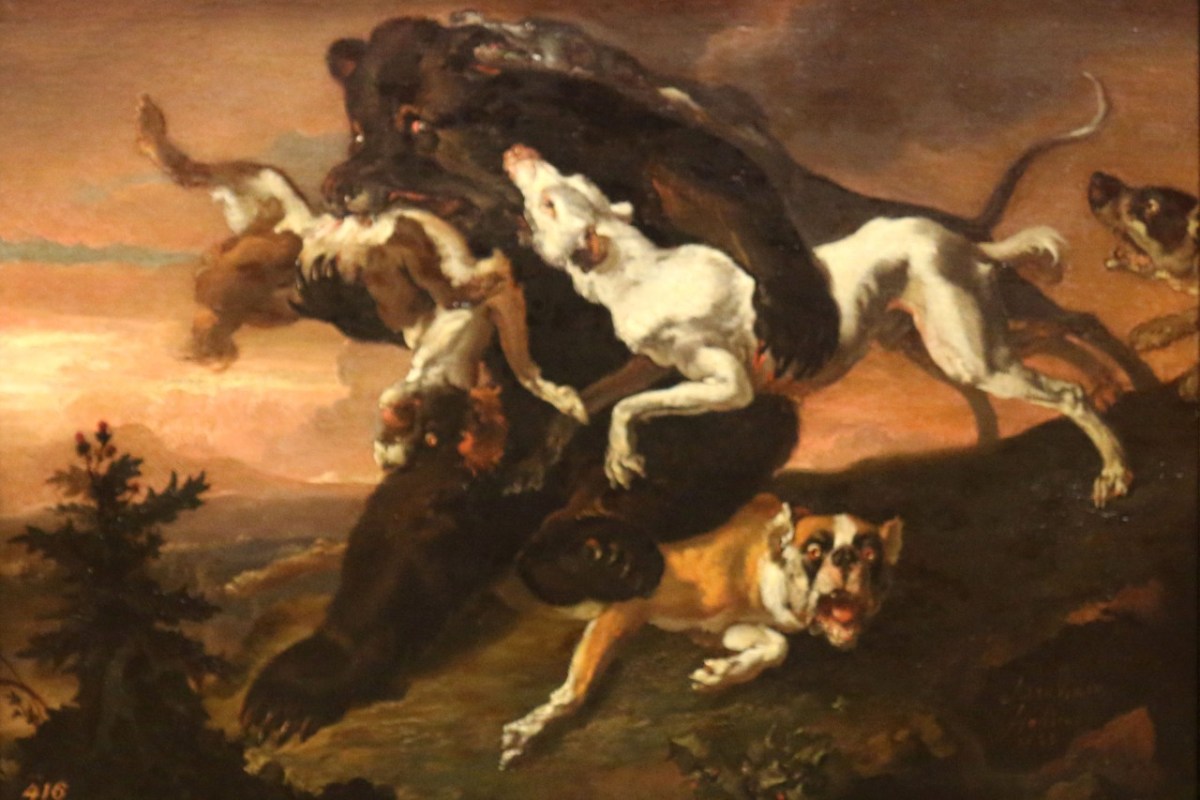
The barbaric hunting methods depicted three hundred years ago in Baroque art correspond to the way predator hunting is conducted in Sweden today. Today's hunters expose both their dogs and the bears to violence. Bears, which are highly sensitive to heat and stress, are hunted with aggressive dogs from dawn to dusk for two months in seven districts. This takes place during the critical period of hyperphagia, when bears need to accumulate enough fat to survive the long Scandinavian hibernation of 5-7 months. For female bears, the stress of finding energy-rich food is even greater, as they give birth to their young during hibernation and must feed their cubs with fat-rich milk.
Anti-predator rhetoric
The seven administrative boards of the northern districts justify the licensed trophy hunting on the grounds that it should «reduce people's fear of predators, curb illegal hunting and strengthen trust in the local management of predators».
That is just as illogical as claiming that legalising prostitution would reduce men's violence against women.
Portents of chaos and death. Hunting causes extreme stress, leads to PTSD, and disrupts feeding, mating and hibernation. This year, almost 25 percent of Sweden's 2,900-strong bear population will be slaughtered; last year it was more than 500.
What are the psychological, ecological, biological and demographic consequences of such extreme hunting in an age of climate change, wildfires, shifting seasons, habitat loss and pollution? What does this say about Swedish morals and ethics in this day and age?
Sweden maintains a new warrior class
A country that expands factory farming, upholds mink breeding and supports playful violence against wild animals through hunting is not the animal welfare role model that some Swedish politicians falsely claim it to be before the European Union. Wild animals are not protected by the animal welfare act. Hunting regulations protect the interests of hunters by normalising violence against wild animals; hunting as a leisure pursuit and sport, population control and wildlife management. This agenda has spawned a new class of warriors: extreme predator hunters with fighting dogs.
Illegal hunting using sadistic methods is widespread, yet Swedish hunting managers never consider how legal hunting, combined with poaching, harms animals. In practice, Swedish hunting regulations make it legal to kill wild animals on virtually every day of the year – day and night, depending on the species. Wild animals are forced to live in constant fear of human predators and hunting dogs. Hunters can even train their dogs on live animals. The hunting association proudly markets Sweden as «the most hunting-friendly country», in order to attract a further 30,000 foreign hunters every year, who plunder nature and its peaceful inhabitants.
The unbearable ease of killing wild animals for pleasure and sport is a murderous business in Sweden. Semi-automatic weapons and silencers, GPS devices and cameras on the dogs – all of this is helping a subculture of trophy hunters to develop within traditional Swedish hunting.Private events featuring celebrities firing test shots at live animals are sponsored by exclusive brands from the weapons industry.Commercialised hunting is an obscene business, run by both private and state landowners.
Swedish wildlife management is a human-made ecology of fear. The «misogynistic» practice of hunting females and their young, or killing the young in front of their mothers' eyes, is a common hunting practice for all kinds of wild animals. In the protective hunt on lynxes and bears, the district administrative authorities even recommend «killing the young before the mother«. Contrary to any ethics, trophy hunting of lynxes is shamelessly scheduled during their mating season. Wolves, foxes, badgers and wolverines and their young are also pursued and killed in their dens or resting places. Technically, pregnant females can also be killed, as the hunting regulations have been expanded.
Traps, snares and bait are medieval methods used in «civilised» Sweden, as are lures used to entice animals into deadly traps or to shoot them from ambush. Animal families are destroyed, their young are abandoned or orphaned, and bears and all other animals often suffer an agonising death. No one can defend themselves against today's war on wild animals.
Collateral damage to bears, even when they are not killed, is openly ignored. The maiming and injuring of animals during hunting is trivialised, and the «accidental» killing of bear cubs or yearlings is common. Hunters are never punished: the hunter who wounded a bear in 2020, shooting it in the mouth, could boast of killing the very same bear in 2021.
Professor Birger Schantz, a former veterinarian and an expert in the examination of gunshot wounds for twenty years, explains: «No one can say that a wounded animal does not suffer. What we do know is that the nervous system that registers pain looks the same in all mammals. A good rule (for understanding this) is that whatever hurts oneself also hurts an animal.»«
A mother bear was killed while protecting her cubs from a hunting dog. The elk hunter claimed he was defending the dog he had released, even though he knew this was a bear's habitat. The cubs, hiding in a tree as their mother had taught them, likely starved to death, since cubs remain dependent on their mother for at least two years. There is no legal provision for rescuing wild animals in such cases.
Hunting poisons the cycle of life
One environmental scandal is the use of 600-700 tonnes of lead per year for hunting ammunition. Wounded animals and birds continue to carry the poison but die out of sight. Hunters leave carcasses and offal scattered everywhere, and poisoned birds and scavengers have long been the silent victims of this abuse. Birds also mistake lead pellets for grain at feeding stations, where animals are lured in for the kill, often near or on agricultural land – revealing the ecological hypocrisy of farmers who sell hunting leases.
Lead is now also being found in the blood and milk of Swedish brown bears: at levels ten times higher than the EU limit for damage to the human nervous system. Bear cubs are contaminated from birth, right in their den. This is not mentioned when hunting permits are issued – on the contrary, the consumption and marketing of bear meat and trophies is actively promoted by district administrative authorities, which have also been caught setting up illegal slaughterhouses in violation of CITES regulations, to make it easier for hunters to remove trophies on the spot.
Tyranny of the hunting minority (<3% of the population). The strategy of the institutions that enable the exploitation of wild animals, the EPA and the county administrative boards, is to keep hunters occupied. Hunting has corrupted Swedish wildlife management and politicians to such an extent that the purpose of the Convention on International Trade in Endangered Species (CITES) and the EU Habitats Directive is regularly violated. Sweden blatantly abuses these strict protection laws by adapting its own national loopholes and interpreting the limited hunting exemptions without restraint in order to support the trophy hunting industry. Interestingly, the administrative court responsible for lawsuits concerning protected predators (Luleå) is geographically located in the region with the highest number of hunters per inhabitant. Could this influence the jury?
A Swedish Disgrace
The county administrative boards have increased the protective hunt every year since 2010. The reindeer industry triumphs over bears, wolves, lynx and wolverines, as they can legally be shot from helicopters and hunted with snowmobiles because they allegedly disturb reindeer husbandry. And this despite the fact that reindeer herders are generously compensated by the state for the loss of reindeer. The hatred of predators in these regions is insurmountable. One village recently proposed a bounty for killing bears.
In 2017, 71 bears were killed within just a few spring months. The five tonnes of bear carcasses were burned and destroyed, to the greedy dismay of the hunters. Animals killed during the protective hunt were previously not allowed to be kept as trophies. As a reminder of the corruption, the EPA recently enforced a new hunting-friendly regulation to please the hunters in the north – now they are allowed to keep trophies and even bring «hunting guests» along for the heli-hunt.
The Lazy Santa Claus Lives in Sweden
Swedish reindeer meat products from Lapland have EU Protected Designation of Origin (PDO) status, acting as a marketing coup for the reindeer meat industry to reach the global food market.
Can the export of gourmet food to Europe be called «environmentally friendly» be described, when the value includes the killing of protected bears, lynx, wolves and wolverines? Are the unethical and cruel treatment and slaughter methods of reindeer not just as well known as the horrors behind the French delicacy of foie gras?
Nothing seems to have changed in this regard, despite the investigations and the undercover trip to Sweden by British journalist Rich Hardy. In his book «Not As Nature Intended», he describes the methods of slaughter in the chapter «Last Christmas».
A terrifying nightmare, far removed from the nomadic Sami culture that once existed. Hardy writes: «…tens of thousands of reindeer are rounded up (with helicopters and snowmobiles) and transported by truck to commercial slaughterhouses, where they meet an end that is anything but traditional.«
What if children understood the bloody nightmare of the real Rudolph the Red-Nosed Reindeer – and for all the «teddy bears» being killed across Sweden at this very moment?
The tangled web of life has never been as fragile as it is today. The worldwide decline of wild animals and, above all, the suffering that humans inflict on non-human animals every second – how can nations such as Sweden claim to be civilised while engaging in a shady business like trophy hunting? How can Sweden trivialise cruel hunting for self-gratification when it clearly reveals the sadistic side of humans towards the innocent? Hunting is about cruelty, and killing for fun is an addiction.
Barbarians in Sweden exposed.
«The time will come when the mere lust for killing will die out in humans. As long as it exists, man has no right to call himself civilised – he is simply a barbarian.» (Swedish writer Axel Munthe, 1929) Quotes from the book Trophy Hunters Exposed by journalist Eduardo Gonçalves: «It is time for a new contract with nature. Society has banned many forms of animal cruelty and blood sports such as bear baiting and dog fighting. Yet trophy hunting has so far been spared. Unchecked human dominance over nature must be abolished for the sake of us all«.
There it is. The great counterforce is on the rise, thanks to intelligent and compassionate journalists, scientists, writers, activists and hard-working animal welfare advocates, as well as all people who understand that we share the fear of pain and the fear of death with all beings.

More on the subject of recreational hunting: In the dossier The Role and Criticism of Recreational Hunters we shed light on the training, power and self-image of recreational hunters. What the research says about this is shown by Hunting fact-checked: the state of research.
The position of IG Wild beim Wild: IG Wild beim Wild rejects recreational hunting. Our model is the canton of Geneva, which has managed without recreational hunting since 1974: without hunting seasons, without hunting dogs, without driven hunts, without high seats, without the animal cruelty and crime that go hand in hand with hunting season elsewhere. What has worked there for over fifty years disproves every position paper by JagdSchweiz. An association that bases its policy on claims it refutes in its own documents is not a professional organisation, but a factory for misinformation.

All articles are written by IG Wild beim Wild as well as by external co-authors. Research, structuring and editorial processes may be supported by AI-assisted tools.
Support our work
With your donation you help protect animals and give their voice a hearing.
Donate now →