SVP ticket for the Federal Council: how Graber and Aeschi voted on the wolf
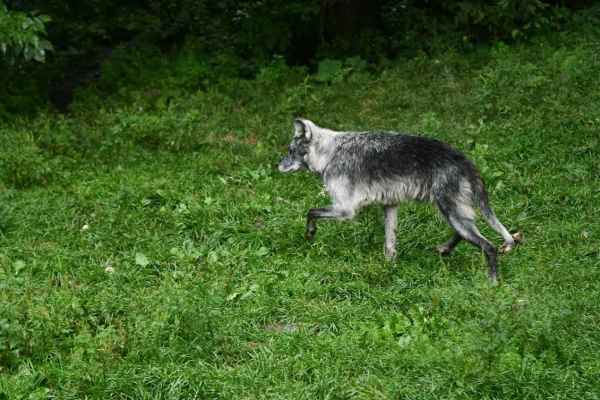
In the National Council, both candidates repeatedly backed a loosening of wolf protection, including the motion to withdraw from the Bern Convention.

Photo: Claudio Schwarz / Unsplash
In Reserve
On Friday evening, the SVP parliamentary group nominated Thomas Aeschi (ZG) and Michael Graber (VS) to succeed Federal Councillor Guy Parmelin. The United Federal Assembly will vote on 9 December. How the two National Councillors voted on the wolf, recreational hunting and species protection can be read in detail in the voting data of the Parliamentary Services.
A ticket from the hardline wing
Aeschi, 47, is leader of the SVP parliamentary group and has sat in the National Council since 2011. Graber, 45, represents Upper Valais. According to SRF, Graber prevailed in the seventh round of voting with 42 votes, Aeschi after six rounds with 37 votes. Both are counted among the party's uncompromising wing.
Michael Graber: "The wolf is a pest"
In the National Council debate on loosening the hunting act in December 2022, Graber said, according to the Official Bulletin: "The wolf is a pest and has long since become the heraldic animal of the federal authorities." The bill, which enables preventive kills, passed the chamber, according to nau.ch, by 106 votes to 74. Graber voted Yes in both the overall vote and the final vote.
He subsequently supported the motion for wolf-free zones in the cantons, the motion "Withdraw from the Bern Convention and regulate wolf protection nationally", wolf kills in hunting ban areas and, in September 2026, a threshold for regulated wolf kills. He voted against stricter import rules for parts of endangered species, such as hunting trophies.
A separate initiative by Graber took a different direction. With the motion 'Civilian service against the wolf', he demanded in 2021 that civilian service personnel tend sheep and goat flocks on the alpine pastures. In his justification he wrote: 'One of the most effective measures against the wolf is and remains the physical presence of humans.' The Federal Council recommended rejecting it, because such deployments were already standard practice in herd protection.
Thomas Aeschi: More than ten years on a kill course
As early as 2016, Aeschi voted for the parliamentary initiative 'Wolf. Fertig lustig!' ('Wolf. The fun is over!'), and in 2017 for the motion to remove wolf hybrids from the population. Since 2021, his voting record on wolf-related proposals has matched Graber's, from the 2022 revision of the hunting act through wolf-free zones to the motion to withdraw from the Bern Convention. On a first threshold-value motion in April 2026 he did not take part; in September 2026 he voted Yes.
On the import of hunting trophies, Aeschi voted No three times: in 2017 on an import ban, in 2021 on a motion concerning trophies of species listed in the CITES appendices, and in 2024 on stricter import rules. In 2013 he also rejected a ban on recreational hunting of stray cats. In the environmental rating by ecorating.ch, he scores 0 per cent environmentally friendly votes in the interim assessment of the current legislative term.
The votes at a glance
| Proposal | Date | Graber | Aeschi |
|---|---|---|---|
| Hunting act, pre-emptive wolf kills (21.502), final vote | 16.12.2022 | Yes | Yes |
| Wolf-free zones in the cantons (22.3478) | 17.04.2024 | Yes | Yes |
| Stricter import rules for parts of endangered animal species such as hunting trophies (22.4184) | 30.05.2024 | No | No |
| Motion 'Withdraw from the Bern Convention' (22.4315) | 10.12.2024 | Yes | Yes |
| Wolf kills in federal hunting reserves (25.3715) | 03.12.2025 | Yes | Yes |
| Threshold value for wolf kills (25.4464) | 23.09.2026 | Yes | Yes |
The motion on the Bern Convention demands that the agreement be terminated and that wolf protection be regulated nationally. What the Federal Office for the Environment has assured the Council of Europe in writing is shown by the WBW analysis of the 15 assurances. How many wolves are currently being killed is documented by the wolf counter.
Darbellay: The next Valais recreational hunter wants to go to Bern
In Valais, too, a politician is declaring his ambitions. State Councillor Christophe Darbellay (Die Mitte) announced his candidacy for the Council of States in 2027 at the beginning of November, immediately after Marianne Maret announced she would not stand again, as Le Nouvelliste reported. Darbellay is himself a recreational hunter and oversees recreational hunting in the canton.
Valais wants to be the first canton to have lynx shot. For the Northwest Valais reference area, Darbellay cites a density of 5.2 lynx per 100 km². For the part of this area lying exclusively within Valais, a research group at the University of Bern calculates 1.7. It estimates the Valais population for the winter of 2025/26 at 37 independent lynx, with an uncertainty range of 26 to 52 animals; in the political debate, figures of up to 80 were mentioned. The study is available as a preprint that has not yet been peer-reviewed.
Commentary: No ticket for the predators
That the SVP pursues an anti-wolf policy is well known. What is remarkable is that both candidates for the federal government have not merely gone along with this line but supported it in the votes analysed here, even to the point of the motion to terminate an international species protection convention. Before 9 December, the Federal Assembly should ask Graber and Aeschi whether, as Federal Councillors, they would also push for the termination of the Bern Convention and what level of protection they intend to grant wolves and lynx in future.
In Valais, Darbellay's candidacy shows how closely recreational hunting and politics remain intertwined. Whoever is responsible today for the canton's lynx figures wants to have a say tomorrow in Bern on the hunting act. This bodes ill for wolves and lynx.
Do you have a tip, a source or a correction for this article? Write to us.
Seen something yourself?
A driven hunt next to a hiking trail, a shot fired near houses, a trap in the forest or an injured wild animal: report it to the Recreational Hunter Radar. We check every tip-off and treat your details confidentially.
More on the subject of recreational hunting: What the research says about this is shown by Hunting fact-checked: the state of research.
The position of IG Wild beim Wild: IG Wild beim Wild rejects recreational hunting. Our model is the canton of Geneva, which has managed without recreational hunting since 1974: without hunting seasons, without hunting dogs, without driven hunts, without high seats, without the animal cruelty and crime that go hand in hand with hunting season elsewhere. What has worked there for over fifty years disproves every position paper by JagdSchweiz. An association that bases its policy on claims it refutes in its own documents is not a professional organisation, but a factory for misinformation.
Wild animals need a voice
Investigations, petitions and background on recreational hunting. As a thank-you, you will immediately receive our free guide «Recreational hunting on your doorstep: what you can do».
Support our work
With your donation you help protect animals and give their voice a hearing.
Donate now →