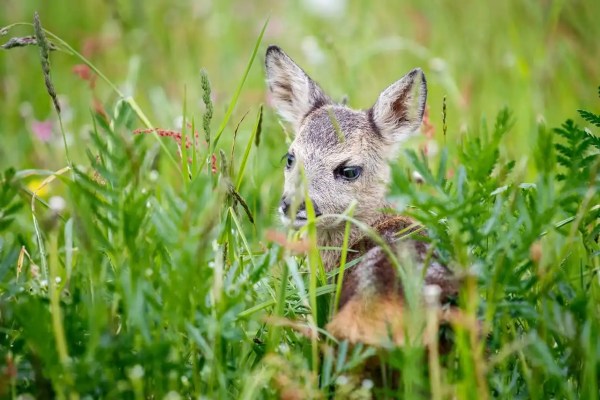
Roe deer Switzerland: The most frequently shot wild animal in recreational hunting

Over 42,000 roe deer are shot by recreational hunters in Switzerland every year; in 2025 the figure was 42,530, including over 10,000 fawns. No other wild animal is killed more often. This dossier shows why roe deer hunting in its current form is ecologically questionable, ethically problematic and driven by vested interests.
Profile
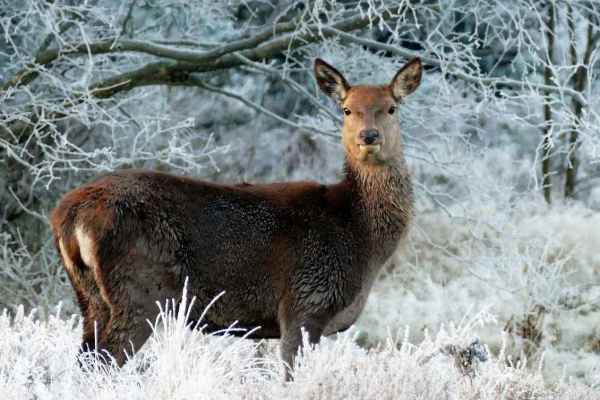
The European roe deer (Capreolus capreolus) is the most common species of deer in Europe and the smallest native to Central Europe. It belongs to the deer family (Cervidae) and inhabits forests, woodland edges, hedgerow landscapes and, increasingly, open farmland. In Switzerland the roe deer is found throughout the country, from the Central Plateau up to the subalpine zone. It lives as a solitary animal or in loose family groups, forms so-called 'Sprünge' (winter herds) in winter, and is a pronounced concentrate selector that prefers protein-rich plant parts such as buds, young shoots and herbs.
Biology and social behaviour
In May or June, roe does give birth to one to three fawns, usually twins. In their first weeks of life the fawns are so-called 'lie-outs': they remain motionless and almost scent-free in the tall grass while the mother grazes nearby. This strategy protects them from predators but makes them extremely vulnerable to mowing machines and free-roaming dogs.
A special feature of the roe deer is delayed implantation (diapause): fertilisation takes place during the rut in July and August, but the embryo only continues to develop from January onwards. As a result, the fawns are born at a time when food is plentiful. Roe bucks are territorial and mark their territory by fraying young trees. This fraying damage is often cited as an argument for recreational hunting, even though it is one of the natural processes in healthy forest ecosystems.
Roe deer in the wild rarely live beyond eight years. Recreational hunting is the most common cause of death, followed by road traffic and disease. Natural regulators such as the lynx and the fox (in the case of fawns) play a central ecological role that is systematically undermined by recreational hunting.
Population figures
For 2025, the cantons report a population of 135,600 roe deer in the Federal Hunting Statistics (2022: 141,241). However, this figure is based on rough estimates by the cantons, not on systematic surveys. The actual population could be either higher or lower. Even the Grisons Office for Hunting and Fisheries admits how unreliable roe deer counts are in its Roe Deer Hunting Plan 2025: on the Danish peninsula of Kalø, the population was estimated at 70 roe deer on the basis of counts, yet 213 roe deer were then shot within a short time (Strandgaard 1972). Despite this uncertainty, the cantons set ambitious kill quotas every year.
The roe deer as the main victim of recreational hunting
The roe deer is by far the most frequently shot wild animal in Switzerland. In 2025, recreational hunters killed 42,530 roe deer, and a further 259 were killed in special culls. In addition, 14,233 roe deer were found dead as fallen game: killed in road traffic, by mowing machines or by dogs (Swiss Hunting Statistics 2025). In individual cantons such as Aargau, more roe deer are killed per area of forest than in any other canton in Switzerland.
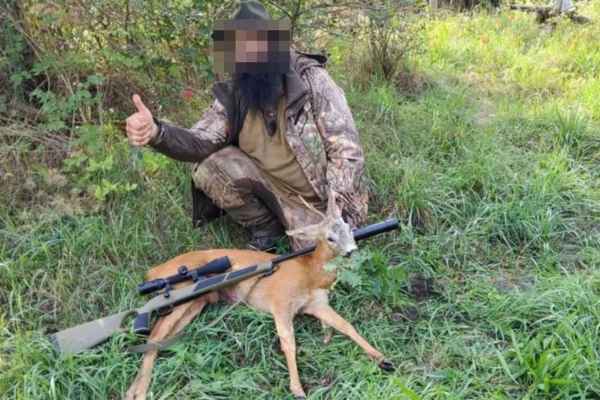
Particularly explosive: around a quarter of the kills involve fawns. In 2025, recreational hunters shot 10,147 roe deer fawns, and over the ten-year average the figure is more than 10,000 per year. The recreational hunting of roe deer fawns is officially sold as 'population management'. From a biological point of view, it amounts to killing young animals that still need their mothers and whose loss causes considerable animal suffering.
Compensatory mortality: lots of shooting, little effect
The Grisons hunting administration itself provides the evidence of how little the hunting of roe deer changes the population. In its Roe Deer Hunting Plan 2025 it notes that the hunting of roe deer fawns is a 'strongly compensatory' intervention: the population would be roughly the same size next spring even if hunting were more intensive. In Grisons, over 70 per cent of total losses are accounted for by fallen game, that is, roe deer that die in winter, on the roads or from disease. At the same time, recreational hunters in Grisons have for decades shot markedly more bucks than does: in 2025, the sex ratio of the high hunt bag was 1 to 0.72 (buck to doe). The kills therefore mainly affect animals that are less decisive for reproduction.
This finding is consistent with the fundamental problem of recreational hunting across numerous wild animal species: a large share of the kills merely anticipates deaths that would occur anyway, and barely reduces the population in the following year. High hunting pressure can also destabilise social structures. Those who argue with high kill figures are selling a largely compensatory removal as regulation.
More on this: Hunting and biodiversity: does recreational hunting really protect nature?
The 'forest-game conflict': a constructed narrative
The central argument for the mass hunting of roe deer is that roe deer browse young trees and thereby prevent forest regeneration. Only consistent killing, it is claimed, can protect the forest. This narrative is shared by forestry authorities, recreational hunters and some scientists alike. It is deeply embedded in the political system and determines kill planning in practically every canton.
What the argument leaves out
The so-called 'forest-game conflict' is in truth a conflict between forestry and wild animals, not between 'the forest' and 'the game'. Roe deer have been feeding on young trees for millennia. Browsing damage only becomes a problem when forestry planning prescribes tree species that would not naturally dominate at the site in question, when forest edges and clearings are lacking because forest management is too dense and monotonous, when natural regulators such as the lynx or fox are systematically decimated or politically thwarted, and when recreational hunting itself drives the roe deer into the forest through constant disturbance, where they then do more damage than in open farmland.
Roe deer that are frequently disturbed retreat into dense cover by day and graze only at dusk and during the night. As a result, browsing damage becomes concentrated in the densely covered parts of the forest, exactly where forest regeneration is most affected. Recreational hunting thus intensifies the browsing pressure it claims to reduce.
The role of the lynx
The lynx is the natural regulator of the roe deer population in Switzerland. KORA studies show that in areas with stable lynx populations, roe deer numbers fall, the deer change their spatial behaviour, and browsing damage to young trees consequently decreases. The so-called “ecology of fear” (landscape of fear) causes roe deer in lynx territory to avoid certain parts of the forest, which benefits forest regeneration. The Grisons Office for Hunting and Fishing also notes that lynx and wolf strongly regulate roe deer populations: in the Surselva, the roe deer population levelled off at a low level after the harsh winter of 2017/18, and since 2021 no special hunt for roe deer has been needed there (Roe Deer Hunting Plan 2025).
This mechanism is ecologically more effective than any kill quota, because it permanently changes the spatial behaviour of the roe deer instead of removing individual animals who are quickly replaced by others. Nevertheless, the lynx is fiercely opposed by recreational hunters and their lobby, not because it is ecologically problematic, but because it is perceived as a competitor for the “resource roe deer”.
More on this: Dossier: The lynx in Switzerland and Hunting myths: 12 claims you should scrutinise critically
Animal suffering left behind
In most cantons, female roe deer and fawns may be hunted from autumn onwards, depending on the canton from September, October or November. At this point the fawns are only a few months old and not yet independent. An orphaned fawn whose mother has been shot generally has no chance of survival. Conversely, fawns that are allegedly “too weak” are also deliberately shot. This practice is presented as selection, but in truth it replaces the natural selection mechanism that, without recreational hunting, would be regulated by predators, disease and winter mortality.
Wounding shots and follow-up searches
The Federal Hunting Statistics also list “gunshot wounds” as a cause of death among fallen game. In 2025, 101 roe deer were found that had been shot and wounded and later died; over the ten years from 2016 to 2025 the figure was 1,429 (Swiss Hunting Statistics 2025). Only animals that are found are recorded. How many wounded roe deer die undiscovered in the undergrowth, nobody knows. In territorial hunting cantons, hunting supervision often falls not to state game wardens but to the recreational hunters themselves, which raises questions of bias and unreported cases.
Mowing machines and traffic
Besides recreational hunting, thousands of roe deer die every year on the roads and under mowing machines. In the canton of Aargau alone, 1,080 roe deer were found dead as fallen game in 2025. Volunteers are increasingly using drones against mowing deaths: in the 2025 season, the association Rehkitzrettung Schweiz secured over 6,400 fawns. In autumn, recreational hunters then shoot over 10,000 fawns of the same year's cohort (Fawn rescue in Switzerland: who saves the fawns, and who shoots them?). For road deaths, by contrast, there is hardly any prevention. Wildlife corridors and wildlife bridges that would protect roe deer and other wild animals are still inadequately developed in Switzerland.
More on this: Hunting and animal welfare: what recreational hunting does to wild animals and Wildlife corridors and habitat connectivity
Geneva as a counterexample
In the canton of Geneva, recreational hunting has been banned since 1974. Professional game wardens take care of wildlife management. Despite the absence of recreational hunting, Geneva has no uncontrolled roe deer population. The game wardens intervene in a targeted and selective way, the forest regenerates, and biodiversity benefits. The Geneva model shows that professional, expertise-based wildlife regulation works without blanket recreational hunting.
More on this: Dossier: Geneva and the hunting ban and Dossier: Arguments for professional game wardens
What needs to change
- Abolition of blanket fawn hunting: Killing wild animals only a few months old that still need their mother is ethically indefensible and ecologically pointless. Natural fawn mortality from predators, weather and disease regulates the population more effectively than any kill quota.
- Promoting the lynx as a natural regulator of roe deer: In areas with stable lynx populations, roe deer numbers fall, the spatial behaviour of the deer changes and browsing damage decreases. This ecological solution works permanently, without the constant disturbance caused by recreational hunting. Instead of fighting the lynx politically, its role as a keystone species must be recognised and its spread encouraged.
- Adapting forest management instead of raising kill quotas: The 'forest-wildlife conflict' is a conflict between forestry and wild animals. Structurally rich forest edges, stands that let light through and a choice of tree species suited to the site reduce browsing pressure more effectively than the mass culling of roe deer. Using the roe deer as a scapegoat for forestry planning errors is scientifically untenable.
- An end to permanent disturbance: Hunting across the whole landscape over many months drives roe deer into the forest, where they concentrate their browsing. Large-scale quiet zones and spatial and temporal limits on recreational hunting would lower browsing pressure where it does the most harm.
- Professional wildlife management instead of recreational hunting: Population control of roe deer must be handed over to professional game wardens, who intervene in a targeted, planned and expert way, free of kill-quota interests and without the constant stress caused by recreational hunting.
Talking points
“Without recreational hunting, roe deer populations would explode and the forest would be ruined.” Even the Grisons hunting administration states that hunting roe deer fawns has a “strongly compensatory” effect: the population would be about the same size next spring even if hunting were intensified. Where lynx and wolf live, the roe deer population has settled at a low level according to the same report, and in the Surselva no special hunt on roe deer has been needed since 2021. Geneva has shown since 1974 that wildlife management works without recreational hunting.
“Browsing by roe deer prevents forest regeneration, so kills are essential.” Browsing becomes a problem when monotonous forest management, a lack of clearings and forest edges, and the decimation of natural regulators such as the lynx combine. Recreational hunting itself drives roe deer into the forest through constant disturbance, where they concentrate their browsing. The solution lies in adapting forestry and supporting predators, not in higher kill numbers.
“Hunting fawns is necessary population management.” Natural fawn mortality from predators, disease and weather regulates the population more effectively than shooting young animals. Hunting fawns is not management but the killing of animals that still need their mothers. In areas with natural regulators (lynx, fox) it is superfluous.
“Recreational hunters actively contribute to forest protection by shooting roe deer.” Attributing forest protection services to recreational hunting reverses cause and effect. It is recreational hunting that persecutes the lynx, drives roe deer into the forest and increases browsing pressure. Anyone who wants to protect the forest does not need recreational marksmen, but professional wildlife management and natural regulators.
Quick links
Articles on Wild beim Wild:
- Hunting Fact Check
- Why recreational hunting fails as population control
- Animal welfare problem: wild animals suffer agonising deaths because of recreational hunters
- Fawn rescue in Switzerland: who saves the fawns, and who shoots them?
- Swiss Hunting Statistics 2025: What the Federal Figures Show
- Hunting statistics 2000 to 2025: half as many foxes killed, red deer population keeps growing
Related dossiers
- The Rock Ptarmigan in Switzerland: An Ice Age Relic Caught Between Climate Crisis, Tourism and the Shotgun
- Ibex Switzerland: Smuggled, saved, trophy
- Beaver Switzerland: Reintroduced and released for culling
- Woodcock Switzerland: Endangered, hunted and ignored
- Waterfowl in Switzerland: Winter Guests in the Line of Fire
- Pigeons Switzerland: Symbol of peace and mass shooting
- Corvids in Switzerland: the most intelligent animals in the crosshairs
- Eurasian jay Switzerland: The forest's forester in the crosshairs
- Marmot Switzerland: Ice age relic and mass shooting
- European rabbit Switzerland: Severely endangered, yet still huntable
- Mountain hare Switzerland: Climate crisis and the shotgun blast
- Raccoon Switzerland: Culled for the wrong origin
- Stone marten Switzerland: Urban adapter under hunting pressure
- Pine marten Switzerland: Shy forest dweller under hunting pressure
- Badger Switzerland: Ecosystem engineer in the crosshairs
- Red deer Switzerland: Returned and demoted to a cull target
- Roe deer Switzerland: The most frequently shot wild animal in recreational hunting
- Wild boar Switzerland: Recreational hunting exacerbates the problem
- Chamois Switzerland: High hunt, climate stress and the overpopulation myth
- Brown hare Switzerland: Endangered, hunted and ignored
- Swiss Hunting Statistics 2025: What the Federal Figures Show
- Self-regulation of wildlife populations: Scientific evidence from Geneva, the National Park and international comparison
- Forest-Wildlife Conflict in Switzerland: Why the Browsing Narrative Does Not Justify Recreational Hunting
Our Standard
The roe deer is not a pest. It is a sentient wild animal that has belonged to Europe's forests for millennia. The fact that it is the most frequently shot wild animal in Switzerland says more about recreational hunting than about the roe deer. The data show that a large share of the kills merely anticipate deaths that would occur anyway, while the constant disturbance caused by recreational hunting aggravates browsing pressure. The lynx regulates roe deer populations more effectively, more quietly and more sustainably than any kill quota. A systemic shift towards professional wildlife management and natural regulators is not an experiment, but an adaptation to the current state of science. This dossier is updated continuously whenever new figures, studies or political developments require it.
More on the topic of recreational hunting: in our hunting dossier we bring together fact checks, analyses and background reports.