
Arguments for Professional Wildlife Managers
Recreational hunting pretends to be something it is not. It claims to practice nature conservation where it manipulates wildlife populations. It claims to regulate populations where it destroys social structures. It claims to be a centuries-old craft where it operates armed recreational entertainment at the expense of the general public, wildlife, and the rule of law. Those who understand the mechanisms are no longer impressed by these claims.
This dossier is a toolbox. It provides the central arguments against recreational hunting and for the system change to professional wildlife managers, organized by topic, supported with sources, and formulated for use in discussions, political initiatives, and media inquiries.
What awaits you here
- Regulation: The central promise that is never fulfilled: Why hunting does not regulate populations but stimulates reproduction.
- Ecology: What hobby hunters really do to the forest: How hunting pressure causes wildlife browsing damage and predators would be the structural solution.
- Safety: The concealed record: Fatal hunting accidents, wildlife accidents, and costs that nobody quantifies.
- Law: What the law really says: Why no canton must provide for recreational hunting and what the animal protection law requires.
- Finances: What recreational hunting really costs: External costs, forest subsidies, and cost comparison with the Geneva model.
- Ethics: What killing for recreational purposes means: Behavioral biology, sentience, and the question of ethical consistency.
- The Wildlife Warden Model: What it delivers and what it costs: How 11 professional wildlife wardens replace what 400 hobby hunters have done poorly.
- What would need to change: Demands for the system change to professional wildlife management.
- Arguments: Answers to the 10 most common claims of the hunting lobby.
- Quick links: All relevant articles, dossiers, studies and resources.
Regulation: The central promise that is never fulfilled
The core argument of the hunting lobby is: Without hobby hunters, wildlife populations explode. Science has refuted this for decades. Even JagdSchweiz wrote publicly on August 29, 2011: «Wildlife populations generally regulate themselves even in our cultivated landscape». With this, the umbrella organization of Swiss hobby hunters has deconstructed its own core argument in writing.
Population biology explains why: When a population is decimated by hunting, the reproduction rate increases compensatorily. Studies show that even with a cull of three-quarters of a population, the same number of animals is present again the next year. Hobby hunting does not produce fewer game animals; it stimulates birth rates and destabilizes social structure. Populations are not regulated but manipulated, losses quickly compensated. Decades of hobby hunting have changed nothing about this fundamental dynamic.
More on this: Why hobby hunting fails as population control and Hunting myths: 12 claims you should examine critically
Ecology: What hobby hunters really do to forests
Throughout the country, farmers, vintners and forest owners complain about damage to crops, even though they are compensated for it. This is not a nature problem, it is a hunting problem. Wildlife browsing damage arises mainly from hunting pressure: Wild animals are forced into forests where they are active at night and cause browsing damage that would not occur to this extent without hunting pressure. The federal government, cantons and municipalities pump millions annually into forest conservation, precisely where hobby hunters 'park' wild animals.
Predators like wolves, lynx and foxes solve this problem structurally by keeping wild animals in motion and preventing overgrazing of individual areas. Where predators occur regularly, fewer forest damages are documented. However, hobby hunters continuously decimate precisely these predators, without legal culling plans and without scientific justification, thus producing the problem for whose solution they subsequently present themselves as irreplaceable.
More on this: Studies on the impact of hunting on wildlife and Wolves in Switzerland
Safety: The concealed balance sheet
When a wolf kills a farm animal, hobby hunters immediately demand its culling until renewed extinction. Where is the public discussion when hobby hunters annually kill people with firearms and injure hundreds? In Switzerland, between 2010 and 2013, there were fourteen fatal hunting accidents and around 200 non-fatal accidents with hunting weapons, out of a total of 1,157 accidents according to the Bureau for Accident Prevention. Private individuals affected by hobby hunters are not even recorded.
In addition, around 60 people per year are injured in wildlife accidents, with personal and property damage of 40 to 50 million francs annually. Wildlife accidents occur because nocturnal, more skittish wild animals under hunting pressure increasingly cross roads. In hunting-free areas, where wild animals are more active during the day and calmer - what one sees, one does not run over - accident frequency is demonstrably lower. The canton of Graubünden recorded 1,298 charges and fines against hobby hunters in 2015 alone. Zurich keeps no statistics on this.
More on this: Hunting accidents in Switzerland: The risk that is rarely discussed honestly and Hunting and weapons: Why 'hobby' and firearms are politically connected
Law: What the law really says
According to Article 4 of the Animal Welfare Act, no one may unjustifiably inflict pain, suffering or harm on an animal, frighten it or violate its dignity. For fox hunting, neither legal culling plans nor scientifically recognized regulatory necessity exist. Foxes are shot tens of thousands of times without justification, without closed seasons and without quotas, and this is in direct contradiction to Art. 4 of the Animal Welfare Act.
Under federal law, no canton in Switzerland must provide for hunting. It is the right of cantons to freely decide whether hunting is permitted or not. The canton of Geneva chose this path in 1974, and the European Court of Human Rights has determined in a landmark decision that hunting on private land without the owner's consent need not be tolerated. The monopoly on force belongs in the hands of the state, not in those of hobby hunter gangs.
More on this: Hunting and human rights and Hunting laws and control: Why self-supervision is not enough
Finances: What hobby hunting really costs
Hobby hunters like to argue with unpaid working hours they allegedly perform for nature. According to estimates, however, 85 percent of these activities are done out of pure self-interest: public relations for their own scene, hunting horn playing, weapon maintenance, creating shooting opportunities, trophy shows and missionary work in schools. This naturally cannot be verified because no independent control takes place.
The consequential costs of hobby hunting borne by the general public are never fully accounted for: forest subsidies in regions with high hunting pressure (100 million francs in four years in Valais canton alone), wildlife accident costs of 40 to 50 million francs annually, administrative costs for hunting supervision, damage regulation, culling planning, court proceedings, and the relief of investigative authorities through thousands of charges against hobby hunters every year. The Geneva model shows: Professional wildlife management costs one million francs per year, thus not even a cup of coffee per resident.
More on this: Dossier: Geneva and the hunting ban and Switzerland hunts, but why actually still?
Ethics: What killing for recreational reasons means
Already in the Middle Ages, the Catholic Church at the Council of Trent (1545 and 1563) prohibited close organs from participating in hunting activities because killing an animal and spilling blood fundamentally contradicts the essence of cult and religion. What was then religiously justified is today scientifically and ethically substantiated: Behavioral biological research shows that wild animals are sentient individuals with social structures, learning ability and capacity for suffering. Against this background, killing for recreational motives is not a matter of taste but a question of ethical consistency.
Hunting is no longer an existential drive for survival. Hunger can today be satisfied ethically correctly, meat exists in abundance, and processed game meat is classified by the WHO in the same toxic class as cigarettes, arsenic or asbestos, which is why the sale of hunter game meat in restaurants and shops is banned in Canada. Anyone who describes killing as a 'passion' and compares animals to apples documents above all one thing: that their own reference frame for ethics and empathy has long since shifted.
More on this: The hobby hunter in the 21st century and The hunting license
The wildlife warden model: What it achieves and what it costs
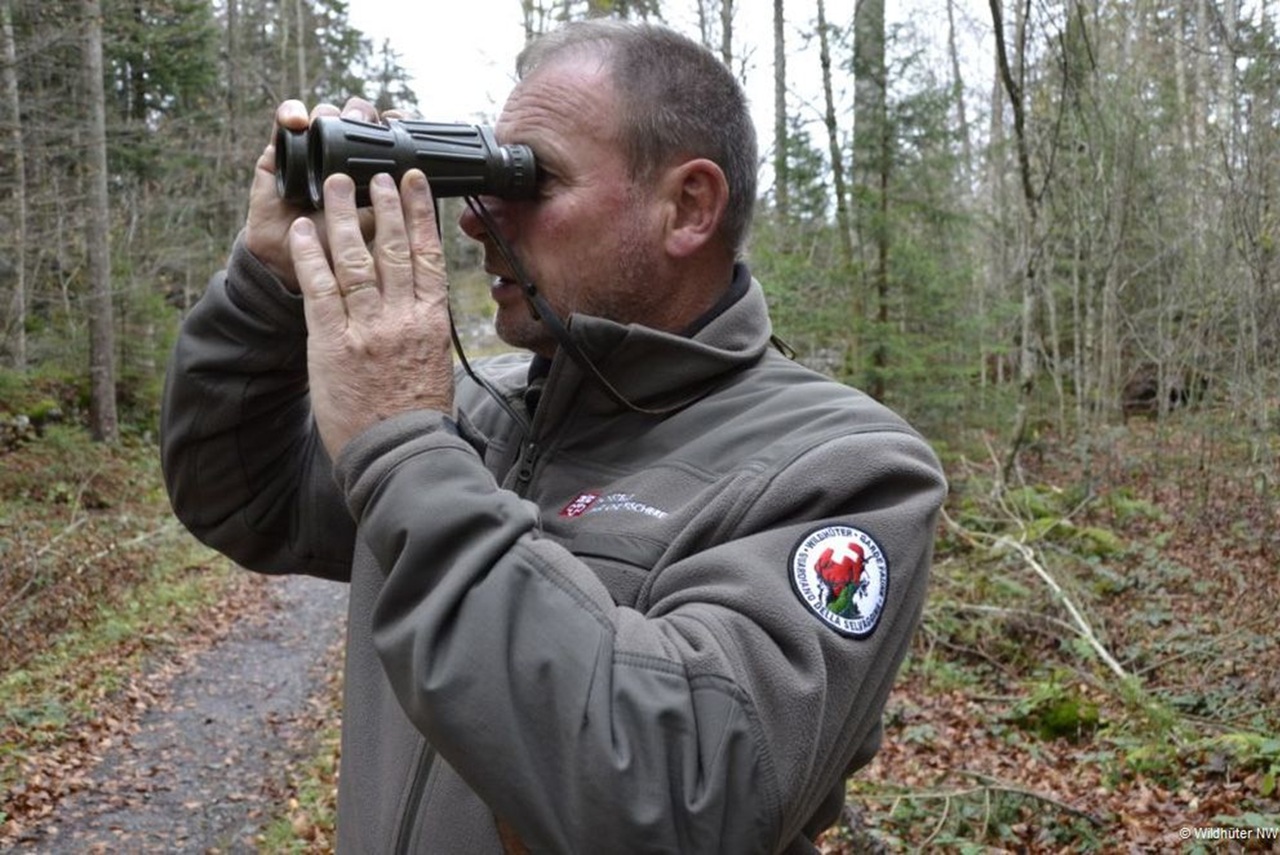
What more than 400 hobby hunters previously did poorly in Geneva is now handled by 11 wildlife wardens sharing three full-time positions, with only one of them required for hunting activities. Professionally trained wildlife wardens differ from hobby hunters not only in training, but in fundamental motivation: They do not manage hunting privileges, but protect wildlife and only intervene where it is ecologically, animal welfare or safety justified.
The concrete advantages of the wildlife warden model in practice:
- The monopoly on violence lies with the state, not with private hunting associations
- Culling is carried out professionally, at night, with light amplifiers: 99.5 percent of shot animals die instantly, no tracking stress, no wounded animals
- Wildlife becomes more active during the day, more visible and more accessible to the public
- No driven hunts, no battue hunts, no den hunts, no trap hunts
- Fewer wildlife accidents because animals are calmer and more active during the day
- Less forest damage because predators are no longer decimated
- No lead contamination of forest soil
- No illegal hunting blinds, no shooting noise, no hunting infrastructure in nature
- Wildlife wardens are not allowed to consume alcohol during work
- Revenue from state venison sales to the public
More on this: Initiative demands 'wildlife wardens instead of hunters' and Dossier: Geneva and the hunting ban
What would need to change
- System change to professional wildlife management: Cantons gradually abolish militia hunting and replace it with state-employed, professionally trained wildlife wardens according to the Geneva model. Model motion: Professionalization of hunting: Wildlife wardens instead of hobby hunters
- Federal legal clarification: No canton must permit hunting: The federal government clarifies in a message or ordinance that cantons have the right to completely forgo hobby hunting and introduce professional wildlife management.
- Independent total cost accounting of hobby hunting: The federal government commissions an independent study that accounts for all external costs of hobby hunting: forest subsidies, wildlife accident costs, administration, court proceedings, ecological consequential damage. The result is compared with the costs of professional wildlife warden models.
- Culling planning on scientific basis: Every culling requires ecological justification. Blanket culling without quota and without closed seasons, particularly for foxes, is abolished. Model motion: Scientifically based culling planning
- Protection of predators: The culling of wolves, lynx, bears and foxes is reduced to the scientifically justified minimum. Predators are recognized as ecological regulatory services and not treated as competition to hobby hunting.
- Transparency requirement for hunting statistics: Cantons publish complete annual data on culling, missed shots, tracking, hunting accidents and fines against hobby hunters. Model motion: Transparent hunting statistics
- Pilot projects for wildlife warden models in additional cantons: At least three cantons start pilot projects for professional wildlife management according to the Geneva model, with scientific supervision and public evaluation.
Arguments for discussions: The 10 most frequent claims
'Without hunters there are too many wild animals.' JagdSchweiz itself has stated in writing that wildlife populations in cultural landscapes regulate themselves. The Engadin National Park and the Canton of Geneva have proven for decades that stable populations are possible without militia hunting.
'Hunters practice nature conservation.' In environmental rankings, hobby hunters occupy the last place. Not a single wildlife sanctuary recognized by FOEN exists in Canton Zurich after decades with hobby hunters.
'Hunting is a centuries-old tradition.' Slavery and gladiator fights were also centuries-old traditions. The age of a practice is not an argument for its ethical justification.
'Hunters prevent wildlife damage.' The main cause of forest damage and wildlife browsing is hunting pressure itself: It pushes wildlife into the forest and into the night. Where predators are present, browsing decreases.
'Hunting is necessary against diseases.' Rabies was defeated by vaccine baits, not by fox hunting. Fox hunting demonstrably increases the spread of fox tapeworm and borreliosis.
'Hunters finance themselves.' The external costs, forest subsidies, wildlife accident damages, administrative expenses, court costs, are entirely borne by the general public.
'The Geneva model is not transferable.' Geneva is a more densely populated and intensively agriculturally used canton than many hunting license cantons. If the model works there, no structural argument speaks against it working equally well elsewhere.
«Wildlife wardens would be too expensive.» The Geneva model costs one million francs per year. That is less than the wildlife accident costs of a single year in Switzerland.
«Hunters have a right to their tradition.» No canton is federally obligated to provide for hunting. The right to kill wild animals on foreign soil is a historically grown privilege, not a fundamental right.
«Without hunters there are more wildlife accidents.» The opposite is true: Skittish, nocturnal wild animals under hunting pressure cause more wildlife accidents. Diurnal, calm wild animals in hunting-free areas are more visible and therefore less accident-prone.
Quicklinks
Articles on Wild beim Wild:
- Arguments against hobby hunters
- Arguments for wildlife wardens
- Initiative demands «Wildlife wardens instead of hunters»
- Why recreational hunting fails as population control
- Hunting and human rights
- The hobby hunter in the 21st century
- Switzerland hunts, but why actually?
- Template texts for hunting-critical initiatives in cantonal parliaments
- Studies on the impact of hunting on wildlife
Related dossiers:
- Introduction to hunting criticism: What recreational hunting really is – and why it has no future
- The hunting license
- Hunting in Switzerland: Numbers, systems and the end of a narrative
- Hunters: Role, power, training and criticism
- Hunting myths: 12 claims you should critically examine
- Hunting and biodiversity: Does hunting really protect nature?
- Game meat in Switzerland
- Hunting ban Switzerland
- Arguments for professional wildlife wardens
- Hunting and human rights
Our claim
Recreational hunting is not a nature conservation system. It is a historically grown usage model that operates with responsibility rhetoric where institutional responsibility is structurally absent. It produces the problems for whose solution it presents itself as irreplaceable, while burdening the general public, wildlife and the rule of law. The system change to professional wildlife wardens is not radicalism. It is an adaptation to the state of science, ethics and democratic control, and a requirement of fairness toward all who do not want any shooting and are still carried along by an armed leisure lobby. This dossier is continuously updated when new studies, numbers or political developments require it.
More on the topic of recreational hunting: In our Hunting dossier we bundle fact-checks, analyses and background reports.