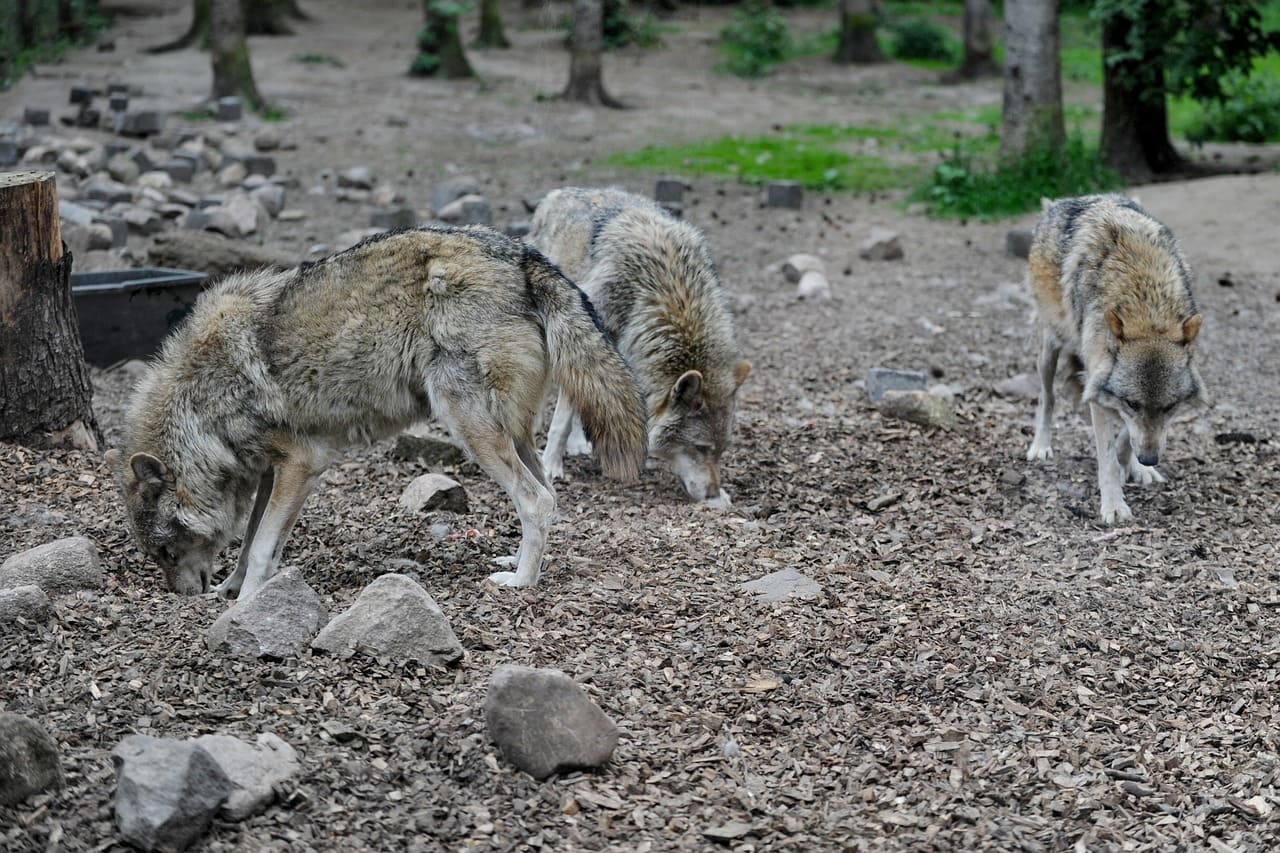
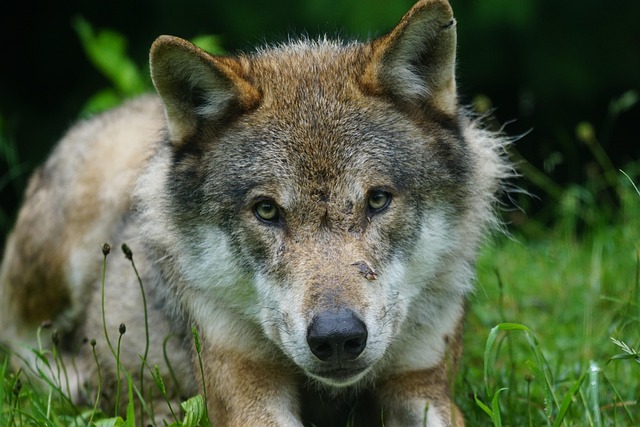
Brussels: Coexistence with large carnivores in the EU
On 7 March 2018, a conference on the topic of “Coexistence with Large Carnivores in the EU” was held at the EU Parliament in Brussels, to shed light on the various solutions and strategies of member states and to achieve a coexistence between so-called predators and people. The event discussed the obstacles and challenges faced by EU citizens and


On 7 March 2018, a conference on the topic of «Coexistence with Large Carnivores in the EU» was held at the EU Parliament in Brussels, to shed light on the various solutions and strategies of member states and to achieve a coexistence between so-called predators and people.
The event discussed the obstacles and challenges faced by EU citizens and, in particular, affected farmers in connection with rising wolf populations, as reported by politician Stefan Bernhard Eck.
How can we preach species conservation to Africa?
At this well-attended conference — to which MEP Sirpa Pietikäinen, President of the Intergroup on the Welfare and Conservation of Animals, had invited participants in cooperation with «Humane Society International», «Eurogroup for Animals» and «Luonto-Liiton Susiryhma» — speakers included Humberto Delgado-Rosa (Director DG ENVI), Mervi Laaksonen (The Wolf Action Group), Dr. Guillaume Chapron (Professor and expert on the protection of large carnivores), and further representatives of various organisations.
Particularly noteworthy is the statement by the representative of the EU Commission, who in essence raised the question: «How can we suggest to African countries that they must protect their predators, such as lions, if we are not even willing to protect our own carnivorous wildlife ourselves?»
Trophy hunting in Africa
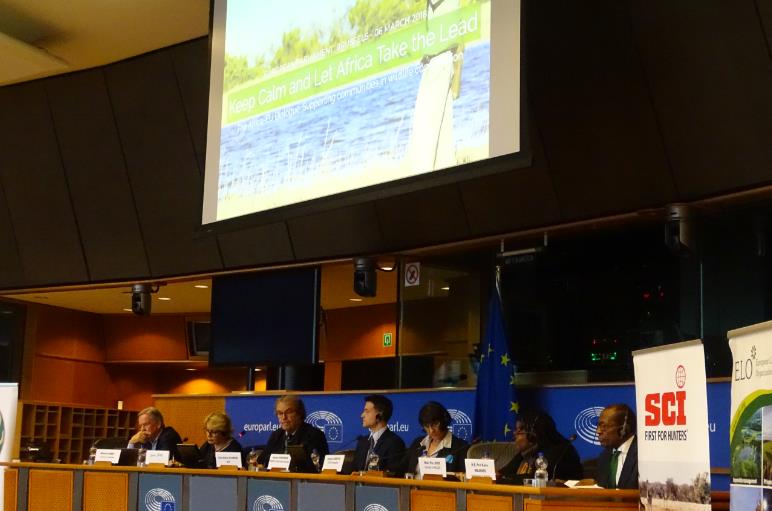
The day before, on 6 March 2018, a conference on the topic of trophy hunting and wildlife hunting in Africa took place at the EU Parliament, to which MEP Karl-Heinz Florenz (EPP Group), President of the Intergroup on Biodiversity, Hunting and Nature, had invited participants in coordination with the European Federation of Associations for Hunting and Conservation (FACE), the International Council for Game and Wildlife Conservation (CIC), the European Landowners' Organization (ELO), and Safari Club International (SCI).
According to the announcement, the aim of the meeting was to bring together decision-makers from Europe and Africa with stakeholders from other fields, in order to better understand the leadership of African countries in managing and conserving their wildlife, as well as the role of local communities in this management and conservation activities.
After MEP Florenz, the Ambassador of Namibia, the Environment Minister of South Africa (via video message), and other invited guests had spoken on the subject, EU Member of Parliament Stefan Eck was given the floor.
He emphasized how important it is to consistently protect wildlife from poachers and to decisively combat illegal wildlife trafficking, so that future generations of people will also be able to experience the rich diversity of wildlife in Africa. Stefan Eck stressed that the protection of species is particularly important because no amount of money in the world can bring back a species once it has become extinct.
He further elaborated that the EU is a hub for the trade in illegally hunted animals and trophies, and how important it is to intensify dialogue between the EU and African states on this issue. In closing, MEP Eck highlighted that — something which often goes unmentioned — wildlife is threatened not only by poaching, but increasingly also by the effects of climate change.
It is to be hoped that the EU Commission will continue to stand behind the protection of the wolf and will not allow itself to be pressured by the conservative and right-wing conservative forces in this Parliament.
Coexistence instead of culling
Dr. Joanna Swabe of Humane Society International said: «It is important to accept that we share our living environment with wolves, bears, and other predators, and to recognize that humans pose a greater threat to these animals than the other way around. In some regions, large carnivore populations are finally recovering after having been persecuted, killed, or even completely exterminated in the past. Habitat loss and the lack of natural prey can, among other things, bring species such as wolves into conflict with humans, as they may prey on unprotected livestock. While such losses are certainly devastating for farmers, killing protected predators is not a desirable or sustainable solution. We must develop better ways to effectively mitigate such wildlife conflicts and to coexist with large carnivores in the long term.»
Background of the EU Study
The “Civil Liberties and Constitutional Affairs” committee of the European Parliament produced a new study ahead of the aforementioned conferences, analyzing the legal frameworks for predators — brown bear (Ursus arctos), Eurasian lynx (Lynx lynx), wolf (Canis lupus), wolverine (Gulo gulo) — and the management of these animals within the EU. Methods of coexistence and the corresponding exemptions were also examined.
Unlike the USA, Canada, or Russia, EU member states are densely populated, and large areas that would facilitate the protection of predators such as brown bear, lynx, wolf, and wolverine are largely absent. Due to their specific characteristics, these species require vast territories to meet their needs, meaning their ranges often overlap with those of humans.
It is therefore not surprising that conflicts arise between human activities and the protection of predators when these animals prey on livestock herds. In the past, Europe had a well-established coexistence between humans and predators, with livestock being protected. However, the last century brought a fundamental shift. The increasing use of firearms and poison led to a historic decline or even the complete extermination of large predator populations in several European countries.
In 1979, a landmark instrument was developed: the Convention on the Conservation of European Wildlife and Natural Habitats — the so-called Bern Convention. Further initiatives followed at the national level, and in 1992, Directive 92/43/EEC on the conservation of natural habitats and of wild fauna and flora was adopted.
With this instrument and the Bern Convention, predators are now protected. This means that killing these animals and granting exceptions to protection in certain situations requires justification.
Killing is not a sustainable solution
During the last century, traditional methods of coexistence were forgotten and agriculture underwent a fundamental transformation. This also influenced how people perceive the threat posed by predators.
Although the number of predators today is far lower than in the past, many stakeholders continue to demand culling quotas for protected species, despite the availability of better preventive alternatives. Science has shown that killing these animals has little or no effect — or is even counterproductive — unless wildlife numbers are reduced so drastically that it is no longer compatible with the Habitats Directive. Recreational hunting as population control fails here too.
The idea of keeping the numbers of legally protected keystone species under control is not tenable given their ecological relevance. These animals possess unique characteristics that allow the regulation of animal populations to occur automatically. These important properties can be severely compromised by hunting and extermination.
Furthermore, protecting livestock is best suited to preventing conflicts. In particular, farmers most affected by the presence of predators should be supported. All stakeholders should be heard so that agreement can be reached on an acceptable approach to coexisting with wildlife.
Finally, EU member states should increase their financial support for science in order to achieve all these goals, thereby ensuring the protection of predators and, with it, the sustainability of all measures. More on the topics of hunting and biodiversity and education.
More on the subject of recreational hunting: The scientific evidence is presented in the overview Studies on the Effects of Recreational Hunting.
The position of IG Wild beim Wild: IG Wild beim Wild rejects recreational hunting. Our model is the canton of Geneva, which has managed without recreational hunting since 1974: without hunting seasons, without hunting dogs, without driven hunts, without high seats, without the animal cruelty and crime that go hand in hand with hunting season elsewhere. What has worked there for over fifty years disproves every position paper by JagdSchweiz. An association that bases its policy on claims it refutes in its own documents is not a professional organisation, but a factory for misinformation.