Calanda Wolf: Why it's becoming more explosive again in 2026
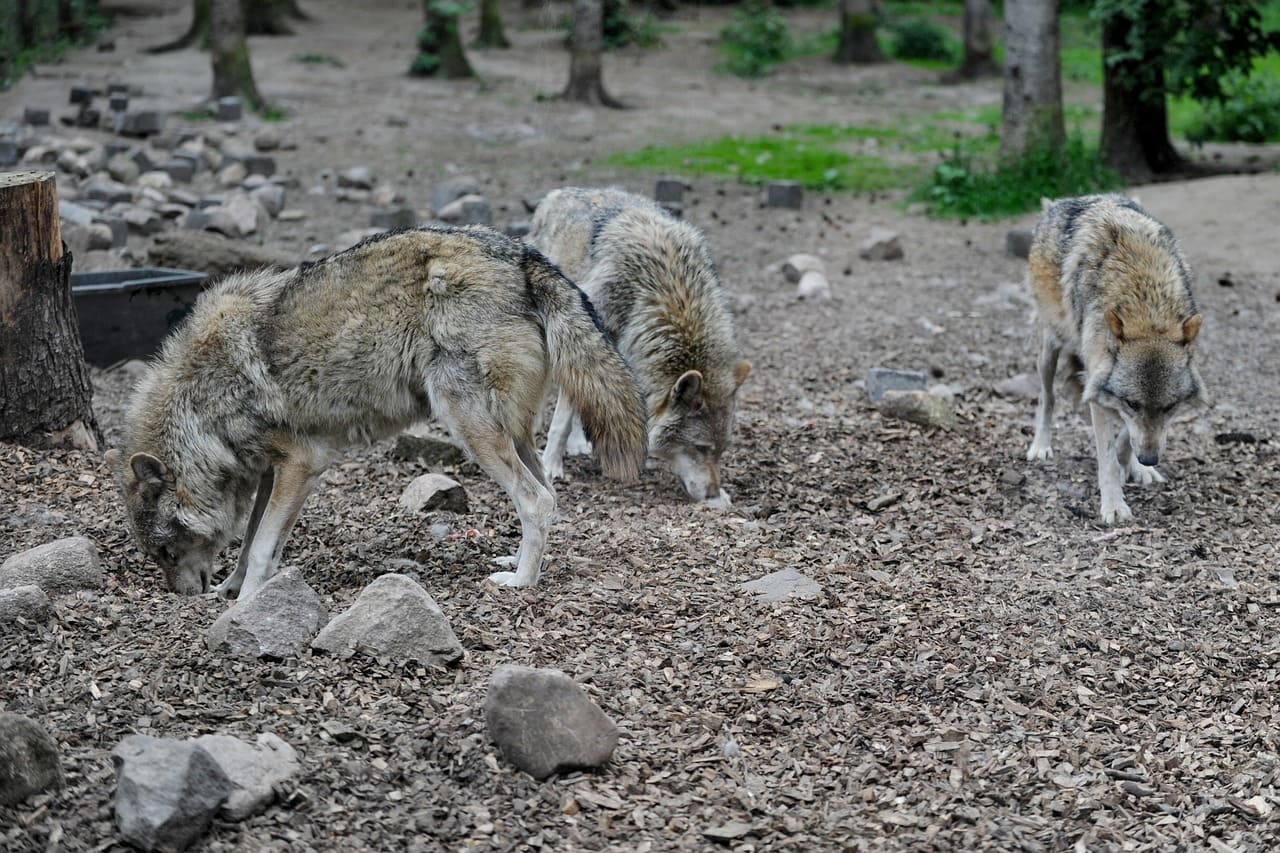
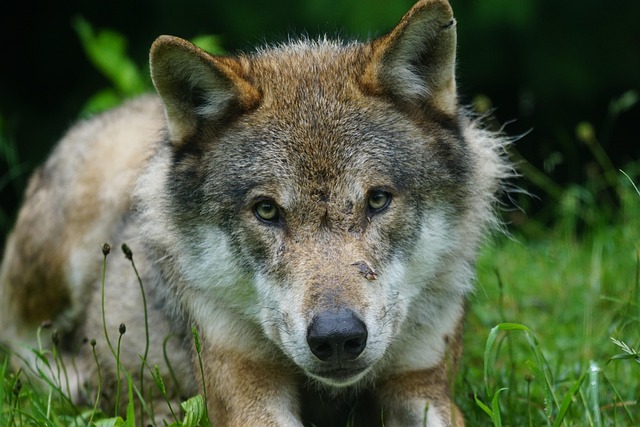
Wolves can reduce ungulate populations and change the behavior of deer, roe deer and chamois. This locally relieves forest regeneration, especially in protection forests. Since 2017, however, the situation has escalated politically: Switzerland regulates preventively, while the number of packs continues to rise.

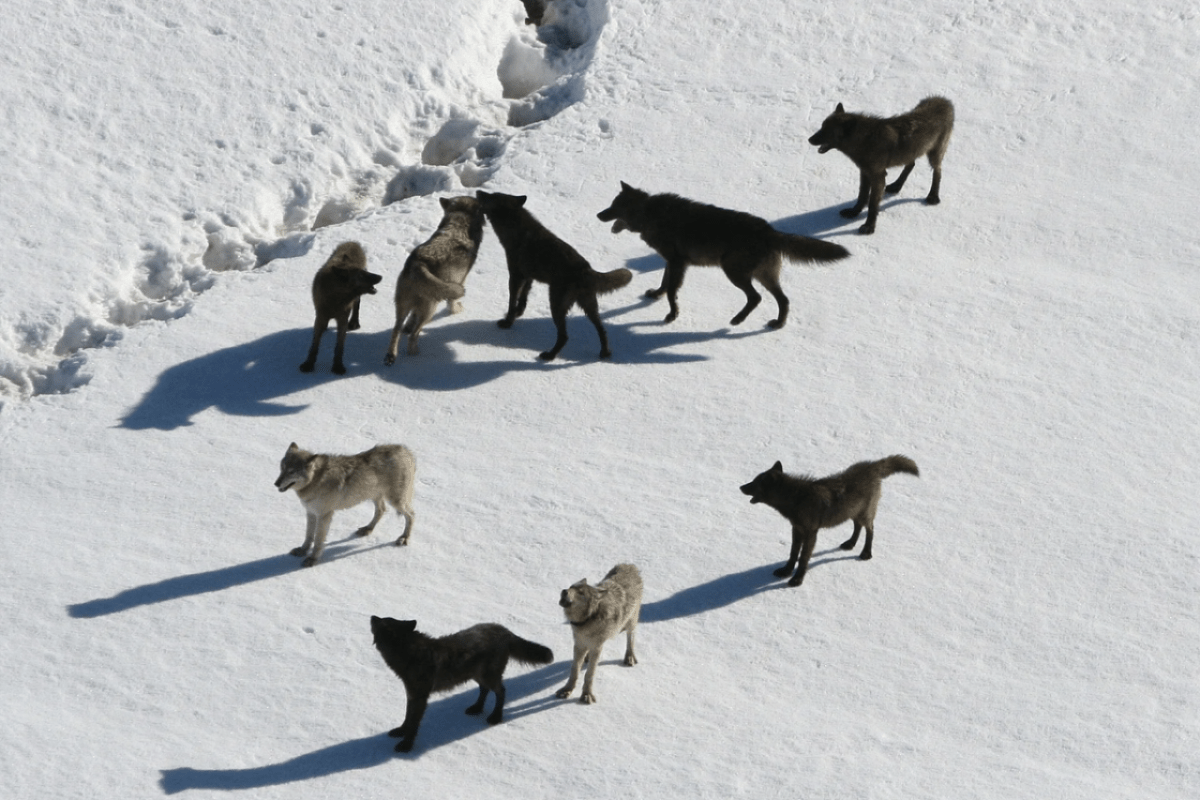
«In the Pack»
The wolf polarizes.
While livestock farmers and recreational hunters often perceive its return as a threat, forestry professionals increasingly view it as an ecological factor with potential benefits for the forest.
The focus is particularly on protection forests, whose regeneration suffers from heavy browsing pressure by wildlife in many regions of Switzerland. Using the example of the Calanda massif in the Rhine valley near Chur, it can be shown how wolf packs can influence ungulate populations and their behavior. Since the initial publication of this article in 2017, however, not only the ecological but especially the political situation has changed significantly.
This article examines the role of wolf packs from an educational and ecological perspective. It serves as a foundational article on the ecological role of the wolf in Switzerland and complements further contributions on wolf regulation, hunting policy, and livestock protection on wildbeimwild.com.
Why protection forests are under pressure
In many regions of Switzerland, deer and roe deer populations are high. The resulting browsing damage to young trees means that forests can no longer regenerate naturally. This is particularly problematic in mountain areas, where forests fulfill a central protective function against avalanches, rockfall, and landslides. If young growth fails to emerge, these forests age and lose their stability in the long term.
How strongly wildlife populations influence forests is often underestimated or left exclusively to recreational hunting. An in-depth analysis can be found in the background article on the influence of recreational hunting and wildlife density on forest ecosystems on wildbeimwild.com.
Calanda as an early example in Switzerland
At Calanda, a wolf pair was first regularly observed again from autumn 2011. With the first confirmed offspring from 2012, this developed into Switzerland's first contemporary wolf pack. The region thus became an early observation area for the interaction between predators, ungulates, and forests.
In the years following pack formation, declines in deer populations were described in the area of influence, while these increased in the rest of the canton. Changes were also observed in roe deer and chamois. The decisive factor is not only the number of animals killed. More important is the indirect effect: ungulates use habitats differently, remain in the same places for shorter periods, and move more frequently. This distributes browsing more spatially and concentrates it less heavily on individual forest areas.
Foresters reported from the area that silver firs and other young growth became visible again, sometimes in age classes that had barely existed for decades. These observations align with findings from other regions with permanent presence of predators like wolves and lynx.
Fact box: Wolf, forest and wildlife at a glance
- Wolf packs can locally reduce populations of deer, roe deer and chamois
- Change the behavior of ungulates
- Reduce concentrated browsing on young trees
- Can relieve pressure on protection forests, depending on region and initial situation
It is important that effects only become apparent over years to decades and are not measurable within individual hunting seasons.
What has changed since 2017
Since 2017, the situation has shifted significantly. The number of wolf packs in Switzerland has increased dramatically. In monitoring year 2025/26 (01.02.2025 to 31.01.2026), 41 packs had been confirmed as of 19.11.2025, with 31 entirely in Switzerland and 10 cross-border. In parallel, hunting law has been amended.
With the introduction of preventive wolf regulation in Switzerland, cantons can apply for culling permits under certain conditions. This development is critically monitored on wildbeimwild.com and analyzed in several contributions on wolf regulation and the Hunting Act.
Update box: What has changed since 2017
- Significantly more wolf packs in Switzerland
- New legal foundations for preventive regulation
- More polarized political debate
- More focus on culling, less on forest issues
The ecological mechanisms have remained the same, the political environment has not.
What this means for forests
Three factors are decisive for forest development: the density of ungulates, their spatial distribution, and the structure of the forest itself. Predators primarily influence the first two points. They reduce populations locally and alter animal behavior. Whether this results in measurable improvement of forest regeneration also depends on climate, tree species, hunting practices, and existing forest damage.
The wolf is thus neither a panacea nor a foreign element. It functions as one ecological factor among many. Particularly in regions with long-term high wildlife pressure, its presence can initiate processes that are relevant for the forest.
Frequently Asked Questions
Do wolves attack humans?
Attacks on humans are rare. In Switzerland, conflicts almost exclusively relate to livestock, recreational hunters, dogs, or false expectations about the behavior of wild animals. In Switzerland, documented incidents are exceptional.
Do wolves take away game from recreational hunters?
Wildlife populations are influenced by many factors. Traffic, agriculture, diseases, habitat loss, and recreational hunting play a greater role than a single predator. An in-depth analysis can be found in articles about the myth of competition between wolves and recreational hunting on wildbeimwild.com.
Are culls a solution for livestock predation?
Livestock protection remains central. The effectiveness of culls depends heavily on accuracy, timing, and accompanying measures. Why livestock protection measures are often more effective than culls is explained in dedicated educational articles on wildbeimwild.com.
Wolf packs can locally contribute to reducing wildlife pressure and changing the behavior of ungulates. Both can relieve protection forests and promote natural forest regeneration. Since 2017, however, Switzerland has entered a phase of intensive regulation. For this very reason, it is important not only to focus on conflicts and culls, but also on long-term ecological relationships. For the forest, the wolf remains a relevant part of the system.
Related Articles
- Wolves under constant fire: How Swiss hunting policy ignores science and ethics
- Protection forest: Recreational hunting creates problems it claims to solve
- The wolf is not the problem – it is the solution
- Forest transformation: Paths to resilient mixed forests in the face of hunting
- Forest transformation at Lukmanier Pass
- Hunting is not the solution for forest transformation
- Recreational hunters do not help forest transformation
- The conflict between forestry, hunting and wildlife
Support our work
With your donation you help protect animals and give their voice a hearing.
Donate now →More on the subject of recreational hunting: What the research says about this is shown by Hunting fact-checked: the state of research.
The position of IG Wild beim Wild: IG Wild beim Wild rejects recreational hunting. Our model is the canton of Geneva, which has managed without recreational hunting since 1974: without hunting seasons, without hunting dogs, without driven hunts, without high seats, without the animal cruelty and crime that go hand in hand with hunting season elsewhere. What has worked there for over fifty years disproves every position paper by JagdSchweiz. An association that bases its policy on claims it refutes in its own documents is not a professional organisation, but a factory for misinformation.