Speciesism in the Hunting Ground
How recreational hunters categorize animals — and why this is reminiscent of dangerous patterns of thought.


Anyone who speaks with recreational hunters will repeatedly hear the same terms: «pests,» «vermin,» «beneficial species,» «regulation,» «population control.»
This language reveals a worldview that categorizes animals according to their usefulness. Foxes, badgers, crows, and more recently raccoons occupy the bottom of this hierarchy. Roe deer and red deer rank higher, yet they too are ultimately «game,» to be «bagged» or «removed.»
This way of thinking is not simply a matter of taste for a hobbyist group. It is an expression of speciesism: the conviction that human interests fundamentally count for more than the lives and suffering of other animals. And it bears features reminiscent of ideologies we know from the darkest period of the 20th century.
Wildlife sorted by usefulness
The hunting worldview is surprisingly simplistic:
- Animals that one wishes to hunt are «game.»
- Animals that compete with recreational hunting or are considered a nuisance are «vermin» or «pests.»
- Animals that are of no interest to recreational hunters are, at best, mere backdrop.
This classification appears in legislation, hunting association brochures, and at regulars’ tables. It determines who is intensively pursued throughout the year and who receives at least limited protection — not because the individual animal has inherent value, but because a species is defined as «worthy of promotion» or «worthy of eradication.»
When the value of an animal depends on its usefulness, compassion is mere decoration.
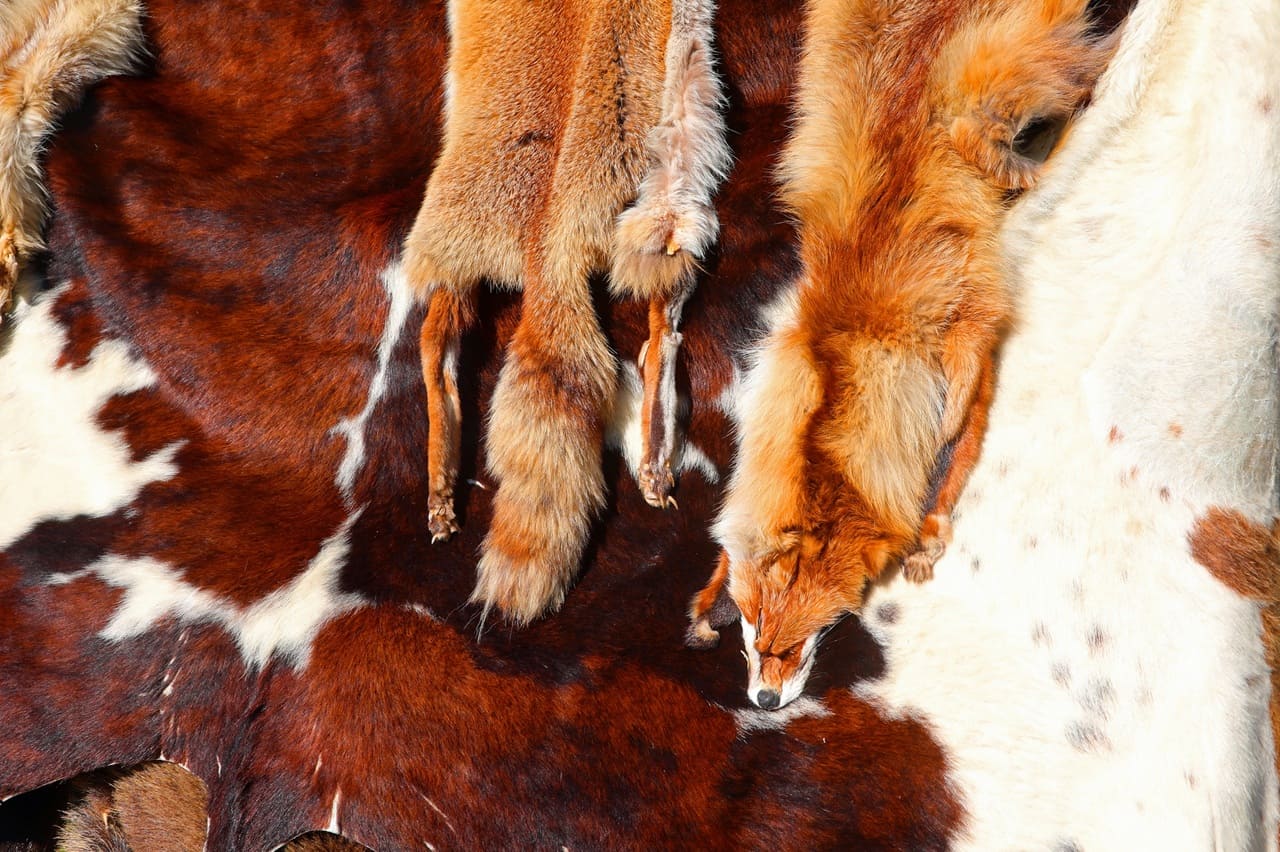
The fox is a classic example of this. In many hunting territories it is pursued almost year-round using traps, earth dog hunting, lure hunting, and night-vision technology. The justifications vary: at times it is said to «protect» small game populations, at others to prevent disease, or to protect the young of roe deer. Evidence for any genuine ecological benefit of this relentless persecution is lacking — yet this fits the pattern: what matters is that the fox has been designated as a problem.
De-individualization: Living Beings Become “Vermin”
Speciesism only works when sentient individuals are turned into abstract categories. Recreational hunters rarely speak of a specific fox that feels fear, experiences pain, and wants to live. They speak of “vermin” that must be regulated.
Within this logic, it no longer matters whether the individual fox has spent years quietly hunting mice and feeding on carrion. He is a carrier of a category, not a subject with a biography. In the same way, crow colonies, martens, or raccoons are declared problem groups whose “populations must be contained.”
This is a psychological mechanism familiar from other contexts: when a large, heterogeneous group is reduced to a single negative trait, it becomes easier to justify violence. Responsibility shifts from the individual perpetrator to an ostensibly inevitable logic of necessity. It is then no longer “I am killing this animal,” but rather “It must be regulated.”
Parallels to Totalitarian Patterns of Thought
This is where things become delicate, because terms like “Nazi” are quickly used in an inflationary manner to defame opponents. That is neither factually sound nor respectful toward the victims of National Socialism. Nevertheless, it is worth identifying structural parallels in the underlying mode of thinking.
Totalitarian ideologies operate with three building blocks:
- Hierarchization of Life
There is life that is valuable and life that is less valuable. Under National Socialism, this was applied to human beings, bound up with cruel, industrial mass murder. In recreational hunting, this hierarchization is applied to animals. The moral weight is not comparable, but the structure of thought bears a resemblance. - Utility Logic as a Moral Standard
Those who are useful are promoted. Those who cause harm are combated. In recreational hunting: pheasants and deer are released or fed so that they can later be shot. Foxes, martens, and crows “cause harm” to this system and are therefore combated — not because they are morally inferior, but because they are disruptive within an artificially constructed hunting and agricultural system. - Linguistic Defusing of Violence
Those in hunting circles who speak of “making a bag,” “bag numbers,” “cull,” “fox weeks,” or “predator hunting” describe killing through technocratic terminology. Violence becomes bookkeeping. Totalitarian regimes, too, concealed violence behind administrative and technical language to render it more bearable. The difference in scale and intent remains enormous, but the mechanism is comparable.
Drawing these parallels does not mean equating recreational hunters with historical perpetrators. It means demonstrating how dangerous it becomes when we begin to sort lives systematically by utility, efficiency, and systemic logic.
Beware of cheap comparisons
Those who criticize recreational hunting occasionally reach for the escalation formula: “This is just like the Nazis.” Such statements may carry emotional weight, but they are analytically weak and morally problematic. They blur distinctions where differentiation matters:
- National Socialism was a legally sanctioned practice, a system of rule that held human life in contempt and organized the industrial extermination of entire population groups.
- Recreational hunting is a legally permitted practice in which humans kill non-human animals, often as a pastime, frequently justified by false ecological narratives.
Conflating the two serves no one in the end — neither the victims of the Shoah, who have a right to historical precision, nor the wild animals whose suffering deserves to be taken seriously. Rigorous criticism of hunting can demonstrate how certain patterns of thought lead toward the devaluation of life, without equating everything with everything else.
The hunting classification of animals into pests, predators, and useful species follows a pattern of thought familiar from totalitarian ideologies: life is hierarchized, de-individualized, and measured by utility. This is not the same as the crimes of National Socialism, but it illustrates how easily empathy erodes when we place categories above the individual.
Speciesism is not a law of nature, but an ideology
Recreational hunters like to claim they stand “on the side of nature.” In reality, they espouse a particular ideology:
- Humans claim the right to decide over the life and death of other animals.
- The interests of leisure, tradition, and trophy collecting are weighted more highly than the animals’ right to physical integrity.
- Nature is understood as a backdrop in which certain species are promoted and others combated in order to achieve hunting objectives.
All of this is loaded with terms such as «Hege», «Waidgerechtigkeit» or «ecological responsibility». At first glance, it sounds like care. At second glance, it is control: who may live, how many may live, who is considered an “enemy” — all determined by people who derive emotional satisfaction or prestige from doing so.
Speciesism persists so tenaciously because it has been familiar to us since childhood. We learn early that some animals are there to be petted and others to be eaten, some to be admired and others to be killed. Recreational hunting is merely a particularly visible symptom of this ideology.
Every fox killed represents a massive intervention in the life of an individual. The fact that somewhere the number of hares in a statistic may rise slightly does not change the fact that this one fox’s life has been irrevocably ended.
Those who take animals seriously should not pretend that a few extra hares in the bag could morally offset the death of the foxes.
Populations feel nothing. Individuals do.
Between the fox and the European hare there exists a natural ecological relationship. The fox eats hares, but also mice, carrion and fruit. The hare has evolved alongside predation over thousands of years.
The severe problems facing European hares in Central Europe are primarily of our own making:
- Intensification of agriculture
- Loss of structural diversity, cover and fallow land
- Pesticides, mowing losses, traffic, and recreational hunting
The logic of “we destroy habitats, but then point to the fox as the main problem and shoot it” is ethically deeply flawed. Responsibility is shifted onto an animal that is simply fulfilling its ecological role.
Why language is the first lever
Those who want to change patterns of thinking must begin with language. As long as foxes are classified as “predatory game”, they can more easily be shot. As long as crows are called “pests”, it is easier to destroy their colonies. As long as wildlife is referred to as “bag”, their deaths become mere figures in a statistic.
A hunting-critical approach therefore starts with questions such as these:
- Why do we call an animal a “pest” simply because it has interests that conflict with our own?
- Why do we accept that the suffering of foxes and deer disappears behind abstract terminology?
- Why is it so difficult for us to see the individual when the system only recognizes categories?
When we begin to describe animals as individuals with their own needs and sensations, the ideology of hunting begins to falter. Killing a “piece of roe deer” is something different from taking the life of a specific deer that uses the same path every night, has social relationships, and seeks to avoid pain.
Implications for a Modern Ethics
Where life is hierarchized, devalued, and sorted by utility, empathy shrinks. This is not harmless when it comes to animals. It says a great deal about how a society fundamentally treats the vulnerable. Recreational hunting is, in this sense, a magnifying glass for speciesism.
Those who criticize recreational hunting because it is built on such patterns are not engaging in a peripheral debate. They are raising a fundamental question: Do we want to continue accepting that sentient beings are sorted into categories that determine their right to life, or are we prepared to question our inherited privileges?
The answer to that question determines not only the fate of the foxes in the hunting territory. It also says something about what kind of society we want to be.
More on the subject of recreational hunting: In the dossier The Role and Criticism of Recreational Hunters we shed light on the training, power and self-image of recreational hunters. The scientific evidence is presented in the overview Studies on the Effects of Recreational Hunting.
The position of IG Wild beim Wild: IG Wild beim Wild rejects recreational hunting. Our model is the canton of Geneva, which has managed without recreational hunting since 1974: without hunting seasons, without hunting dogs, without driven hunts, without high seats, without the animal cruelty and crime that go hand in hand with hunting season elsewhere. What has worked there for over fifty years disproves every position paper by JagdSchweiz. An association that bases its policy on claims it refutes in its own documents is not a professional organisation, but a factory for misinformation.