Schilt pack: 127 working hours disclosed – the total costs remain unclear
GLP cantonal councillor Franziska Cavelti Häller is once again demanding clarity about the costs of the kill order and its enforcement. The St. Gallen government cites individual expenses but declines to systematically record the full costs.
“Moderate the Tone”
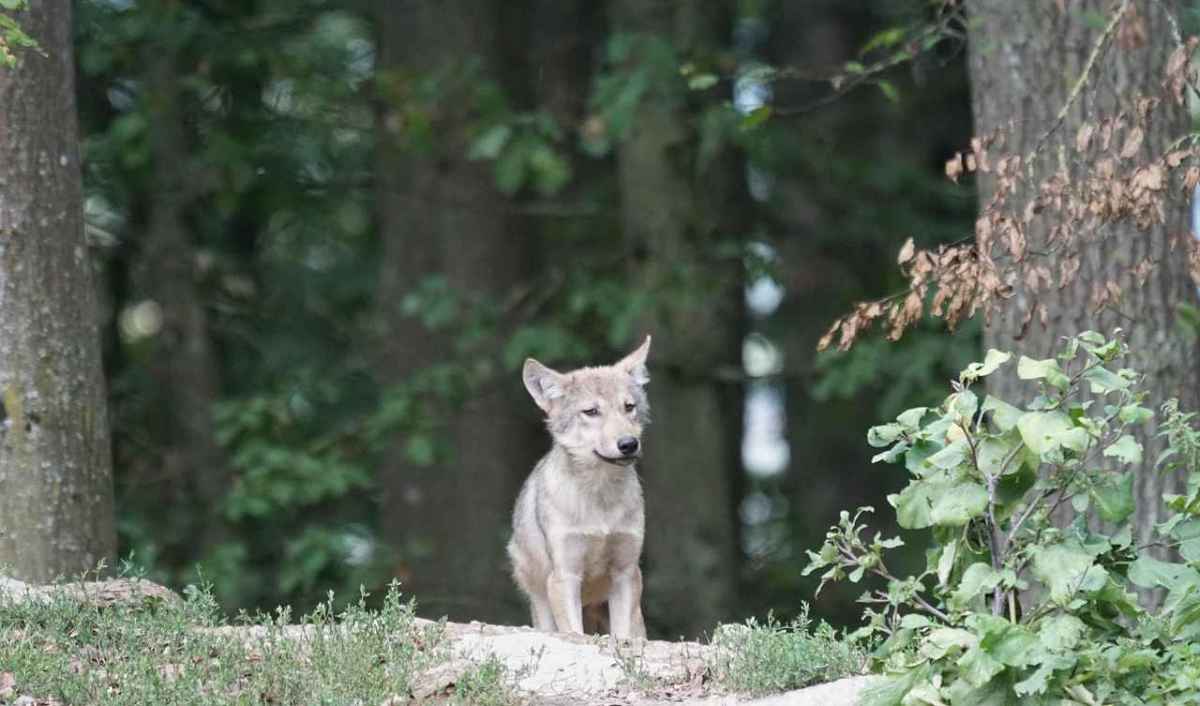
Two young wolves were killed in the Weisstannental. How much the enforcement cost the public purse still cannot be traced.
How high were the total costs for the order and enforcement of the kills in the Schilt pack? GLP cantonal councillor Franziska Cavelti Häller is asking this question for the second time and once again receives only partial figures.
A cost question without a complete answer
The wolf and politics: it remains a complicated relationship. In the past four years alone, more than a dozen motions on the topic were submitted in the St. Gallen cantonal parliament. Now another, actually simple enquiry has been added. Yet the St. Gallen government had already once failed to fully answer GLP cantonal councillor Franziska Cavelti Häller (Jonschwil) the question about the total costs.
In September 2025, two young wolves of the Schilt pack were killed in the Weisstannental under a cantonal kill order from the Office for Hunting and Nonsense . Despite the regulations carried out in recent years, the Switzerland-wide wolf population has continued to grow, as a «Tagesanzeiger» article from January 2026 shows. However, the long-term effects of repeated interventions on pack structure, reproduction and recolonisation cannot be derived from the development of the overall Swiss population alone.
In her enquiry, Cavelti Häller asked several questions about the canton's wolf strategy and about the costs of enforcing the regulation. A concrete answer from the government on the costs was not forthcoming. Cavelti Häller therefore followed up with a second motion.

For the two young wolves killed in the Schilt pack, the canton of St. Gallen has not provided a complete breakdown of costs. The cantonal councillor, however, does not want to give up.
«The originally posed question regarding the specific costs associated with the ruling and the execution of the kill of the two young wolves from the Schilt pack remains unanswered»
Franziska Cavelti Häller, GLP cantonal councillor
Government cites partial expenditure, but no total costs
In its response, the St. Gallen government provides no complete cost breakdown for the kill of the two young wolves. It merely quantifies the effort of the wildlife wardens: between the entry into force of the kill order and the killing of the animals, a total of 127 working hours were incurred in September 2025. This included outward and return journeys, field operations, transports, as well as the examination of the killed animals.
In addition, the government estimates roughly one working day per wolf each for the application and the kill order, as well as for instructing the hunting ground lessees. For the mandatory veterinary examination it cites 600 francs. Which hourly rate applies, what personnel and vehicle costs were incurred, and how high the total administrative expenditure was, however, remains open.
The government further explains that the costs of individual regulatory kills are not recorded systematically. This makes it impossible to trace either what the killing of the two young wolves cost in total, or to reliably compare the costs with other cantonal measures. The government considers comparisons with other cantons, such as Ticino, to be not meaningful.
What a wolf kill costs taxpayers across Switzerland
For the canton of St. Gallen itself, no reliable total figure can be derived from the known 127 working hours and the 600 francs for the veterinary examination. The canton discloses neither hourly rates nor further personnel, vehicle, administrative and material costs.
Other cantonal cases show, however, that the effort can be considerable. An in-house analysis by wildbeimwild.com based on publicly accessible cantonal figures arrives – depending on the cost items taken into account – at an average expenditure of around 35’000 francs per killed wolf. Comparability is limited, because cantons record and publish costs differently. In the In the canton of Uri, hunting a single wolf cost 43,500 francs according to figures published there. This individual case does not allow for extrapolation to St. Gallen, but it does show that individual operations can incur costs in the five-figure range.
Systematic lack of transparency
That an authority does not even systematically record its own enforcement costs fits a pattern that recurs at the St. Gallen hunting administration. How much the recreational hunting of predators costs taxpayers in total remains an open question across Switzerland, as an overview of the actual costs of the recreational hunting system also shows. As long as cantons such as St. Gallen do not disclose an overall accounting, every political debate about the sense and effectiveness of wolf regulation remains incomplete.
Dossier on the St. Gallen hunting administration:
- Dominik Thiel: wolf hunter at the state’s expense – an office director as a security risk for wildlife protection
- The psychology of hunting in the canton of St. Gallen
- Hunting season until New Year’s Eve: kill pressure instead of wildlife management
- Licence hunting as a solution to red deer conflicts?
- St. Gallen hunting administration: wolf management without science and without credibility
- The authorisation to kill a wolf in the canton of St. Gallen was unlawful
- Public stupefaction in the canton of St. Gallen
- The Office for Hunting and Nonsense in St. Gallen modernises hunting training
- St. Gallen wants to regulate the wolf pack at the Gamserrugg
- Controversy over Swiss official at the wolf hunt in Russia
- «Experts» in St. Gallen end wolf regulation for this winter
- The rotten apple in the St. Gallen hunting administration
- Lying hunter became department head in the canton of St. Gallen
- St. Gallen: stop the fox and badger massacre
- Are the FOEN and the hunting administrations still working seriously?
- How recreational hunter Simon Meier leads people onto the wrong track
More on the subject of recreational hunting: In our dossiers on the criticism of recreational hunting gather fact-checks, analyses and background reports. The scientific evidence is presented in the overview Studies on the Effects of Recreational Hunting.
The position of IG Wild beim Wild: IG Wild beim Wild rejects recreational hunting. Our model is the canton of Geneva, which has managed without recreational hunting since 1974: without hunting seasons, without hunting dogs, without driven hunts, without high seats, without the animal cruelty and crime that go hand in hand with hunting season elsewhere. What has worked there for over fifty years disproves every position paper by JagdSchweiz. An association that bases its policy on claims it refutes in its own documents is not a professional organisation, but a factory for misinformation.
Support our work
With your donation you help to protect animals and give their voice a hearing.
Donate now →