"I fired and immediately regretted it": in court, recreational hunting reveals itself as a sport
A young man stands weeping before the police court in the French department of Loire.

«Whoever Pulls the Trigger Once»
In his early twenties, an employee of a waterworks in Unieux.
In November 2024 he saw a wild boar step out of the undergrowth, reached for the rifle that, by his own account, he constantly carries in his car during the season, and pulled the trigger. "I shot and immediately regretted it," he told the judges, according to "Le Progrès". The case sounds like a one-off slip. In fact, it reveals something far more fundamental.
The association worries about "the reputation of its sport"
The newspaper "Le Progrès" reported on 24 May 2026 on a whole series of recreational hunters who had to answer in court for luring, poaching or the failure to tag game they had killed. What is remarkable is not the individual rule-breaking, but the reasoning with which the hunting association comes down hard on such cases: they damage "the reputation of their sport".
With this, the hunting community itself says what it otherwise goes to great lengths to deny. Anyone who speaks of their sport is pursuing a hobby. A hobby, however, does not justify any official mandate, any necessity, and certainly no service to the general public. It is leisure entertainment, nothing more.
"Fifteen foxes a year": the annual tally as a scoreboard
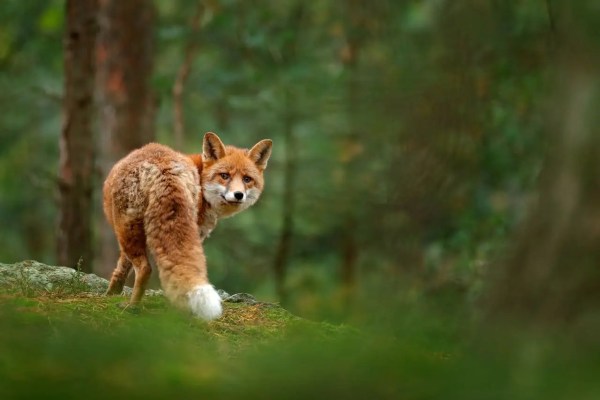
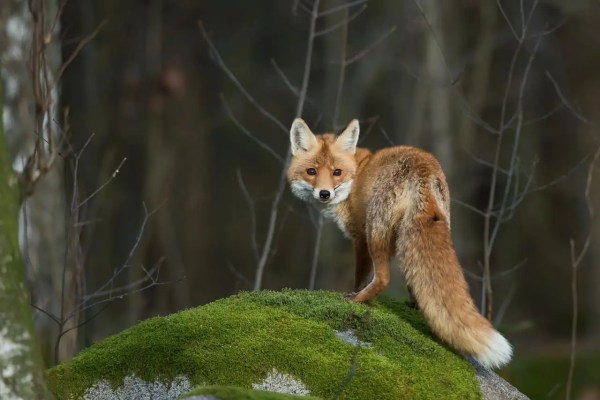
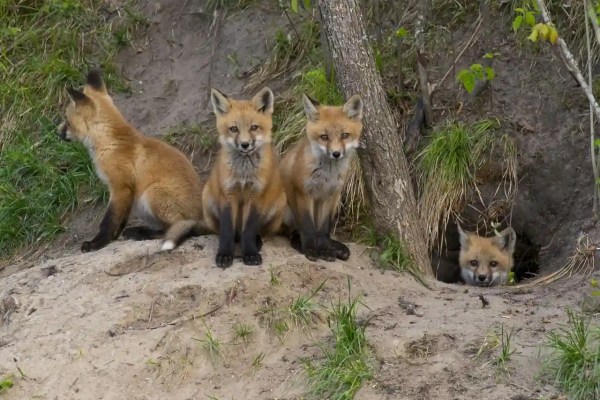
In the same coverage comes the sentence that gives the report its headline: "I do fifteen foxes a year." Anyone who counts the animals they have killed like a personal scoreboard is not describing ecological management. They are describing a leisure activity with a target, a kind of seasonal league table.
It is precisely at this point that the central protective claim of recreational hunting falls apart. As long as the killing is sold as a sober, unloved duty, the appearance of a public mandate can be maintained. But the moment a recreational hunter, in the courtroom, proudly or casually states their annual tally, that facade collapses. The current hunting law provides the matching framework, by declaring the fox open for killing all year round.
The myth of the public mandate
France delivers the textbook case on a grand scale. Between 600,000 and one million foxes are killed there year after year, the predator is officially classified as a "species capable of causing damage". A scientific basis is lacking: the French food and environmental agency ANSES already concluded in 2023 that no killing of foxes was justified on health grounds. The fox regulates mouse populations, keeps diseases in check and stabilises the balance. It is beneficial, not a pest.
Even the French Senate twists itself around an honest assessment, writing that hunting cannot be "reduced to a sport, nor to a leisure activity, nor to a regulatory task". This formula is the attempt to be everything at once and to have to prove none of it. The court cases from the Loire show how little of that remains in everyday life. The supposed mandate becomes a rifle in the boot, drawn at the first opportunity.
Poaching where "everyone knows" that poaching takes place
Pascal's crime scene is no coincidence. "Everyone knows that poaching takes place in this area", "Le Progrès" quotes the French Office for Biodiversity. The waterworks is known as wild boar territory, including among the employees, to whom the young man belongs. Where killing becomes an open secret, the line between legal recreational hunting and plain poaching blurs completely. Both follow the same logic: there is an animal, so it gets shot.
The impulse, not the necessity
"I didn't think, I reached for my rifle. I thought: I can do this." Pascal's own account is the most honest description of the mechanism that the psychology of hunting has long identified. It is the thrill of the hit, the human hunting instinct, the lust for the kill. It is not the cool reasoning of an agent steering a population on behalf of the authorities.
This very distinction is decisive. A public mandate is carried out soberly, in a controlled and transparent manner. A hobby thrives on impulse. Pascal's tears change nothing about that. They only confirm that no professional was at work here, carrying out a task, but a person who succumbed to temptation.
What remains
The report from the Loire department is therefore more valuable than a hundred debates. It is not animal welfare activists who claim here that recreational hunting is a sport. The hunting association itself calls it that when it fears for its reputation. And the recreational hunters themselves confirm it when they tally up their annual fox totals or shoot a wild boar simply because they happen to “manage” it.
An activity that draws its satisfaction from killing and that counts its hit rate deserves no protection as a public-interest service. It is what it is: a leisure pastime at the expense of wild animals. Anyone who has understood this views every demand for more kills and longer closed-season exemptions with different eyes. It is not about nature conservation, it is about preserving a hobby.
More on the subject of recreational hunting: In our dossiers on the criticism of recreational hunting gather fact-checks, analyses and background reports. What the research says about this is shown by Hunting fact-checked: the state of research.
The position of IG Wild beim Wild: IG Wild beim Wild rejects recreational hunting. Our model is the canton of Geneva, which has managed without recreational hunting since 1974: without hunting seasons, without hunting dogs, without driven hunts, without high seats, without the animal cruelty and crime that go hand in hand with hunting season elsewhere. What has worked there for over fifty years disproves every position paper by JagdSchweiz. An association that bases its policy on claims it refutes in its own documents is not a professional organisation, but a factory for misinformation.