Recreational hunters abuse the heritage of humanity
There is no such thing as game damage, only hunting damage. Animal welfare and nature conservation mean doing away with recreational hunting altogether.
Recreational hunters like to see themselves, absurdly, as protectors of animals, nature and species.
These recreational hunters tell the public about their understanding of nature, according to which self-regulation no longer works in our cultivated landscape and the good recreational hunter has to take over the role of the extinct predators (lynx, wolf, birds of prey, etc.) and regulate wild animals in order to protect nature. Yet no animal species has ever wiped out another — unlike recreational hunters.
But are recreational hunters really the heroes of nature they claim to be? Is this understanding of nature not based far more on assumptions that have been recognised as wrong by experts for many years? Should nature, with its various wild animals, not rather be protected from recreational hunters and their bogus arguments and base motives? It has long been scientifically proven that recreational hunting and hunters' tall tales are enemy number two of biodiversity, after industrial agriculture.
Modern findings in ecology and wildlife biology show that the population density of wild animals also regulates itself dynamically on the basis of food availability, territoriality, climate, disease, resources as well as social and physiological factors, and so on, without human intervention — provided it is not shot to pieces! Hunting pressure, improper hunting practice and other factors, by contrast, increase the reproduction rate of the animal populations concerned, something that can be observed not only in wild boars, foxes, roe deer, red deer and pigeons, but in every species (species preservation, survival instinct, compensatory birth rates, etc.).
Recreational hunters cause far more damage than the animals they chase after. Do recreational hunters not therefore impose a brutal yoke upon wild animals?
The umbrella organisation of recreational hunters in Switzerland wrote on 29 August 2011: «JagdSchweiz knows that wildlife populations would in principle regulate themselves – even in our cultivated landscape.»
Nevertheless, these friends of animal cruelty remain unimpressed by ordinary wildlife-biology findings, ecology, animal welfare and ethical conduct.
Practically everything that is contrary to animal welfare, cruel, unnecessary and heartless counts as proper hunting practice.
IG Wild beim Wild
Recreational hunters are like a plague upon the animal world and regularly produce mass killing under the guise of nature, species and animal protection. With the recreational hunter, wild animals have no right to be old, young, injured or sick and to recover again. With the recreational hunter there is no right to life and evolution. On closer analysis, hunting has little to do with nature and animal protection.
Why are animal species whose populations are endangered and which appear on the red list hunted? What is the point here of the supposedly urgently necessary regulation of species populations for the protection of nature and species?
Why do recreational hunters often shoot precisely those animals which animal and nature conservationists try to promote and protect through great voluntary commitment and expense?
Why does the hunters' supposed «husbandry» focus predominantly on wild animals of interest to hunting? Rare bird species and predators are hardly ever promoted by recreational hunters, but they are readily shot and poached.
There are several thousand animal species. Why do supposedly just a few animal species require «regulation», and mainly those which are of interest to recreational hunters (trophies, game meat, fun factor, competitor), and which are manipulated and cultivated?
How can it be that recreational hunters are allowed to inflict unnecessary suffering and pain on wild animals, something which under the applicable animal welfare act is prohibited in any other context and can even be punished with prison sentences?
One of the consequences of the shameful goings-on of recreational hunters is that wild animals have by now become so shy that one hardly ever gets to see them.
Today's recreational hunters are not real hunters (hunting for the necessary, vital procurement of food and tools), but organised eccentrics, often from a milieu of cronyism and nepotism. Underhand types who roam the countryside killing deliberately with state-of-the-art technology. Modern recreational hunting has nothing to do with the skill and courage that define a traditional hunter.
When the exercise of hunting undermines animal and nature protection to such an extent, when animals are subjected to considerable suffering and pain (earth hunting, trap hunting, wait hunting, special hunt, bird hunting, trophy hunting, hunting for fun, etc.), then this hobby has long since ceased to have any place in a civilised society close to nature.
Today's hunting destroys the normal social coexistence of wild animals, the ecological balance, their natural behaviour, family structures and social groupings, the use of burrows and hiding places; it causes a shift from daytime to night-time activity, increased migration into unhunted settlement areas, unnatural concentrations of animals in the forests, and so on.
National parks, Holland, large parts of Belgium, hunt-free islands and many areas with a hunting ban such as Geneva show that nature and wild animals regulate themselves far better, thanks to a variety of factors, than they do with hunters.
In no other canton in Switzerland, for example, has such strong biodiversity developed in so short a time as in the canton of Geneva, and there a hunting ban for recreational hunters has been in place since 1974. Why is it that wherever recreational hunters are not wanted, the problem of extreme over- or under-population does not arise?
Is it not recreational hunting that drives wild animals into the forests in the first place? Hunting makes wild animals shy. Roe deer and red deer, for example, are normally active during the day and can be seen quite trustingly in the meadows in unhunted areas, just like other grazing animals, sheep, goats and cows. It is only because of hunting pressure that roe deer and red deer often come into contact with young trees at all, on which they then cause bark-stripping and browsing damage. Yet the more damage occurs, the louder the calls for more intensive hunting. The interplay of hunting and game management thus creates a vicious circle.
Today, modern wildlife biology and science explain, on the basis of experience and case studies, that hunting pressure can actually increase wildlife populations, because the remaining wild animals simply increase their birth rate. The regulation of wildlife populations does not come about through hunting. Hunting is therefore not the solution, but rather also the cause of the alleged problems. If overpopulation threatens a biotope, the birth rate is lowered. If many cloven-hoofed animals are killed in an area by hunting in the autumn, those that remain have a better food supply. Wild animals that survive the winter in good condition reproduce earlier and in greater numbers in the spring. The unnatural problems and surplus populations are, in particular, home-made by the recreational hunters, so that the recreational hunters can then assign themselves a supposedly statutory mandate.
Wild animals are not clay pigeons. Nor is it necessarily the case that unhunted wild animals cause greater damage, as can be seen perfectly clearly in hunting-free areas. On the contrary! In this context it is also cynical and self-serving to speak of damage. Wild animals such as roe deer and red deer do not overeat; they simply take in vegan food, often precisely where the recreational hunters park them. No group of wild animals has a more miserable ecological footprint, wastes more resources and so on than the recreational hunters, foresters or indeed farmers. Recreational hunting does not regulate in line with the natural abundance of wildlife populations, but instead creates inflated or suppressed populations.
Hunting is always also a form of war, one that brings out only the negative qualities in human beings.
In the red deer factory of Grisons in Switzerland alone, hundreds of charges for breaches of hunting legislation and fixed penalty fines are issued every year. Practically every fifth recreational hunter is an offender, with a large number of unreported cases in the annual ebb and flow. At present, 2 popular initiatives have been launched against the hunting unculture in Grisons.
Grisons, with its hunting administration and hunting pressure, is traditionally not a good example of ethical wildlife management. This Alpine canton (7,105 km2) is far smaller in area than the Alpine cantons of Bern, Valais, Ticino and Uri combined (15,072 km2), and yet, proportionally, Grisons shows ever-increasing kill figures for red deer and roe deer, ever-growing populations and alleged problems with wild animals, as well as ever more recreational hunters — all as a result of misguided hunting practices. In 1970 the roe deer population in Grisons still stood at 4,300 animals, whereas today it is around 15,500. For red deer the figure has likewise grown from 9,000 to more than 15,000. Many red deer are migratory animals from the surrounding areas and do not actually belong to the Grisons recreational hunters, but just as much to the non-hunting population. Every year some 6,000 hunters slaughter around 22,500 wild animals during the high hunt and the low hunt. About 1,000 times a follow-up search is required, of which only around half are successful. The game meat usually ends up in the recreational hunters' freezers.
More hunting does not mean fewer wild animals, but more births. Birth control is also an effective and sustainable solution in the case of an actual overpopulation. Successes in this respect can be observed in countries dealing with the problem of street dogs in Europe, for example. In Switzerland, too, this problem is normally solved in this way. Even today, 10,000 stray cats a year are neutered by animal welfare activists in Switzerland and, in the event of illness, given medical care as well — which is the only solution that does justice to the animals! In other areas, roe deer and red deer populations are regulated in certain regions by means of a birth control vaccine, and in other European countries wild boars are managed the same way. The same happens today in animal parks or zoos! Shooting unnatural populations of living creatures back into shape every year for the pleasure of hunting is simply barbaric!
Hunting has failed. For decades recreational hunters have been trying to regulate wildlife populations sustainably, something they have to this day not managed to achieve in a civilised manner. The only thing that is sustainable is the ever more brutal shooting. There are certain things that should not be tolerated in a civilised country.
The hunting community bears part of the responsibility for the many wildlife accidents. Across Switzerland, a car collides with a roe deer on average every hour. This results in 20,000 animals being involved in road accidents each year. Some 60 people are injured and property damage amounts to 25 million francs. The hunting community causes far more damage than the game the recreational hunters pursue. Hunters cause personal injury (around 300 hunting accidents per year in Switzerland), environmental damage, property damage, damage to species and so on, all of which far exceeds the average 2% of browsing damage caused by wildlife to plants or timber yields in Switzerland. Credible friends of nature, animals and species do not need weapons in order to nurture and care for them.
Hunting is under criticism. It is ethically questionable and, in the view of eminent researchers, also ecologically and economically counterproductive — indeed harmful, IG Wild beim Wild concludes.
Recreational hunting is cruelty to animals and immorality. It is not for nothing that renowned animal welfare organisations regularly make great efforts to put a stop to the barbarities of the dark world of recreational hunting.
Natural disaster: the recreational hunter
In the chaos in which nature finds itself after decades of nurturing and care by hobby hunters, the proportion of endangered species is greater in Switzerland than in any other country in the world. For decades these contract killers have been creating an ecological imbalance in the cultivated landscape, with sometimes dramatic consequences (protective forests, diseases, agricultural damage and much more). More than a third of plant, wild animal and fungus species are considered endangered. Switzerland also comes bottom in Europe when it comes to designating protected areas for biodiversity. And it is precisely these circles of recreational hunters, with their lobbying, who have been responsible for this through politics, the media and legislation for decades. It is they who notoriously block modern, ethical improvements in animal welfare and sabotage serious animal and species protection. Recreational hunters regularly oppose more national parks in Switzerland, because for them it is not about nature, biodiversity and species conservation or animal welfare, but about indulging their perverse, bloody hobby.
Did you know …
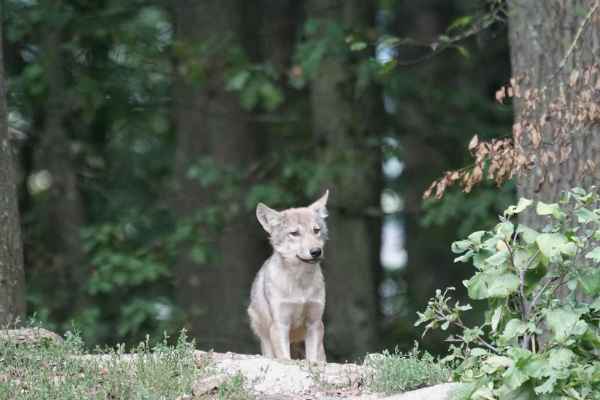
- that in Switzerland innocent young wolves are being liquidated?
- that recreational hunters, in the Assessment of game meat quality are lying and that processed game meat is, according to the WHO, carcinogenic like cigarettes, asbestos or arsenic?
- that, according to a study, nowhere is the lead contamination of golden eagles and bearded vultures higher than in the Swiss Alps, because of recreational hunters' ammunition?
- that the sporting ethics of recreational hunters diametrically contradict the Animal Welfare Act and are a mirage?
- that hunting is war, where animal competitors are simply liquidated?
- that there are countless illegal and unmarked high seats out in our countryside, some of them so rotten that they pose a danger to children and people can be killed?
- that year after year countless people are killed or injured by hunters' weapons, some so severely that they end up in a wheelchair or have limbs amputated?
- that in Switzerland around 120,000 completely healthy roe deer, red deer, foxes, marmots and chamois are killed every year, mostly pointlessly?
- that because of recreational hunters it is now barely possible to live in harmony with wild animals or even to see wild animals?
- that loads of shot make hares scream like small children and tear apart the innards of “shot” roe deer and red deer, so that as they flee they leave traces for the follow-up search?
- that the claim made by recreational hunters that the cruel massacres of wild animals are necessary in order to regulate animal populations has been scientifically refuted?
- that recreational hunters openly admit that hunting is about the “lust for killing” and “the joy of taking prey” – a pathological passion?
- that recreational hunters have no sixth sense, yet regularly claim that they only shoot sick and weak animals, which of course is not true in practice?
- that recreational hunters travel abroad for trophy hunting, far from any species protection and hunting protection rules, and that there are even Swiss recreational hunting tour operators for such moronic hunting pleasures?
- that the overwhelming majority are not legitimate professional hunters, but pursue hunting as a hobby, a sport and a leisure amusement, which is not ethical and actually contradicts the Animal Welfare Act?
- that 99.07 % of civilised people in Switzerland are not recreational hunters, meaning only 0.3 % – the recreational hunters – take pleasure in these bloody activities?
- that these killers of wild animals do not hunt on the basis of scientific justifications?
- that protected species actually have no place in hunting law, because recreational hunters are out of their depth with species conservation and repeatedly shoot Red List animals such as lynx, wolf, brown hare, grey partridge, quail, etc., for fun?
- that recreational hunters deliberately decimate certain animal species so as to have no competition for their unnatural behaviour (fox, lynx, wolf, birds of prey, etc.)?
- that game dies before the recreational hunter can fire even a single shot, that this must be prevented, and that this is probably the central idea behind game management and care as well as hunting planning?
- that among wild boars (and foxes) normally only the lead sow has young, but that because she is shot all the female animals within the sounder reproduce, which is another reason why we have a glut of wild boars?
- that grazing animals – red deer, roe deer, etc. – originally lived mainly by day on fields and meadows, like goats, sheep, cows, etc., and not in the forest?
- that the wolf is vital in the long term for keeping wild ungulates healthy, because it preys on sick or weak animals with incredible precision, for example, and is thereby far superior to recreational hunters?
- that foxes usually end up in the rubbish after the pointless hunt?
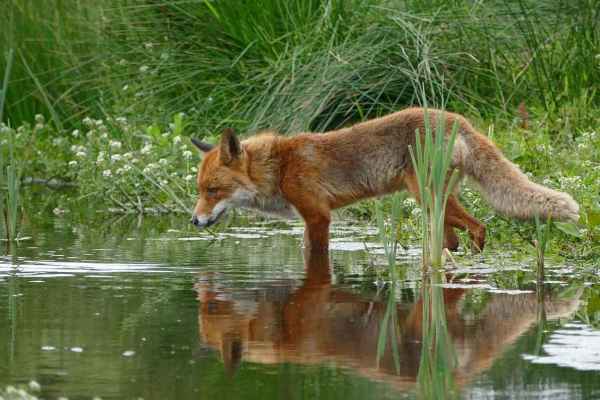
- that foxes today are hunted mainly so that there are more hares, etc., in the frying pan for recreational hunters? That the fox, however, does not feed on hares in over 90 % of cases and never catches a healthy hare?
- that in animal welfare one cannot tackle recreational hunters with gentleness, street festivals, prayer chains, etc., alone (a rough wedge is needed for a rough log)?
- that recreational hunters, with their hunters' yarns, engage in a disrespectful mockery of living creatures?
- that it is frowned upon to shoot big game at feeding sites or during the mating season, yet the recreational hunter has no scruples about doing exactly that to the fox, their competitor for prey?
- that in some cantons recreational hunters go hunting purely for the tender meat of a young animal?
- that recreational hunters shoot pregnant mother cows in front of their young, or only young animals during the rearing period (post-special hunt)?
- that recreational hunters poison the environment, nature, humans and animals with their ammunition?
- that bestiality, barbarity, cruelty, bloodshed and pointless suffering cannot be cultural heritage in a civilised society?
- that recreational hunters shoot around 10’000 roe deer fawns every year?
- that recreational hunters, in the harsh winter, lure starving animals with food only to be able to shoot them treacherously and cowardly?
- that recreational hunters send aggressive dogs into burrows to eliminate foxes and badgers (earth hunting)?
- that recreational hunters lure peaceful creatures into box traps, in which they may suffer for days on end waiting for their killer, or often subject the animals to hours of agony (trap hunting)?
- that recreational hunters cowardly murder or injure peaceful wild animals from ambush with state-of-the-art precision weapons while they sleep or bask in the sun?
- that recreational hunters support awards, fur markets, prize-givings for the trophy cult, trophy shows, the fur trade, and so on?
- that recreational hunters press firearms into the hands of underage schoolchildren and practise killing with them?
- that recreational hunters often carry out their agonising deeds in solitude, which encourages cruelty to animals?
- that recreational hunters merely severely injure many wild animals and that the victims often suffer for hours in enormous agony and fear until a tracking dog finds them and they are shot?
- that recreational hunters (apart from vivisection) inflict the most suffering and abuse on animals, not least through the manner of killing?
- that the hunters' love of animals and nature does not delight in the existence of the beloved object, but rather aims to possess the beloved creature hide and hair, culminating in turning it into prey through the act of killing?
- that recreational hunters positively encourage browsing damage through hunting pressure, especially on predators such as fox, lynx and wolf?
- that recreational hunters open the floodgates to antisocial, unethical and unchristian behaviour?
- that recreational hunters deprive the public of normal, natural observations of animals and their interactions?
- that there is no greater product of suffering, and none more contaminated with ammunition, than game meat?
- that there is no uniform regulation across Switzerland regarding eye tests, shooting practice and the like for recreational hunters?
- that there is no psychological aptitude test for recreational hunters?
- that there is no ban on alcohol for recreational hunters when they shoot at animals with their weapons?
- that recreational hunters push their way into school institutions in order to talk their tall hunting tales and their violence into children?
- that a court in Bellinzona recently confirmed that hunting associations promote practically everything that is cruel, unnecessary and heartless?
- that the association «Jagd Schweiz» primarily cultivates disrespect and a culture of violence – exactly the opposite of what a civilised person in our society should strive for.
- that in the canton of Grisons alone more than 1,000 charges and fines are issued against recreational hunters every year?
More on the subject of recreational hunting: In our dossiers on the criticism of recreational hunting gather fact-checks, analyses and background reports. The scientific evidence is presented in the overview Studies on the Effects of Recreational Hunting.
The position of IG Wild beim Wild: IG Wild beim Wild rejects recreational hunting. Our model is the canton of Geneva, which has managed without recreational hunting since 1974: without hunting seasons, without hunting dogs, without driven hunts, without high seats, without the animal cruelty and crime that go hand in hand with hunting season elsewhere. What has worked there for over fifty years disproves every position paper by JagdSchweiz. An association that bases its policy on claims it refutes in its own documents is not a professional organisation, but a factory for misinformation.

All contributions are written by IG Wild beim Wild as well as by external co-authors. Research, structuring and editorial processes may be supported by AI-assisted tools.
Support our work
With your donation you help to protect animals and give their voice a hearing.
Donate now →