Sweden's wolf model fails in court – a warning signal for Rösti and Regazzi
A court ruling and criticism from Brussels are putting Sweden under pressure to revise the reference value for a favourable conservation status of the wolf. This makes licence hunting more difficult. For Switzerland this is explosive: of all the models, it is precisely this one that Councillor of States Fabio Regazzi is promoting as a template for a wolf population cap and controlled hobby hunting.

Sweden should not be a role model for Switzerland, but a warning.
For years, the country has been trying to keep its small and genetically compromised wolf population down using politically defined target figures. Now a court ruling and criticism from the EU Commission show: anyone who wants to have wolves killed regularly cannot simply invoke a desired residual number. The favourable conservation status must be scientifically substantiated.
It is precisely this realisation that hits a Swiss politician who has expressly declared Sweden to be a model: Centre party Councillor of States Fabio Regazzi from Ticino. He demands a fixed cap on the number of wolves for Switzerland and wants to have “surplus” animals removed through controlled hunting. His template is, of all countries, Sweden – the very country whose wolf hunt is now becoming increasingly difficult due to inadequate legal and scientific foundations.
Sweden must revise the reference value
Following criticism from the EU Commission, Sweden has raised its reference value for the favourable conservation status of the wolf from 170 to 220 animals. Previously the value had been lowered from 300 to 170 wolves. The Commission doubted that this drastic reduction was sufficiently scientifically justified and would secure the long-term survival of the population.
The favourable conservation status is not a politically desirable target value under European nature conservation law. It is meant to ensure that a species remains viable in the long term, that its range does not shrink and that sufficient suitable habitat is available. An authority therefore cannot declare the wolf secure solely on the basis of a politically desired residual number.
Sweden thereby illustrates the difference between scientifically grounded species protection and a policy of population minimisation. What matters is population development, genetic diversity, connectivity, natural and human-caused mortality, as well as the consequences of additional kills — not the question of how many animals should be politically tolerated.
| Species protection | Political population minimisation |
|---|---|
| Asks what a population needs in the long term | Asks how many animals should be politically tolerated |
| Takes genetics, connectivity and mortality into account | Reduces the wolf to a target number |
| Requires comprehensible scientific foundations | Relies on interests, conflict narratives and hunting quotas |
| Sees kills as a narrowly limited exception | Makes kills an instrument of population management |
Such a number is not a conservation concept. It is a political decision about a residual population.
Court halts the licence hunt
The licence hunt planned for 2 January 2026 targeting up to 48 wolves in five Swedish regions was already halted in December 2025 by administrative courts. In January 2026, the Court of Appeal in Sundsvall confirmed this line for Västmanland. It held that a sufficient scientific basis was lacking to justify the licence hunt at the intended low population levels.
The ruling clarifies a central principle: it is not environmental organisations that must prove a hunt could be harmful. Authorities that authorise kills must demonstrate comprehensibly that the favourable conservation status of the population is not thereby impaired.
From damage prevention to a hunting opportunity
Swedish practice also shows something else: as soon as the wolf is treated as an administrative quantity available for hunting, the focus quickly shifts from effective herd protection to a hunting opportunity.
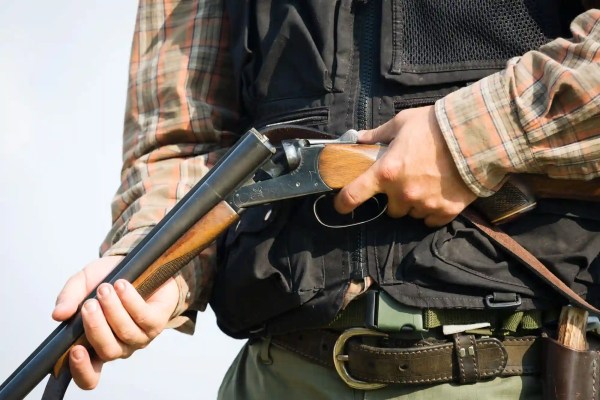
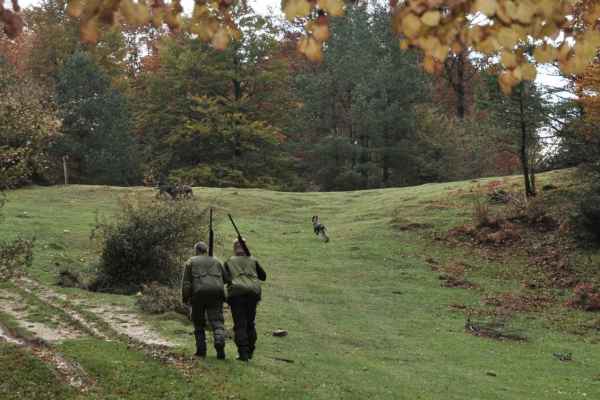
In Scania, in southern Sweden, an authority authorised a protective hunt after an attack on a ram and a pony presumably caused by the same wolf. Within three hours, 53 hobby hunters, in order to take part in the killing of a single wolf.
This is not a factual answer to a conflict. Herd protection should have been at the centre: secure fences, shepherding, night pens, rapid support for livestock keepers and a targeted assessment of the specific incident. Instead, protective hunting became a sought-after leisure opportunity.
The reaction of the hunting community makes visible the dynamic that a policy of kill authorisations creates. A single wolf is no longer viewed primarily as an animal in a specific conflict, but as a rare hunting opportunity.
The Swedish hunting lobby, too, is working to restrict public oversight. The president of the hunting association Jägarnas Riksförbund, in an editorial, described people who use the principle of public access to obtain information about hobby hunters and livestock keepers as «animal rights terrorists». The direction is clear: kills should take place, but data on permits, participants and consequences should be less easy to scrutinise.
Species protection without transparency is not oversight. It is administration in the interest of those who profit from hunting.
Fabio Regazzi wants to import this logic
For years, Fabio Regazzi has represented a line in Switzerland that, when it comes to the wolf, does not rely on case-by-case assessment, herd protection and a strict burden of proof, but on politically determined upper limits and simplified removals. He is a Council of States member for the Centre party in Ticino, vice-president of JagdSchweiz, president of the Swiss Trade Association and himself a hobby hunter.
As early as 2022, Regazzi contrasted the Swiss wolf population with the Swedish model. At the time, he referred to the Swedish government's intention to reduce an estimated population of 460 wolves to between 170 and a maximum of 270 animals. Applied to Switzerland, according to Regazzi, wolf populations should in his view be limited to 17 to 27 animals.
This comparison is problematic both in technical and political terms.
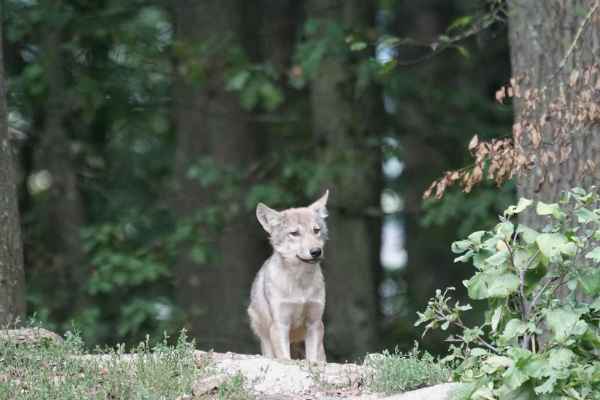
Sweden is almost eleven times the size of Switzerland, yet it does not possess a huge, genetically secure wolf population. On the contrary: the Scandinavian wolves are isolated, weakened in their genetic diversity and threatened by illegal killings. That Sweden, despite this situation, is planning a radical reduction of its population is no argument for adopting this approach. It is precisely the reason why courts and the EU Commission must look more closely.
Regazzi takes only the number from the Swedish example: a population that is as small as possible. What he ignores are the preconditions and consequences:
- The target range of 170 to 270 wolves is legally and biologically contested.
- The licence hunt of up to 48 wolves was blocked by the courts in 2026.
- The authorities were unable to adequately demonstrate the protection of the population.
- The Swedish-Norwegian wolf population is genetically heavily burdened.
- Legal hunting does not automatically increase acceptance of the wolf.
- Illegal killings remain one of the greatest threats to the population.
The central flaw in his argument is simple: a political wish figure is turned into a supposed biological necessity.
An upper limit is not species protection
Regazzi's current proposal seeks a change of system. In Switzerland, only a certain number of wolves would be tolerated. If this politically fixed limit is exceeded, animals would be deemed «surplus» and could be removed.
This reverses the very purpose of species protection.
Until now, in the case of a concrete intervention, it must fundamentally be examined whether damage exists, whether prevention is possible and reasonable, whether alternatives exist and whether a removal would not endanger the population. A blanket upper limit replaces this examination with statistics: it would no longer be the behaviour of a particular wolf or pack that is decisive, but the question of whether its mere existence lies above a target number.
This is particularly worrying because the Federal Council recommends the adoption of Regazzi's motion. According to Regazzi, this support surprised even him.
This threatens a development that Sweden is already demonstrating:
- A politically defined upper limit is introduced.
- From the upper limit arise kill quotas.
- From the quotas arises an administrative mandate to reduce the population.
- From the reduction arises a hunting offer.
- The scientific justification remains full of gaps.
- Courts have to intervene because the species protection obligations are not fulfilled.
Switzerland should not wait until it has to have the same path corrected in court.
Switzerland is under international observation
The Swedish development is also relevant for Switzerland: the country's wolf policy has long provoked international criticism. On 28 November 2023, 158 environmental and animal welfare organisations from 37 countries called on Federal Councillor Albert Rösti in an open letter to halt the preventive kill of up to 70 per cent of the Swiss wolf population that was planned at the time.
They warned of consequences not only for Swiss wolves, but also for the interconnected populations of the western and central Alps as well as the Jura. Particularly criticised were the potential kills of entire packs and of young wolves.
Experts also opposed this course. The chairs of the IUCN SSC Canid Specialist Group described the wolf management plan of the time as «unscientific» and incompatible with modern insights into large predator management. FERUS stated that there was no evidence that wolf kills effectively protected herds; what mattered were preventive herd protection measures.
Sweden now shows where a policy of politically fixed residual populations can lead: to questionable reference values, licence hunts and court-ordered stops when the scientific and legal evidence for interventions is lacking. Switzerland should therefore not rely on arbitrary upper limits and kill quotas, but rather fund herd protection, investigate conflicts transparently and treat the Alpine and Jura population as a single interconnected protected asset.
Criticism of Rösti grows
Criticism of Albert Rösti is not confined to wolf policy. Resistance to his environmental and climate policy course is also growing in the Federal Palace. The Greens are demanding that the DETEC be taken away from him; their call for an urgent debate on heat and drought is, according to Blick, supported by parties from the SP to the GLP.
This criticism does not directly concern wolf kills, but points to a political conflict: Rösti is accused of subordinating ecological risks to short-term interests. In wolf policy, according to his critics, this is reflected in the fact that prevention, scientific justifications, population protection and international obligations take a back seat to kill quotas and hunting policy demands.
What Switzerland needs instead
Coexistence with the wolf requires an honest and effective policy. It must not ignore the concerns of livestock keepers. Livestock kills cause suffering and can be devastating for farms. Yet the answer must start where conflicts are actually prevented – not with the populist notion that a wild animal species can be made “manageable” with an arbitrary maximum number.
What is needed:
- Fully funded, practical herd protection for all affected farms.
- Rapid and independent assessment of damage and incidents.
- Targeted, tightly limited interventions in the case of demonstrably problematic individual wolves or packs.
- Disclosure of all underlying data, kill permits, genetic data and evaluations.
- Protection of genetic connectivity and natural migration corridors.
- A clear separation between professional wildlife management and recreational hunting.
Sweden shows where the other path leads: to a government planning the reduction of a protected species; to hunting quotas instead of protection strategies; to hobby hunters applying by the dozen to kill a single wolf; and, ultimately, to courts having to remind the authorities of their own burden of proof.
Sweden is not a role model
Fabio Regazzi wants to make the Swedish wolf model usable for Switzerland. Yet right now the narrative of the successful Nordic model is falling apart. The higher reference value for a favourable conservation status and the judicial halt to licensed hunting show: a small wolf population cannot be regulated downwards at will, simply because politicians and the hunting lobby wish it.
The lesson for Switzerland is not to copy the Swedish target figures. The lesson is: Species protection is not an upper limit. Anyone demanding kills must prove that they are necessary, proportionate and harmless to the population. As long as this proof is lacking, every demand for “surplus” wolves remains what it is: a political licence to minimise the population.
LET'S STAY IN TOUCH!
We would like to send you the latest news and offers in our newsletter.

All articles are written by IG Wild beim Wild as well as external co-authors. Research, structuring and editorial processes may be supported by AI-assisted tools.
Support our work
With your donation you help protect animals and give a voice to those who have none.
Donate now →