Greenwashing of recreational hunting: Italian magazine draws on WBW analysis
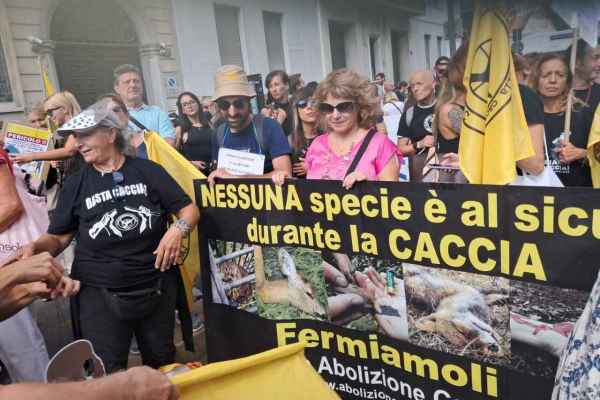
In «Il Tascabile», the naturalist Roberto Inchingolo examines how Italy's hunting associations present themselves as guardians of biodiversity, and points to considerable gaps in the research: a blanket benefit of recreational hunting for biodiversity cannot be derived from more than 1,000 studies. As counter-examples he draws on the IG Wild beim Wild analysis of ten protected areas without recreational hunting.
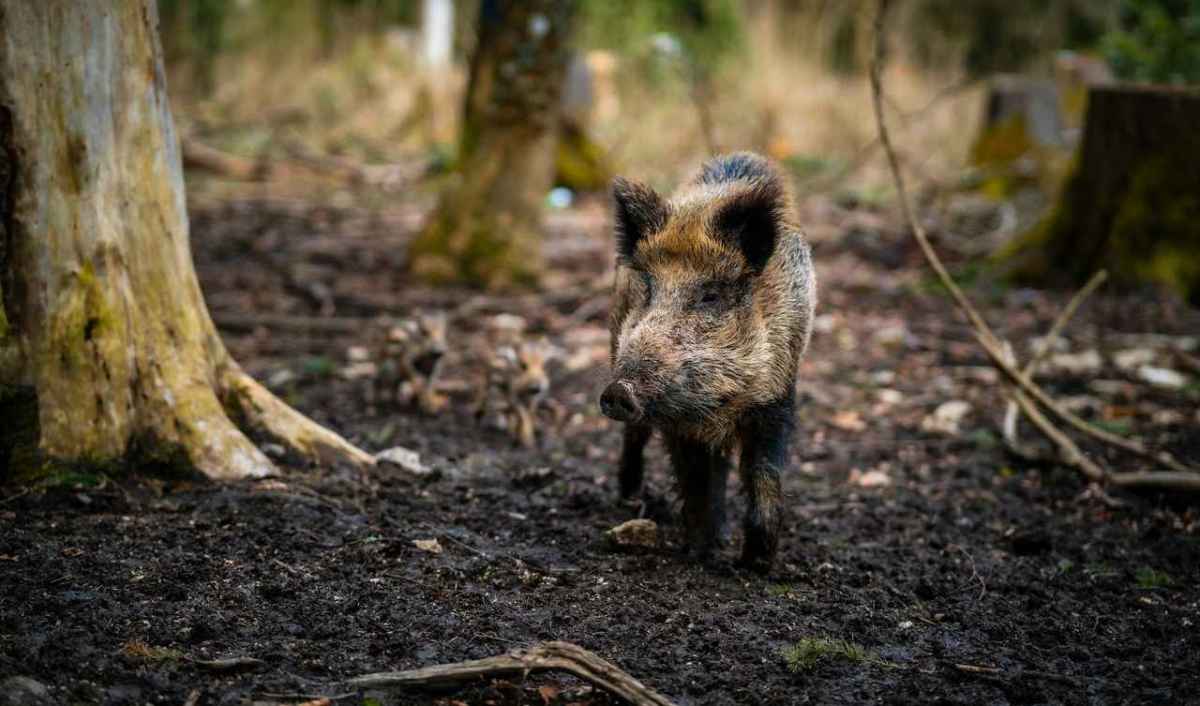
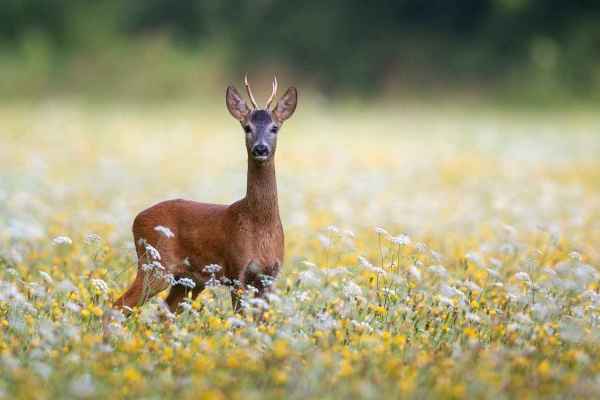
Photo: Patrick Pahlke / Unsplash
hunters' tall tales
The Italian cultural magazine Il Tascabile published an essay on 2 November 2026 by the naturalist and science journalist Roberto Inchingolo, which the mountain sports blog GognaBlog republished on 7 November. Title: «Il greenwashing della caccia», the greenwashing of hunting. Inchingolo examines how Italian hunting associations have for years been adopting a green vocabulary, and checks whether science supports the claimed benefit for nature. As counter-examples to the recreational hunters' blanket doomsday scenarios, he cites ten protected areas without recreational hunting in Switzerland, Germany, Austria and Italy that IG Wild beim Wild has analysed.
From hunter to «bioregolatore»
The occasion is the reform of the Italian hunting act 157/1992, which the Senate has passed as Bill 1552 and on which the Chamber of Deputies is due to vote on 27 November should vote on. Inchingolo is less interested in the list of relaxations than in a single sentence in the purpose article: hunting “contributes to the protection of biodiversity and the ecosystem”. This, he argues, turns the recreational hunter into a “bioregolatore”, a bioregulator. The term comes from a register that admits recreational hunters, after a hygiene course, to shoot wild boars in areas affected by African swine fever. In the law, this becomes a reinterpretation of recreational hunting as a whole: killing for pleasure is conceptually put on a par with official wildlife management.
This language, he says, is no brainwave of the legislators but has been prepared for years. Inchingolo quotes the president of Federcaccia, Massimo Buconi, who in 2024 described recreational hunters as “true guardians of biodiversity”; the Fondazione UNA, which in 2017 called for the image of the hunter-gatherer to be replaced by that of a guardian of the natural balance; and the Associazione Italiana per la Wilderness, which promotes an “ambientalismo venatorio” and invokes Aldo Leopold in doing so. The governor of Trentino, Maurizio Fugatti, praised recreational hunters this year as guardians of the mountains, at an event with over 1,000 trophies of roe deer, red deer, chamois and mouflon on display.
According to Inchingolo, solid interests lie behind the green veneer. In 2023, Federcaccia itself submitted to the Senate a Nomisma report putting the hunting sector in Italy at around 8.5 billion euros in annual turnover and more than 88,000 jobs, mainly weapons, ammunition, accessories and hunting dogs. Anyone presenting such figures, Inchingolo says, is a lobby and not a neutral conservationist.
Over 1,000 studies, but no free pass for recreational hunting
The core of the essay is the question of whether recreational hunting demonstrably benefits biodiversity at all. Inchingolo concludes that the research mainly shows one thing: gaps. There is a lack of large-scale long-term studies comparing hunted and unhunted areas, and the existing databases are barely comparable. He points to three review papers: an analysis of 26 studies with contradictory results, a review by the James Hutton Institute on bird hunting with a similar finding, and a comprehensive review, Di Minin et al. (2021) in the journal One Earth. It evaluates more than 1,000 peer-reviewed studies from 1953 to 2020 and concludes that the evidence is lacking to answer where and how recreational hunting contributes to fair and sustainable nature conservation.
The study is now also listed on our page Hunting Fact Check. What matters is reading it precisely: the review establishes neither a general harm nor a general benefit of recreational hunting. It also reports positive findings, such as habitat management for small game in agricultural landscapes. However, no benefit for biodiversity that is independent of species, habitat and management can be derived from this. The sweeping attribution in the purpose article of the Italian bill goes beyond this nuanced state of research.
What happens without recreational hunters?
The counter-test is provided by Inchingolo with the WBW analysis. Since Costa Rica has abolished recreational hunting entirely and is not ecologically comparable with Italy, he argues that European protected areas must be examined. He summarises the ten areas, covering roughly 2,600 square kilometres, in which only official interventions are permitted, and explicitly describes the findings as fragmentary: in the Swiss National Park, free of hunting since 1914, red deer and chamois populations keep themselves in balance through harsh winters and density-dependent factors; in the Kalkalpen National Park, the forest regenerates better than in comparable hunted areas; in the Bavarian Forest, lynx and wolf have resumed their role; in the Hainich, near-complete absence of hunting coincides with one of the highest wildcat densities in Europe. His conclusion: the absence of recreational hunting does not necessarily lead to an uncontrolled increase in populations.
Rising kill figures are not, in themselves, proof of effective population control either. Inchingolo cites the wild boar. According to ISPRA, the number of animals killed in Italy rose by 45 per cent between 2015 and 2021, averaging around 300,000 kills a year, and yet there are more wild boars today than ever before. The population geneticists Massimo Scandura and Renato Semenzato outline a possible mechanism to him: hunting pressure may alter the social structure and reproductive behaviour of wild boars, for instance when dominant boars are missing and the sows mate earlier and with several younger males, thereby encouraging higher reproduction. Inchingolo does not, however, turn this into a rule for all areas: in the Cabañeros nature reserve in Spain, a hunting ban without wolves led to a population increase with damage to vegetation and soil; population dynamics are complex, he says, and there is no one-size-fits-all solution. Wild beim Wild has repeatedly documented the effect of hunting pressure for wild boars and foxes.
Cheaper than science
So why more recreational hunting despite the public mood against it? Inchingolo points to the Ipsos-Doxa survey for the Fondazione Capellino, according to which only 3 per cent of Italians want more recreational hunting, 91 per cent want to keep the current law and 75 per cent want recreational hunting severely restricted or abolished. His answer is an economic one: scientific wildlife management with trained specialists, uniform databases and years of monitoring costs millions. On average, Italy spends 0.1 per cent of its gross domestic product on landscape and biodiversity protection, and the specialist agency ISPRA had to accept a further cut of 14 million euros this year, which puts more than 100 fixed-term posts at risk. It is cheaper, then, to leave the field to those who already own a rifle, and to paint the whole thing green.
A correction is needed: Inchingolo writes that the wolf is 'no longer protected' under the new law. That is imprecise, as a reader also notes in the comments. The bill removes the wolf from the list of especially protected species, but it remains protected and does not become a huntable species. Wild beim Wild set out the legal provisions in detail in its article on the vote of 27 November.
That an Italian cultural magazine has picked up the analysis of a Swiss animal welfare organisation shows that the debate need not stop at hypothetical doomsday scenarios. European protected areas provide concrete examples that the absence of recreational hunting does not necessarily lead to an uncontrolled increase in numbers. Further articles on the reform can be found in the section Hunting Act.
More on the subject of recreational hunting: In the dossier The Role and Criticism of Recreational Hunters we shed light on the training, power and self-image of recreational hunters. The scientific evidence is presented in the overview Studies on the Effects of Recreational Hunting.
The position of IG Wild beim Wild: IG Wild beim Wild rejects recreational hunting. Our model is the canton of Geneva, which has managed without recreational hunting since 1974: without hunting seasons, without hunting dogs, without driven hunts, without high seats, without the animal cruelty and crime that go hand in hand with hunting season elsewhere. What has worked there for over fifty years disproves every position paper by JagdSchweiz. An association that bases its policy on claims it refutes in its own documents is not a professional organisation, but a factory for misinformation.
Wild animals need a voice
Once a week: research, petitions and background information on recreational hunting. Free of charge and can be unsubscribed from at any time.

All articles are written by IG Wild beim Wild as well as by external co-authors. Research, structuring and editorial processes may be supported by AI-assisted tools.
Support our work
With your donation you help protect animals and give their voice a hearing.
Donate now →