
Wolf in Europe: Politics and Recreational Hunting Against Species Protection
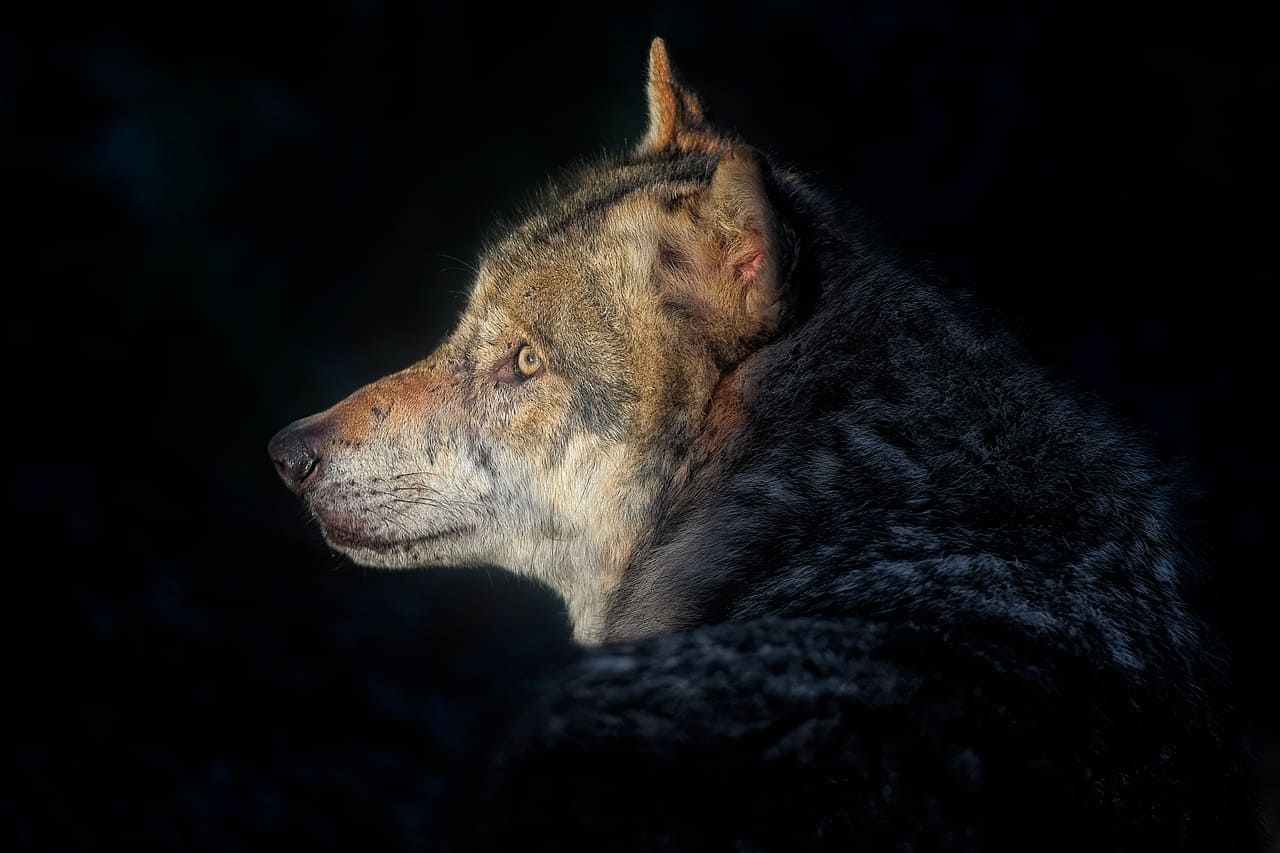
The wolf is back in Europe. After decades of strict protection, over 20,000 wolves now live on the continent again. What should be a success story for species protection is increasingly becoming a political football: protection status downgraded, shooting quotas ramped up, hunting laws rewritten. This dossier compiles the facts, contextualizes the European dimension, and shows why 'more recreational hunting' is not a solution.
What to expect here
- The Wolf: Ecological Keystone Species: Why the wolf as apex predator promotes forest regeneration and biodiversity and self-regulates its population density.
- The European Legal Framework: From the Bern Convention through the Habitats Directive to the 2025 downgrading: How the wolf is losing its protection and why this is legally questionable.
- Sweden 2026: Why the Swedish ruling against wolf hunting is a signal to all of Europe.
- Switzerland: Proactive Regulation as Euphemism: What the 2024/2025 shooting record shows and what 'proactive regulation' really means.
- Country Comparison: How Germany, France, Norway, Italy and Spain deal with the wolf.
- Livestock Protection: What Actually Works: Why electric fences, livestock guardian dogs and shepherding are more effective than culling.
- The Geneva Model: How wildlife management functions without hobby hunting.
- What would need to change: Demands for evidence-based wolf management in Switzerland and Europe.
- Arguments: Ten counterarguments to the claim that wolves must be hunted.
- Quick links: All relevant articles, studies and sources.
The Wolf: Ecological Keystone Species
The wolf (Canis lupus) is the largest wild representative of the canids in Europe. Wolves live in family groups (packs) and as apex predators regulate populations of ungulates such as roe deer, red deer and wild boar. Their presence has measurable positive effects on forest regeneration, aquatic ecology and biodiversity.
A healthy wolf pack typically consists of a parent pair and the offspring of the last one to two years. Reproduction is naturally limited: only the alpha pair reproduces, and young wolves disperse once they reach sexual maturity. Wolves thus largely regulate their own population density, depending on food availability and territory size.
The wolf was eradicated from large parts of Europe until the 20th century. Intensive hunting, poisoning and habitat destruction had reduced populations to a few refugia in Southern Europe, the Balkans and Scandinavia. Only through strict protection from the 1970s and 1980s onwards did the return begin.
More on this: Wolf in Switzerland and Species profile: The Wolf
The European Legal Framework
Bern Convention (1979)
The Convention on the Conservation of European Wildlife and Natural Habitats obliges 45 contracting states, including Switzerland, to protect endangered species. The wolf was listed in Annex II as a 'strictly protected species'.
On 3 December 2024, the Standing Committee of the Council of Europe approved an EU proposal to downgrade the wolf from Annex II (strictly protected) to Annex III (protected). The change entered into force on 7 March 2025. Critics such as the Large Carnivore Initiative for Europe described the decision as 'premature and flawed'. Over 700 scientists expressed concerns in open letters.
EU Habitats Directive (1992)
The Fauna-Flora-Habitat Directive forms the cornerstone of European nature conservation. The wolf was listed in Annex IV as a strictly protected species. On 8 May 2025, the EU Parliament voted 371 to 162 in favor of reclassifying the wolf from Annex IV to Annex V (Directive 2025/1237). The change entered into force on 24 June 2025. Member states have until early 2027 to transpose the change into national law.
Crucially: Several EU states have announced they will maintain strict protection. Belgium, the Czech Republic, Hungary, the Netherlands, Poland and Portugal want to continue strictly protecting the wolf. At the same time, a lawsuit by five associations is pending before the European Court of Justice (ECJ), alleging a lack of scientific accuracy and a violation of EU procedural rules.
Why the Downgrading is Questionable
The decision was made under an expedited procedure, bypassing the responsible Environment Committee of the EU Parliament. Wolves in Europe do not form a uniform population. In six of seven biogeographical regions of the EU, wolf populations are still in an unfavorable conservation status according to official assessments. The ECJ has repeatedly emphasized that protected species must be 'protected from any deterioration' even after achieving favorable conservation status.
The downgrading is unanimously assessed by conservation organisations, scientists and lawyers as politically motivated, driven by the agricultural lobby and conservative parties. The fact that Commission President Ursula von der Leyen described the vote as an 'important message for rural communities' and her own pony was killed by a wolf in 2022 reinforces the impression of an interest-driven decision.
More on this: Battle for the Wolf: Why the Downgrading of Protection Status is Legally and Scientifically Questionable and European Initiatives
Sweden 2026: How Courts Protect the Wolf
Sweden was long considered a model for 'robust wolf management' and was regularly cited as a reference by Swiss hobby hunting lobby. In winter 2025/2026, licensed hunting of 48 wolves in five provinces was supposed to begin.
But courts stopped the hobby hunting: The Administrative Court in Luleå banned licensed hunting in December 2025. The Court of Appeal in Sundsvall confirmed the ruling and rejected all five appeals by the provincial administrations. The reasoning was clear: the authorities could not prove that the culls would not endanger the favorable conservation status of the wolf population.
At its core, the issue was whether the reference value of 170 wolves (previously 300) politically lowered by the government was scientifically viable as a lower threshold. The courts rejected this. The EU Commission had also criticized the step as scientifically untenable.
The Swedish ruling shows: species protection law is not a mood barometer, but binding law that demands scientifically robust data. Anyone wanting to hunt wolves must deliver more than political slogans and complaints from the livestock lobby. The ruling is a signal to all of Europe, including Switzerland, where similar strategies with politically fixed population targets are pursued.
More on this: Wolf Hunt 2026 Stopped: How Courts Protect Wolves Better than Politics and Sweden Stops Wolf Culls 2026: Signal to Switzerland
Switzerland: Proactive Regulation as Euphemism
Switzerland is not an EU member but has ratified the Bern Convention. Since December 2023, the revised Hunting Act allows so-called 'proactive regulation' of wolf packs, meaning culls before a wolf has caused damage. The complete Hunting Ordinance (JSV) entered into force on 1 February 2025.
The balance sheet is sobering: In the regulation period 2024/2025, the FOEN approved the culling of around 125 wolves. Actually, 92 wolves were proactively killed, not a single one reactively. For the period 2025/2026, 7 cantons submitted applications for a total of 32 packs.
Canton Valais
Canton Valais has become the spearhead of Swiss culling policy. From 1 September 2025 to 31 January 2026, 24 wolves were killed as part of proactive regulation. Three packs (Chablais, Salentin, Simplon) were authorised for complete removal, with three other packs having two-thirds of their juveniles shot. The total number including reactive culls amounts to 27 wolves in a single season. In the canton, 75 wolves were identified in 2025, of which 57 were new individuals.
More on this: Valais Wolf Balance 2025/2026: Numbers of a Massacre
Canton Grisons
Grisons had 35 wolves shot in total in 2025. Conservation organisations (WWF, Pro Natura) have filed complaints against the culling orders. The core of the legal argument: the law requires proof that major damage exists or people are endangered. The shooting of entire packs may only be used as a last resort, and local wolf populations must not be endangered.
The Costs of Culling Policy
A single wolf culling costs Swiss taxpayers around 35,000 francs. In Valais alone, wolf management consumed over 13,000 working hours in 2025. Under the program agreement 2025 to 2028, 3.2 new full-time positions were created, costing between 0.8 and 1 million francs per year. For comparison: compensation for livestock kills in Valais amounted to around 170,000 francs in 2025, a fraction of the costs for the culling apparatus.
More on this: Massacre of Wolf Populations in Grisons and Hunting Laws and Control: Why Self-Regulation Is Not Enough
Germany: Wolf to be Included in Hunting Law
Germany reported the 'favorable conservation status' of the wolf in the Atlantic and continental regions to the EU Commission in October 2025. With 209 packs, 46 pairs and 19 resident individuals (monitoring year 2023/2024) and an estimated minimum population of around 2,000 wolves, Germany is one of Europe's most wolf-rich countries.
On December 17, 2025, the Federal Cabinet approved a bill to include the wolf in the Federal Hunting Act. The first reading in the Bundestag took place on January 14, 2026. The draft provides for regional population management: in regions with favorable conservation status, a hunting season from July 1 to October 31 shall apply. Wolves that overcome livestock protection measures shall be able to be 'legally removed'.
Conservation organizations responded with sharp criticism: BUND rejects the draft as 'too aggressive and threatening to populations'. WWF demands comprehensive revision. The German Legal Society for Animal Protection Law describes it as a bill that 'disregards the legal situation up to the constitutional goal of animal protection'. Compatibility with EU law is unclear, particularly for regions with unfavorable conservation status.
In parallel, individual federal states are advancing their own regulations: Brandenburg has been developing a state hunting law with wolf regulations since October 2025, Saxony-Anhalt approved its own draft law in January 2026. Both see themselves as transitional solutions until the federal law comes into force, which is expected at the end of 2026.
More on this: Germany Declares the Wolf 'Favorable' and Current Numbers and Data on Wolves in Germany
France: High Culling Quotas Despite Stable Population
France has pursued an aggressive culling policy for years through so-called 'tirs dérogatoires' (exception culls). The national wolf plan 2024 to 2029 provides for an annual culling quota of 19 percent of the estimated population. For 2025, this means culling 192 wolves with an estimated population of around 1,013 animals. In 2024, according to official statistics, 194 wolves were killed through exception culls.
Remarkably: despite these high culling numbers, the number of wolf attacks on livestock increased by 4.6 percent in 2024 compared to the previous year, the number of killed animals by 10.6 percent. The French model thus empirically proves what conservationists have been emphasizing for years: mass culls do not solve the coexistence problem, but destabilize pack structures and can exacerbate the predation issue.
More on this: Hunting Myths: 12 Claims You Should Critically Examine and Why Recreational Hunting Fails as Population Control
Other European Developments
Norway: The Economic and Environmental Crime Unit Økokrim has charged ten men with illegal wolf hunting. Proceedings for allegedly illegal lynx hunting are running in parallel. The cases show how far the disregard for protection rights extends in recreational hunting circles.
Baltic States: Latvia and Estonia maintain regular wolf hunting quotas with triple-digit culling numbers per year, embedded in a long hunting cultural tradition.
Italy: The wolf is strictly protected in Italy. The population estimate is around 3,300 animals. Despite increasing political demands for culls, there is no regular hunting so far.
Spain: Since 2021, the wolf has been protected nationwide. The decision led to fierce conflicts with northern Spanish livestock holders, who traditionally regarded the wolf as a huntable species.
More on this: How Hunting Politics Escalates in Scandinavia
Livestock Protection: What Actually Works
The most effective measure against livestock kills is not the culling of wolves, but consistent herd protection. This is shown by experience from European wolf policy as a whole.
Functioning livestock protection concepts include robust electric fences with at least 90 cm height and ground connection, livestock guardian dogs (Maremmano, Pyrenean Mountain Dog or Kangal) that grow up in the herd and defend it independently, night enclosures for particularly vulnerable phases, shepherding and adapted grazing management in high-risk areas, as well as compensation systems that function quickly and without bureaucracy.
The example of IG Herdenschutz plus Hund in Saxony-Anhalt shows what is possible: livestock holders with 25,000 animals have recorded not a single wolf kill for many years, thanks to consistent livestock protection. In Switzerland, an Agridea study confirms that livestock protection with dogs works well.
The costs for livestock protection are significantly lower in the long term than the costs of culling policy. Germany invested around 23.4 million euros in livestock protection measures in 2024. This sounds like a lot, but stands against a population of over 200 wolf packs and sustainably protects the affected farms, unlike culls, which neither keep territories free nor prevent kills.
More on this: Alternatives to Hunting: What Really Helps Without Killing Animals and Hunting and Biodiversity: Does Hunting Really Protect Nature?
The Geneva Model: Wildlife Management Without Recreational Hunting
The Canton of Geneva abolished recreational hunting by referendum in 1974 and replaced it with professional state wildlife management. The model has shown for over 50 years that wildlife populations can be regulated without recreational hunting. Professional game wardens carry out targeted interventions as needed on a scientific basis, transparently, controlled and free from the vested interests of the recreational hunting lobby.
More on this: Abolition of Recreational Hunting
What Would Need to Change
- Moratorium on Proactive Wolf Culls: Switzerland suspends proactive regulation until an independent, scientific evaluation of the shooting periods 2023/2024 and 2024/2025 is available. Shootings without proven damage contradict the principle of proportionality. Model motion: Moratorium on proactive wolf culls
- Livestock protection obligation before shooting permits: No wolf shooting will be approved as long as the affected farms have not demonstrably implemented all reasonable livestock protection measures. The burden of proof lies with the applicant, not with the wolf. Model motion: Livestock protection before wolf culls
- Independent scientific population assessment: The determination of population targets and shooting quotas will be transferred to an independent expert commission that is not staffed by recreational hunting associations or cantonal hunters. Politically set reference values as in Sweden (170 instead of 300) must not be incorporated into Swiss management plans.
- Complete cost transparency of shooting policy: The federal government publishes annually the total costs of wolf management per canton, including personnel costs, working hours, helicopter operations and legal proceedings, compared to the actual compensation for livestock kills.
- No expansion of recreational hunting of wolves: Wolf culls are carried out exclusively by professional game wardens, not by hobby hunters. The delegation of culls to licensed or district hunters is terminated.
- Maintaining strict protection at federal level: Switzerland uses the scope of the Bern Convention and national legislation to keep the wolf at the highest possible level of protection, regardless of the downgrading at European level.
- Investment offensive for livestock protection: The federal government doubles the funds for livestock protection measures and makes their use a prerequisite for any compensation for livestock losses.
Arguments: Why 'more recreational hunting' is not a solution
'The wolf population must be regulated'
Wolves regulate their population density as apex predators themselves. Pack size and reproduction rate adapt to the food supply and available territory. A politically set 'target size' has no ecological basis, but serves acceptance policy towards the recreational hunting and agricultural lobby.
'Favorable conservation status is achieved, so hunting is allowed'
The reporting of a 'favorable conservation status' is politically controversial and scientifically contested in several countries. The ECJ has clarified that even with favorable conservation status, any deterioration must be prevented. Favorable status is not a free pass for widespread hunting, but obliges preservation of this status.
'Culls reduce livestock kills'
France proves the opposite: Despite 194 wolves shot in 2024, livestock kills increased. Scientific studies show that killing pack members destroys social structure and produces lone wolves that resort to livestock more frequently than intact packs. Livestock protection is demonstrably more effective than culls.
'Hobby hunters make an important contribution to wolf management'
Hobby hunters act out of self-interest (reducing food competition), not ecological responsibility. Professional game wardens and veterinary authorities are better suited for scientifically based wildlife management. In Valais, 19 of 24 proactive culls were carried out by professional game wardens, hobby hunters performed only five culls as support.
'The wolf endangers humans'
In the last 50 years, there have been no fatal wolf attacks on humans in Western Europe. Studies prove that wolves have a deeply rooted fear of humans. The risk of being killed by a dog, a cow or lightning is many times higher than by a wolf.
More about this: The big bad wolf is afraid of you
'The rural population suffers from the wolf'
The rural population suffers from structural change in agriculture, from declining incomes and from lack of political support. The wolf is instrumentalized as a scapegoat for larger societal problems. The actual damage from wolf kills amounts to a fraction of the costs caused by recreational hunting accidents, wildlife damage in forestry or losses due to weather and diseases.
'The Swedish model shows that wolf hunting works'
The Swedish model has failed. Courts stopped wolf hunting in 2026 because authorities could not prove favorable conservation status. The politically lowered target size of 170 wolves was criticized by the EU Commission as scientifically untenable. Anyone citing Sweden as a model must also acknowledge the judicial defeats.
'Wolves belong in hunting law'
Inclusion in hunting law is not a technical necessity, but a political concession to the recreational hunting lobby. It lowers the legal threshold for culls, creates hunting seasons and transfers management to hobby hunters who are neither independent nor scientifically qualified. The German Legal Society for Animal Protection Law speaks of a violation of the constitutional animal protection objective in the context of the German draft law.
'Illegal culls show that frustration is too great'
Illegal culls are crimes, not legitimate expressions of opinion. They do not show that protection is too strict, but that prosecution and prevention are too weak. In Norway, ten men were charged with illegal wolf hunting. In recreational hunting circles, the saying 'shoot, shovel, shut up' circulates as a normalized attitude towards protected species.
'Coexistence is an illusion'
Coexistence is not a state, but a process. It requires investments in livestock protection, consultation, compensation and education. In regions that make these investments, cohabitation works. Where politics instead relies on culls, coexistence indeed remains an illusion, but not because of the wolf, but because of the lack of political will.
Quicklinks
Articles on Wild beim Wild:
- Battle for the wolf: Why the downgrading of protection status is legally and scientifically questionable
- Wolf hunting 2026 stopped: How courts protect wolves better than politics
- Sweden stops wolf culls 2026: Signal to Switzerland
- Valais wolf balance 2025/2026: Numbers of a massacre
- Germany declares the wolf 'favorable'
- Current numbers and data on wolves in Germany
- How hunting policy escalates in Scandinavia
- The big bad wolf is afraid of you
- Hunting administration St. Gallen: Wolf management without science
- Massacre of the wolf population in Graubünden
- Animal Portrait: The Wolf
Related Dossiers:
- Golden Jackal in Switzerland: Natural Immigrant Under Political Pressure
- The Eurasian Otter in Switzerland: Exterminated, Returned and Politically Threatened
- The Brown Bear in Switzerland: Exterminated, Returned and Still Unwanted
- The Wildcat in Switzerland: Back from Extermination, Threatened by Indifference
- The Lynx in Switzerland: Predator, Keystone Species and Political Object of Dispute
- The Fox in Switzerland: Most Hunted Predator Without a Lobby
- Wolf: Ecological Function and Political Reality
- The Wolf in Europe: How Politics and Recreational Hunting Undermine Species Protection
- Wolf in Switzerland: Facts, Politics and the Limits of Hunting
- Valais Wolf Balance: Numbers of a Massacre
- Fox Hunting Without Facts: How JagdSchweiz Invents Problems
- Livestock Protection in Switzerland: What Works, What Fails and Why Culling Is No Solution
Our Mission
The wolf belongs to Europe. Its return is a success of species protection that is now being systematically undermined. This dossier documents how politics, the agricultural lobby and recreational hunting associations are eroding wolf protection, and why the answer is not 'more culling' but better livestock protection, independent science and a rule of law that upholds its own protection commitments. The dossier is continuously updated when new developments require it.
More on recreational hunting: In our Hunting Dossier we compile fact-checks, analyses and background reports.