Fields as poison dumps: Slurry threatens wild animals
In the countryside, oases for animals and nature must be created: without recreational hunters and with farming in harmony with nature.
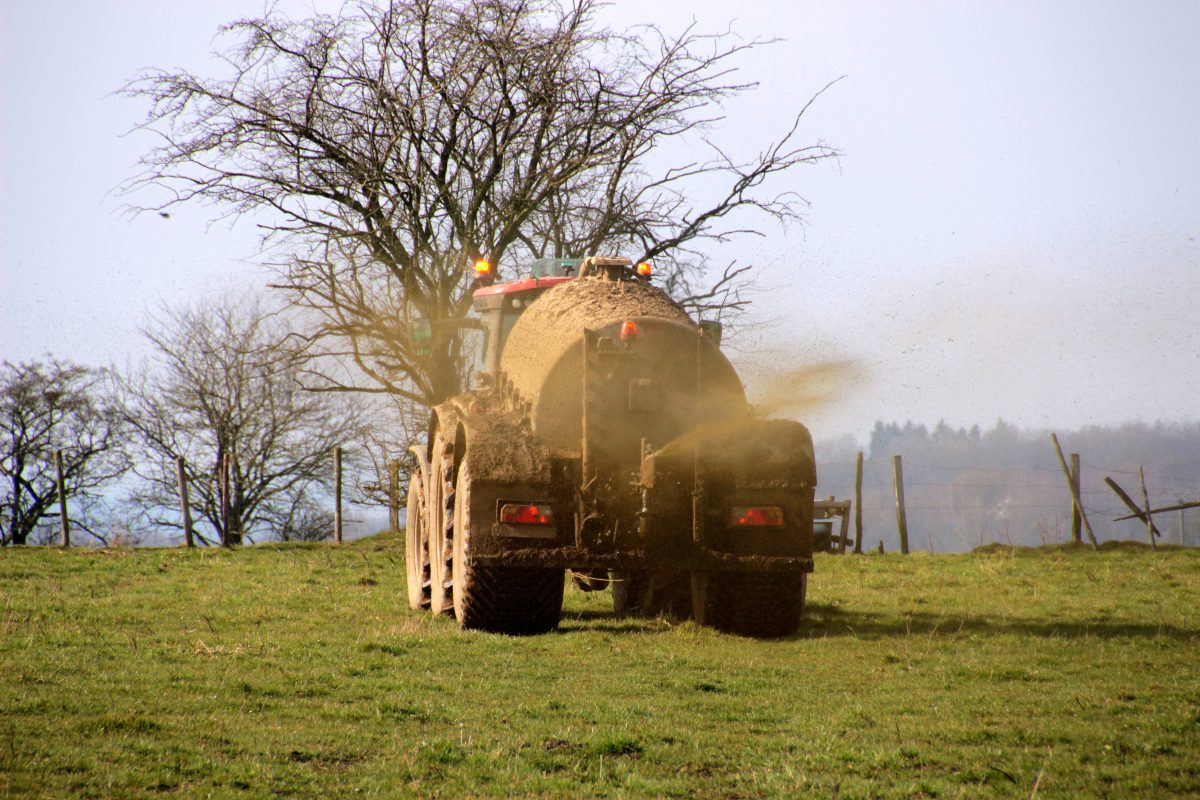
Farmers view fields as disposal sites
The sum of the entire toxic cocktail that the conventional farmer disposes of on the fields also takes a massive toll on wild animals.
For environmental protection reasons, farmers are in fact not allowed to spread slurry as they please: if the ground is frozen, covered in snow or saturated with water, this hazardous waste, which can contain traces of antibiotics, hormones, GM feedstuffs, pesticides, sprays, herbicides and so on, must not be spread as slurry. Yet many farmers do not comply with the slurry regulations.
Slurry also contains a great deal of heavy metal, since animals in intensive livestock farming are given feed containing zinc and copper. These heavy metals end up in the excrement, which reaches the soil via the slurry. They inhibit plant growth and damage valuable micro-organisms and important soil organisms such as earthworms.
Time and again, Swiss farmers also spread their hazardous waste in the protected three-metre-wide buffer strips along streams, woodland and hedgerows. It is likewise forbidden to store silage bales on these strips. Farmers are paid through direct payments not to cover these ecologically particularly valuable buffer strips with liquid manure, dung and pesticides, so that wild plants – and animals have a natural habitat. In reality, however, many do not abide by the rules – and are rewarded all the same. Of all the countries in Europe, Switzerland applies the most pesticides per hectare.
Slurry from the valley floors is also often hauled up into higher mountain regions and spread on the meadows there. On top of this, these animals are generally fed concentrated feed that likewise contains systemic insecticides (neonicotinoids), which were initially meant "merely" to keep insects off the fodder plants, but which later also lead — by way of the slurry — to an impoverishment of insect diversity on the alpine meadows, since these substances are not readily broken down.
Switzerland's applicable rules on the use of farmyard manure are considerably less strict than in the surrounding EU countries. This is apparent both in the very short minimum distances of 3 m from watercourses during spreading (compared with Austria, for example, which requires at least 10–20 m) and in the spreading technique, as the Swiss provisions contain no concrete requirements as to how it is to be done. Unlike in other countries, Switzerland has not laid down a specific winter period during which slurry spreading is prohibited. In Austria, for instance, the winter spreading ban runs from mid-November (on grassland) or mid-October (on arable land) until mid-February, and in Germany from mid-November to mid-January.
Further articles
- Swiss Meadows Losing Massive Amounts of Biodiversity
- When sheep, cattle and co. occupy the space of wild animals
- Swiss animal welfare organisation criticises planned wolf kills as a danger to pack structures and herd protection
- Wolf incompetence rages in Grisons
- Val Fex: When the herd protection concept has more holes than the fence
- Killing instead of protection – Switzerland on the path to a silent wolf extermination
- Communication Failure at the Grisons Office for Hunting and Fisheries
- Illegal wolf hunting in Switzerland
- Wolf cubs in Switzerland caught in the crossfire
- Switzerland sells wolf massacre as a success
- Sloppiness in Katrin Schneeberger's office
- Grazing by livestock changes the soil, the plants and the insect populations
- The absurd hunt for wolves in Switzerland
- The truth about sheep mortality in Switzerland: causes and statistics
- Wolf kills in Switzerland: concern over party politician Albert Rösti
- Let's stop the SVP's destructive rage
- Participation campaign: An appeal for change in Switzerland
- 200 environmental organisations from 6 continents call on the Swiss government: Stop the wolf kill
- Federal Council strongly criticised by wolf experts
- The consequences of controversial wolf management in Switzerland
- Wolf: Federal Councillor Rösti (SVP) circumvents law and order
- Es Burebüebli mahn i nit
- Are the FOEN and the hunting authorities still acting seriously?
- Federal Councillor Albert Rösti tramples on the will of the people
- The consequences of controversial wolf management in Switzerland
- Too many sheep are harming biodiversity
- Agricultural use destroys alpine meadows
- Attacks despite herd protection – how is that possible?
- The rotten apple in the St. Gallen hunting administration
- Pro Natura calls for a comprehensive strategy for summer sheep grazing
- According to an Agridea study, herd protection with dogs works well
- Thanks to herd protection, wolves in Switzerland kill fewer livestock
- Farmers view fields as disposal sites
- Biomass of wild animals
- Of sheep farmers and evasive authorities
- The double standards of wolf opponents
Non-ruminant farm animals excrete the phytate they ingest with their feed undigested. This is why slurry from pigs and other farm animals contains a great deal of phosphate, which is regarded as the main source of phosphate pollution and the eutrophication of watercourses by agriculture.
Slurry also brings pathogens onto the fields. The suspicion is a grave one: dairy cows, breeding pigs or horses, but also wild animals such as roe deer, wild boars or hares, may have been infected with highly infectious bacteria for years. Because of the heavy use of antibiotics in livestock fattening, slurry frequently also contains dangerous antibiotic-resistant germs. Once spread on the field, slurry contaminated with antibiotics can disrupt the bacterial communities in the soil and increase the frequency and transmissibility of antibiotic resistance.
Among wild animals too, diagnoses of cancer caused by environmental toxins are mounting to a worrying extent – from over-fertilisation, the accumulation of heavy metals in soils, pesticides, elevated phosphorus levels in watercourses, the contamination of the water with nitrate, plant protection residues in drinking water, and so on.
Around 30 different herbicides are poisoning Alpine pastures. For critics, the cause is clear: decades of mismanagement and a serious decision by the federal government are among the reasons. The herbicides recommended by the federal government include asulam, which is banned in the EU. Treating plants that are toxic to animals with such herbicides and then, out of ignorance, often leaving them lying around is irresponsible. Livestock and wild animals no longer recognise them as poisonous plants – and eat them.
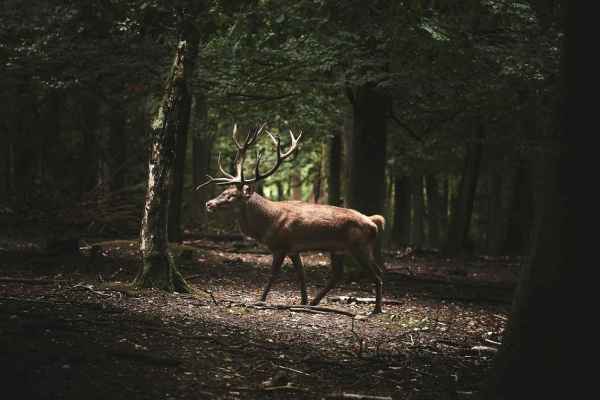
According to the Schwyz Pro Natura president Roger Bisig, an underestimated problem: «Plants treated with herbicide taste salty, which is why they are tempting for wild animals.» As a game warden he had sometimes found dead roe deer that had presumably died from herbicides. «The cause of death could never be established. Such investigations are expensive, so they were simply not carried out.»
The negative effects of pesticides on human health are being proven in more and more studies: cancers, birth defects, damage to the reproductive system, neurological disorders, Parkinson's, autism, and so on. The scientific community agrees that the population must be protected from pesticides.
From an ecological point of view, pesticides have long been regarded as responsible for the decline in biodiversity. Insecticides kill bees, butterflies and numerous other beneficial insects. Herbicides decimate wildflowers, which in turn are indispensable food sources for many of the pollinators of our crops. This natural biodiversity is the legacy of millions of years of natural evolution on this planet.
Conventional agriculture uses such large quantities of pesticides that it is impossible to protect the neighbouring population and the immediate surroundings from them. Even without wind, pesticides drift onto adjacent land and poison people, natural areas, watercourses and organic farmland.
175 pesticides once authorised had their approval withdrawn again between 2005 and 2020, chiefly because of damage to health and the environment. So pesticides are not safe and harmless even after authorisation!
Moreover, according to the Federal Office for the Environment, air pollutants from animal excrement enter the atmosphere. These include ammonia, which leads to the over-fertilisation of sensitive ecosystems and forms respirable particulate matter (PM10), as well as the greenhouse gases methane and nitrous oxide. Swiss farmers are incidentally also the biggest particulate matter offenders – accounting for 37 per cent of all particulate emissions. Each year, particulate matter claims 3,700 lives and causes health costs of 4.2 billion francs in Switzerland (Source: FOEN).
The film «Can the bees still be saved?» documents that systemically acting anti-parasite agents injected into cattle in the Swiss Alps find their way back onto the meadows via the dung. Anyone who knows that in nature a dung pat from an unmedicated animal is broken down with the help of countless insects, beetles and soil organisms can imagine that these principles do not work with insecticides – decomposition takes considerably longer and the number of insects declines.
How many wild animals are contaminated?

Alongside liquid manure, the Swiss farmer carelessly sprays pesticides into a fragile system. Swiss pesticide consumption runs at around 2,200 tonnes per year – and the trend keeps rising. Many farmers also obtain illegal pesticides abroad. According to numerous studies, pesticide residues are also suspected of disrupting cell division and altering genetic material. According to a study by Pro Natura and Friends of the Earth, more than forty per cent of Europeans carry the toxin glyphosate alone, a so-called total herbicide, in their bodies.

More than two thirds of Switzerland's agricultural land consists of meadows and pastures. That means: the bulk of the pesticides sold is applied to land used for arable farming, fruit growing and viticulture.
Emilie Bréthaut, a veterinarian at the COR, summed it up recently while rescuing a red kite: «When you see something like this, it really does make you think about the fruit and vegetables we consume», said the vet. Using a probe, she brought up dirt and greenery from the red kite's stomach that smelled strongly of chemicals.
Something has to change in the countryside!
While our cities are becoming oases of biodiversity, in the countryside many plant and animal species that were once taken for granted have become rare or have even disappeared completely. Around half of all central European species are considered endangered, and the red list grows longer from year to year.
Enemy No. 1 of species is industrial agriculture, writes Prof. Dr Josef H. Reichholf in his book „The Future of Species“: over-fertilisation, structural impoverishment and monocultures are species killers. Over the past decades, the industrialisation and intensification of agriculture has continuously robbed countless wild animals and plants of their habitat and food base: through land consolidation with the draining of bogs and floodplains, the straightening of watercourses and the clearing of hedgerows; through the triumph of agrochemistry with the excessive use of artificial fertilisers, pesticides and fungicides; through over-fertilisation with vast quantities of slurry that smother soil life and wipe out wild plants which depend on nutrient-poor soils; through monocultures that have created cultivated steppes. There is a lack of habitats such as hedgerows, water bodies and areas without intensive agricultural use. And our woodlands have become timber plantations meant to yield returns and as much money as possible: through intensive forestry, many forests have been turned into mere fields of pole timber with virtually no opportunity for retreat.
After industrial agriculture, hunting is enemy of species No. 2: in the countryside, hunting takes place everywhere in the woods and fields and all year round. Prof. Dr. Reichholf is convinced that, for most of the larger species, the future hangs on the gun barrels of recreational hunters. Hunting, he argues, artificially creates shyness and thereby severely restricts the living conditions of the hunted species. «Anyone can see this directly in the incomparably lower shyness of animals living in cities compared with those out in the open countryside,» says Reichholf. Compared with hunting, the damage caused by construction and settlement activity, by industry and traffic is relatively minor.
As much as we can be pleased that biodiversity in our cities keeps growing and that oases for wild animals have emerged, as much as we welcome the fact that the animals have lost their unnatural shyness towards people and have thus become something we can experience again – the clearer it becomes that something has to change in the countryside. If we want to preserve nature and the animals living in it, a rethink in agriculture is more than overdue. More than overdue, too, is a different view of animals: wild animals are not the enemies of agriculture, they are part of our natural world. Ultimately, by destroying the habitats of ever more animals and plants, we humans are destroying our own habitat – and threatening our survival on planet Earth.
Studies / Sources:
- What effects do pesticides have on the health of farmers?
- The influence of synthetic pesticides on obesity and type 2 diabetes
- Do pesticides affect children's health?
- Eating organically produced food reduces the risk of cancer
- Brain tumours in children: pesticides strongly suspected
- Children's playgrounds contaminated with agricultural toxins all year round
- The myths of the pesticide industry
- We must protect the unborn better from chemicals
- Brain tumours in children: pesticides under suspicion
- Pesticide could endanger the unborn
- Farmers spray without protective suits
- A «pesticide cocktail» found in the blood of sick patients
Do you have a tip, a source or a correction for this article? Write to us.
Seen something yourself?
A driven hunt next to a hiking trail, a shot fired near houses, a trap in the forest or an injured wild animal: report it to the Recreational Hunter Radar. We check every tip-off and treat your details confidentially.
More on the subject of recreational hunting: In the dossier The Role and Criticism of Recreational Hunters we shed light on the training, power and self-image of recreational hunters. What the research says about this is shown by Hunting fact-checked: the state of research.
The position of IG Wild beim Wild: IG Wild beim Wild rejects recreational hunting. Our model is the canton of Geneva, which has managed without recreational hunting since 1974: without hunting seasons, without hunting dogs, without driven hunts, without high seats, without the animal cruelty and crime that go hand in hand with hunting season elsewhere. What has worked there for over fifty years disproves every position paper by JagdSchweiz. An association that bases its policy on claims it refutes in its own documents is not a professional organisation, but a factory for misinformation.
Wild animals need a voice
Investigations, petitions and background on recreational hunting. As a thank-you, you will immediately receive our free guide «Recreational hunting on your doorstep: what you can do».
Support our work
With your donation you help protect animals and give their voice a hearing.
Donate now →