The Ukrainian Prosecutor's Office has brought an environmental crime to court for the first time
The Ukrainian Prosecutor's Office has brought an environmental crime in the context of the war against a nature reserve to court for the first time.

The prosecutor's office in Kherson has filed charges against the Russian-appointed director of the Askania-Nova Biosphere Reserve for the illegal export of rare and specially protected animals to Russia.
A total of seven animals protected within the reserve were removed from Ukrainian territory as a result of the illegal transfers. This case constitutes a worldwide precedent and demonstrates that environmental crimes committed during a war will not go unpunished.
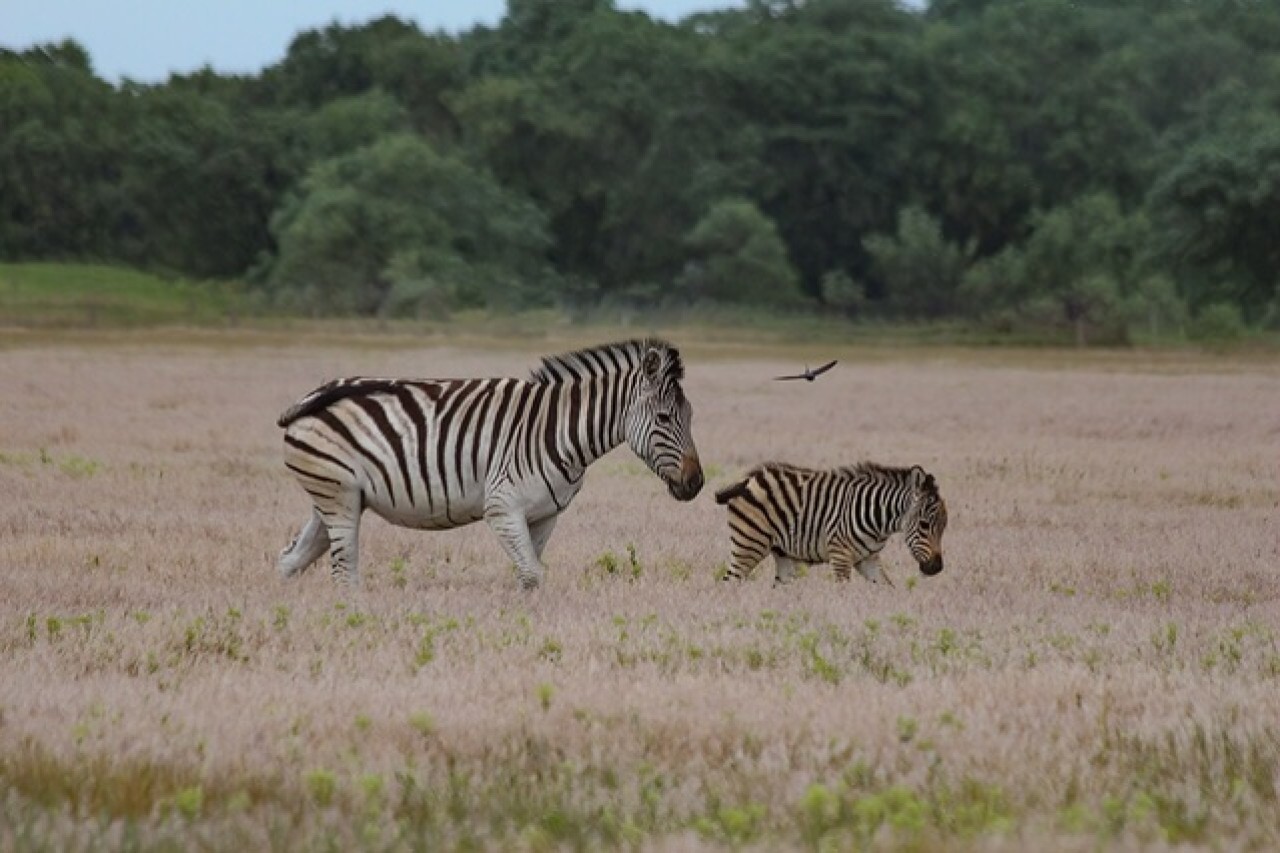
The specialised department for environmental criminal law of the Office of the Prosecutor General and the regional prosecutor's office of Kherson, with the support of the Environmental Mobile Justice Team of Global Rights Compliance, began investigating the case. Following the Russian occupation of Askania-Nova, a UNESCO-protected biosphere reserve, the reserve was unlawfully re-registered under Russian law and the legitimate Ukrainian administration replaced. On 1 December 2023, the new administration illegally transferred rare and endangered animals (which remain Ukrainian property despite the illegal re-registration) to Russian-controlled zoos without Ukraine's consent. The animals affected included Chapman's zebras, American bison, Przewalski's horses, and a Pere David's deer that died during the transfer.
Under international humanitarian law, Russia as an occupying power must respect Ukrainian legislation, including the protected status of Askania-Nova. Article 55 of the Hague Regulations of 1907 permits an occupying power to act only as a temporary administrator of property, not as its owner. Furthermore, Article 56 prohibits the destruction or seizure of institutions dedicated to art and science, and grants Askania-Nova special protection.
The war crime of pillage concerns not only the looting of artefacts or civilian property, but also extends to Ukraine's natural treasures. The unlawful removal of these protected animals is a direct violation of international humanitarian law and must be prosecuted, said Nataliia Pavlovych, Legal Advisor and Deputy Team Leader of the Environment MJT at Global Rights Compliance.
The suspect in this case is Dmytro Mesheryakov, the Russian-appointed director of Askania-Nova, who is responsible for organising the transfer of protected animals in violation of international law.
While war crimes such as pillage and destruction of cultural heritage have already been prosecuted before national courts and international tribunals, this is the first time that criminal complaints relating exclusively to war-related environmental damage in a nature reserve have been brought before a court. Ukraine's lawsuit, supported by GRC, sends a strong signal that environmental destruction is treated with the same gravity as other war crimes.
“By initiating this proceeding, prosecutors are beginning to close this gap, while simultaneously sending the message that environmental damage caused during a war will no longer go unpunished. They are at the forefront of creating precedents in this area of law,” added Donna Cline, Head of the Environment MJT at Global Rights Compliance.
GRC's Mobile Justice Team is part of the Atrocity Crimes Advisory (ACA) Group for Ukraine. The ACA is a multilateral initiative established by the United States, the European Union, and the United Kingdom to support Ukrainian law enforcement authorities and prosecutors in investigating and prosecuting international crimes committed during the full-scale war.
More on the subject of recreational hunting: The scientific evidence is presented in the overview Studies on the Effects of Recreational Hunting.
The position of IG Wild beim Wild: IG Wild beim Wild rejects recreational hunting. Our model is the canton of Geneva, which has managed without recreational hunting since 1974: without hunting seasons, without hunting dogs, without driven hunts, without high seats, without the animal cruelty and crime that go hand in hand with hunting season elsewhere. What has worked there for over fifty years disproves every position paper by JagdSchweiz. An association that bases its policy on claims it refutes in its own documents is not a professional organisation, but a factory for misinformation.