The Questionable Role of Hobby Hunting in Nature Conservation
Every human intervention in nature favours one species and thereby disadvantages others. Always, whether unintentional or deliberate! Only many indigenous peoples manage to live without manipulative interventions, and thus in perfect sustainability.

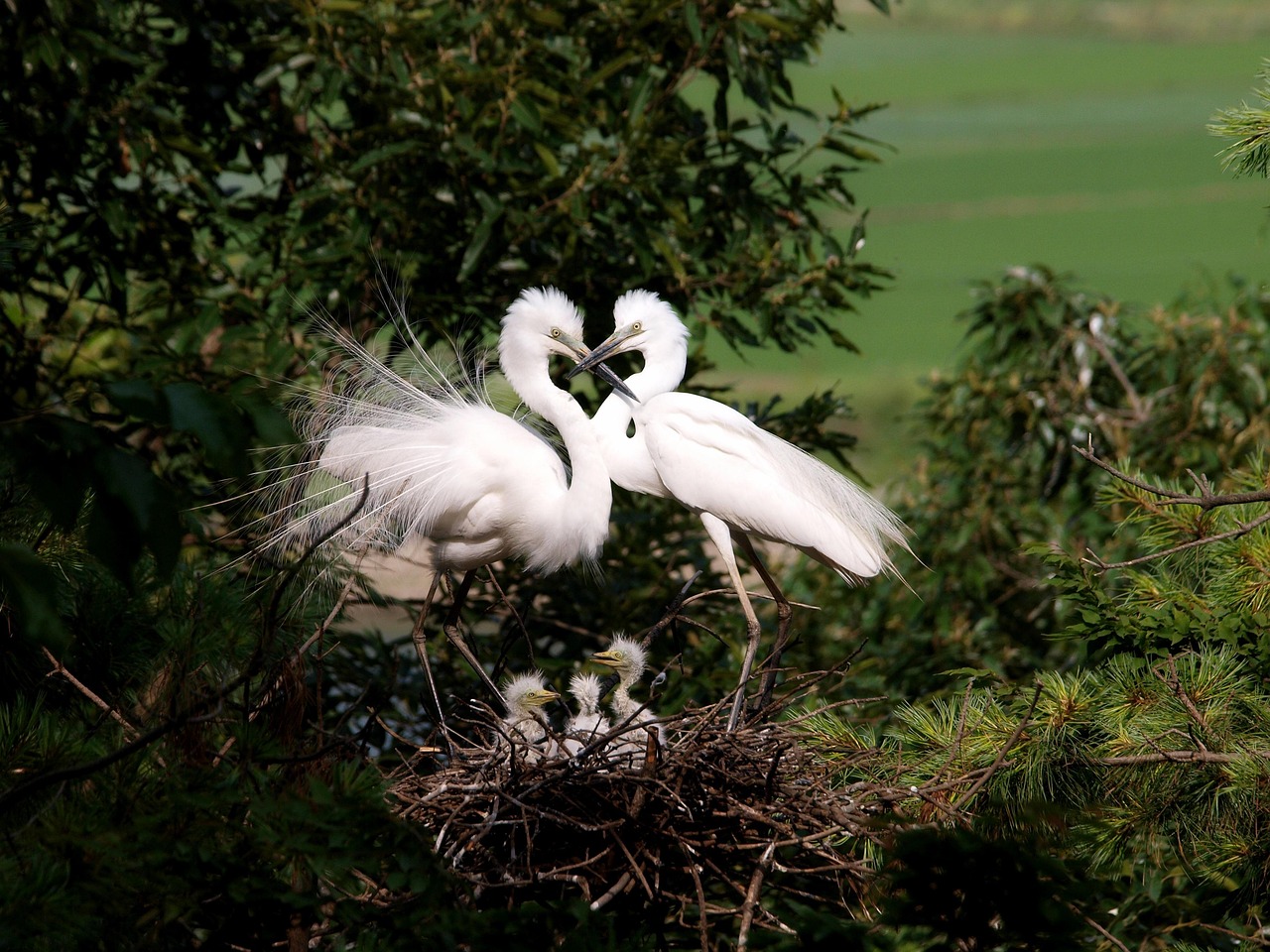
We, on the other hand, are steering ourselves into the greatest human-made mass extinction of species in history.
Already 40% of all living species are under threat, approximately 42% of birds, 71% of reptiles, half of all amphibians, and the biomass of insects has declined by a dramatic 75% (!). Furthermore, 30% of plant populations are endangered, many already extinct. We are hurtling at high speed towards a catastrophe with full awareness — it is already visible, tangible, and has long been measurable.
And yet humanity continues to believe it can control everything according to its own ideas — many even holding the view that in a cultivated landscape there is simply no other way. But why, exactly? How can we truly know that? To this day, there is no scientific evidence in Germany that nature can also function without regulation; here too, other nations are far ahead. We merely “assume” that in a cultivated landscape we must have every square metre under control. Areas without us — such as Chernobyl or Fukushima — have fully recovered within just a few decades and today exhibit outstanding biodiversity. Why do we not finally “measure” this, designate a large area, and proceed scientifically? Probably not least because such an area would have to be off-limits to forestry and hunting, meaning some people would “merely” have to give something up. The EU Biodiversity Strategy had envisaged precisely this — seeking to designate 10% of land as strictly protected, meaning without forestry and hunting — but the relevant lobby quickly and swiftly dismantled this plan, quietly and without public notice.
On more than 99% of all land areas — true wilderness exists on only 0.6% of Germany's territory — we dictate which plants are to grow, where, and how, mostly with short-term and exclusively yield-oriented objectives. We also delude ourselves into thinking we can, must, or are even capable of regulating all animal populations accordingly. The persistently rising wildlife numbers over decades alone already prove the contrary. Smaller animal species we combat chemically; larger ones we shoot.
Often, however, we also attempt to offer certain animals — for example, those whose populations are under threat — greater advantages in order to increase their numbers again, sometimes for nature conservation reasons, but perhaps also sometimes merely for commercial purposes or to polish an image. We then label uncontrolled, runaway overpopulations as "pests" or even "plagues," once again solely to legitimize a radical form of extermination.
An example of how we respond to excessive population numbers: the bark beetle. We significantly favored its way of life, offering it the entirely unnatural habitat of monocultures consisting almost exclusively of spruce — plantations that some still had the audacity to call forests — while ensuring that nearly all of its more than 300 natural predators were absent from these timber plantations. That is the very opposite of biodiversity! Biodiversity, meaning species diversity, brings with it — to stay with the example — those natural predators. Almost every animal depends on certain plants, and many plants depend on certain animals; the system functions optimally in the greatest variety. Only in this way does a stable equilibrium exist, allowing disruptions and fluctuations to be compensated for immediately.

An example of insufficient or severely threatened population numbers: the Eurasian curlew is classified as "severely threatened" and is already listed on the Red Lists of most Central European countries. Sufficient breeding success in the cultivated agricultural landscape requires that the curlew be given adequate time to breed on managed land, as mowing schedules create mounting pressure. Remaining wet grasslands and fens must either be managed extensively or returned to nature.
Often, however, in this very context, hunting of so-called “vermin” is cited and thereby legitimized as a means of preserving these magnificent birds. Again, typically human: the problem is not solved, merely displaced. Of course, killing foxes, martens, weasels, and raccoons, or crows, may appear to benefit the curlew in the short term, but far more can be achieved in the long run by restoring its habitats and thus its food sources — such as earthworms, woodlice, and numerous insects — allowing populations to recover through improved living conditions, something that is hampered by agricultural use and displacement. Under such circumstances, populations are only marginally or temporarily on a path to recovery, while the overall local situation is in fact indirectly worsened. There will always be a proportion that falls prey to predators, since the law of “eat and be eaten” holds true at all times and in all places in nature. The correct approach is therefore not to eliminate natural decimation through predators, but to expand and create natural living conditions. What will be the next step otherwise? After the species listed above that are subject to hunting, will common buzzards, marsh harriers, grey herons, and storks be next — all of which, as chick predators, decimate ground-nesting birds?
The demanded hunting of so-called “vermin” — a term used deliberately without respect, whereas predators is the correct expression — may sound logical and is, on superficial examination, initially understandable. However, a reduction of foxes, “Nature’s health police,” would in turn disadvantage or advantage another species. In areas where many foxes lived, mice carried significantly fewer tick-borne pathogens of Lyme borreliosis. The reason identified was the influence of predators on the behaviour of mice, which are considered the primary reservoir of the Lyme disease pathogen.
Fencing installations are also being eagerly erected as protection for or to support ground-nesting birds. All these measures are understandable from one perspective or another, but do they deliver sustainable success, particularly in the long term? Fences are a quick and rarely ideal measure; as long as they do not significantly obstruct other wildlife, they may only be used as a short-term solution. To assume that this is the definitive answer is mistaken. Large-scale fencing, e.g. along motorways, fragments landscapes and makes the vital exchange of genetic material impossible without wildlife crossings. It is little wonder that significant genetic defects and deformities are already being observed in red deer in southern Germany. In the case of ground-nesting birds, targeted small-scale fencing can indeed be a sensible approach as a transitional measure toward creating better habitats — all the more so since it may also help avoid the culling of important wildlife species.
If we tackle the problem at its roots and create habitats that offer the insect world opportunities through, for example, far more green corridors, would that not be the better path?
The decline of ground-nesting birds or even biodiversity cannot be attributed to predators such as the fox. Despite intensive fox hunting over recent decades, the decline of grey partridges, pheasants, brown hares, and numerous ground-nesting bird species could not be halted even marginally. The loss of biodiversity, particularly among ground-nesting birds, is attributable rather to the destruction of their habitat and the accompanying loss of insects as a food source. In the canton of Geneva, in Switzerland, in England, in Scotland, as well as in Wales and Luxembourg, a significant increase in biodiversity was actually observed following the cessation of fox hunting bans.
Despite all efforts, it is ultimately of no use if we genuinely create all the necessary conditions here, yet migratory birds — among many others — were still being shot in France as recently as 2020. For certain stopover sites along the French Atlantic coast, the ban was lifted yet again. There, curlews may be shot between early August and late January. Across the European Union as a whole, a total of 82 bird species are classified as “hunatable,” including numerous species whose populations are now threatened.
It is abundantly clear that hunting — and recreational hunting in particular — is by no means about nature conservation, but more often than not simply about satisfying the base desires of a shooting minority. As is so often the case, at the outset of the chain of argumentation only those arguments are hastily put forward to legitimise the killing for sport — in this instance, the fox is shot because it preys on ground-nesting birds.
Of course it does so, and it is entirely natural that it should, although scientific measurements in these areas confirm that up to 90% of stomach contents consist of mice, followed by large quantities of invertebrates, as well as plant matter and carrion. However, if we modify habitats — not solely for the benefit of the curlew, but for the benefit of the ecosystem as a whole — then the modest yet natural decimation of other carnivorous wildlife is entirely justifiable, rendering the supposedly corrective hunting carried out in the name of nature's wellbeing wholly superfluous.
Source: Guido Meyer