Feeding a dog a vegan diet: what studies show and what the wolf has to do with it
The dog descends from the wolf, but has long since stopped eating like one. An overview of genes, studies and open questions.

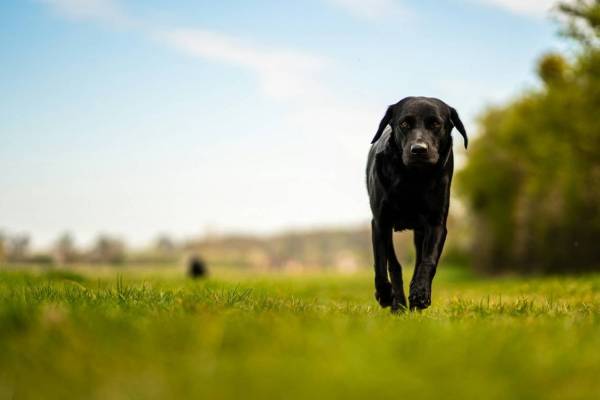
Photo: Ayla Verschueren / Unsplash
“A dog is a carnivore, after all!” Almost everyone who feeds their dog a plant-based diet hears this sentence. In a column in 20 Minuten, dog trainer Cyrill Matter, who feeds his own dogs a vegan diet, has reignited the debate and consulted veterinarian Karim Montasser on the matter. What is there to the wolf argument, and what does the research actually show?
The dog is not a wolf at the bowl
The dog descends from the wolf, which is undisputed. But domestication has changed it, including its digestive tract. In 2013, a research team at Uppsala University compared the genomes of 12 wolves and 60 dogs in the journal Nature. One striking difference concerns the AMY2B gene, which is important for digesting starch: in the wolves studied, the researchers found 2 copies, in the dogs 4 to 30. A follow-up study of dogs from around the world, however, showed large differences between dog populations. Most dogs carry many copies, while a small group, mainly from Australia and the Arctic, carry hardly any additional ones (Heredity, 2016). The findings point to an adaptation of many dogs to starch-rich food in the vicinity of humans. On their own, however, they do not prove that any particular vegan food meets a dog's needs. Exactly when the adaptation arose is disputed among experts.
Zoologically, the dog belongs to the order Carnivora; in terms of nutritional physiology, it is an omnivore. Montasser puts it the same way. What matters is not where a nutrient comes from, but whether it is in the food. A dog needs amino acids, fatty acids, vitamins and minerals, not meat as such. What plants do not supply, or supply in insufficient amounts, such as vitamin B12, vitamin D or iodine, is added to the food.
What the feeding studies show
The best evidence comes from controlled feeding trials, and these are small. At the University of Guelph in Canada, 61 healthy adult dogs were given either an experimental vegan diet (31 dogs) or a commercial meat-based diet (30 dogs) for three months. Allocation was random and blinded. All the dogs remained healthy. Some blood values changed in the vegan group but stayed within the normal range (British Journal of Nutrition, 2024).
Another study followed 15 dogs in California for a year on a commercial plant-based diet (PLOS ONE, 2024). All remained clinically healthy, and the researchers reported no clinically significant negative changes in the blood and urine values examined. A few individual measurements did, however, fall outside the reference ranges. Because there is no comparison group and only 15 dogs took part, the study's explanatory power is limited.
The large survey and its limits
A frequently cited survey by the University of Winchester covered the owners of 2,536 dogs (PLOS ONE, 2022). Vegan-fed dogs performed well in it. However, the data rest on owners' own reports, not on veterinary examinations. A re-analysis by the University of Liverpool in 2024 looked mainly at how owners rated their dog's health. That rating was more strongly linked to the dogs' age and other factors than to a vegan diet. The team led by first author Andrew Knight arrived, in a further analysis (Heliyon, 2024), at more favourable results for vegan-fed dogs even after accounting for the dogs' age, sex, neutering, size and exercise. But these remain survey data. They cannot reliably tell us which diet is healthier.
Since 2018, the US authority FDA has been investigating a possible link between certain food formulations and dilated cardiomyopathy, a disease of the heart muscle. In many of the reported cases, the food contained larger proportions of peas or lentils. What role the formulation and other factors play is unclear. This implies neither a general suspicion against vegan food nor an all-clear for every formulation. Reliable long-term data spanning several years are lacking.
What matters in practice
Veterinarian Karim Montasser recommends the following in conversation with 20 Minuten:
- Only a complete feed from a manufacturer that discloses how it meets nutritional requirements. Do not cook it yourself.
- Switch gradually.
- Before switching, have a veterinary examination with blood tests, a check-up after about six months, and annually thereafter. Which examinations and intervals make sense is for the vet to decide in each individual case.
- In cases of heart disease, kidney disease or other chronic illnesses, only in close consultation with the veterinary practice.
The feeding studies presented examined healthy adult dogs. Their results cannot simply be transferred to puppies or to pregnant or nursing bitches. Moreover, 'vegan' alone says nothing about quality: feed analyses repeatedly reveal gaps in plant-based food, for example in iodine and B vitamins. Products containing meat can also have nutrient deficiencies.
The picture is different for cats
Cats are obligate carnivores. They need nutrients such as taurine or preformed vitamin A, which occur naturally almost exclusively in animal tissue. Analyses of vegan cat food have repeatedly shown gaps, and there are hardly any good clinical studies on cats. What may be defensible for dogs cannot be transferred to cats.
Who profits from a recommendation
Montasser feeds his own dogs a vegan diet and, according to the transparency notice from 20 Minuten, works commercially with a manufacturer of vegan dog food. That does not make his statements wrong, but it belongs out in the open. The same applies to the research: in the 2024 analysis by Knight and colleagues, the authors themselves disclose funding from, among others, ProVeg International and a pet food manufacturer. Anyone assessing studies and recommendations should always ask who funds them and who profits from them.
Comment: 'Nature' is a convenient argument
The argument 'The wolf eats meat, so the dog must too' does not stand up to closer scrutiny. A dog that wears a coat in winter and sleeps in a heated flat does not live like a wolf. Those who invoke nature often simply mean habit.
The same pattern is familiar from recreational hunting. Recreational hunters like to appeal to natural cycles while at the same time putting out dog and cat food to lure foxes into their line of fire, as is customary in Wait hunting. Nature serves as a justification only as long as it suits one's own interests.
The philosopher Jeremy Bentham asked the decisive question as early as the 18th century: what matters is not whether non-human animals can think or speak, but whether they can suffer. This question concerns the non-human animals that end up in the dog bowl just as much as those in the forest (more on this under Speciesism in the Hunting Ground). For healthy adult dogs, a carefully formulated, nutritionally complete vegan complete feed can be a defensible option. The feeding studies so far offer encouraging but limited evidence for this. Whether a specific recipe is also suitable in the long term cannot yet be reliably inferred from them.
Do you have a tip, a source or a correction for this article? Write to us.
More on the subject of recreational hunting: What the research says about this is shown by Hunting fact-checked: the state of research.
The position of IG Wild beim Wild: IG Wild beim Wild rejects recreational hunting. Our model is the canton of Geneva, which has managed without recreational hunting since 1974: without hunting seasons, without hunting dogs, without driven hunts, without high seats, without the animal cruelty and crime that go hand in hand with hunting season elsewhere. What has worked there for over fifty years disproves every position paper by JagdSchweiz. An association that bases its policy on claims it refutes in its own documents is not a professional organisation, but a factory for misinformation.
Wild animals need a voice
Investigations, petitions and background on recreational hunting. As a thank-you, you will immediately receive our free guide «Recreational hunting on your doorstep: what you can do».
Support our work
With your donation you help protect animals and give their voice a hearing.
Donate now →