
Pine marten: profile, way of life and pine martens in Switzerland
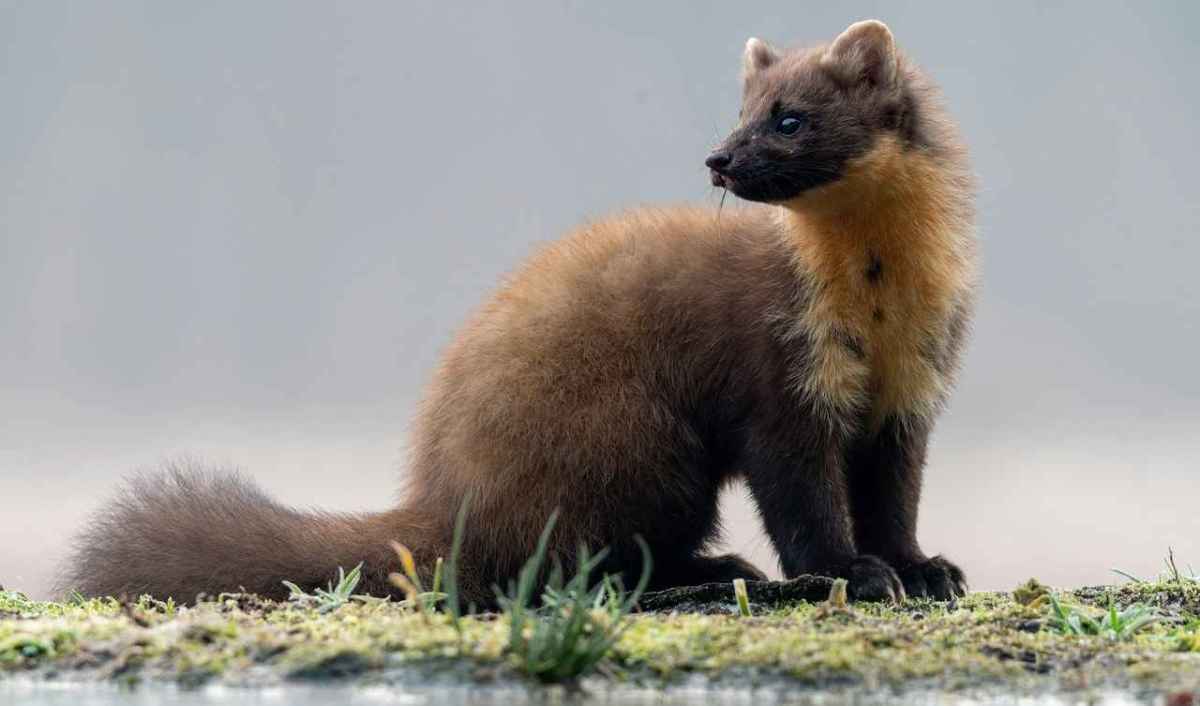
The pine marten (Martes martes), also known as the European pine marten, is one of the most secretive inhabitants of Swiss forests. It climbs and leaps effortlessly through the treetops and avoids humans. Because it is so rare, every kill weighs heavily, and yet it is hunted in several cantons.
Profile
- Family: Mustelids (Mustelidae)
- Size: 40 to 58 cm, tail 16 to 28 cm
- Weight: 0.8 to 1.8 kg
- Recognising it: chestnut-brown fur, yellowish throat patch, furry soles
- Habitat: old, continuous deciduous and mixed forests
- Territory: up to 30 km²
- Offspring: usually 2 to 4 young in April
- Status in Switzerland: huntable, protected in several cantons
Pine marten or stone marten?
- Pine marten: yellowish throat patch with a rounded lower edge, furry soles, lives only in forests.
- Stone marten: white, forked throat patch, bare soles, often found in built-up areas. More in the profile of the Stone marten.
Acrobat of the treetops
The pine marten leaps up to four metres from tree to tree and can rotate its hind feet by 180 degrees when climbing. Its bushy tail keeps it balanced. By day it sleeps in tree hollows, woodpecker holes or old squirrel dreys, changing its resting place almost daily. Thanks to delayed implantation, the young are born in spring even though mating takes place in summer.
Rare and sensitive
In the Jura, only 0.1 to 0.8 pine martens live per square kilometre. Roads, settlements and open terrain without cover are almost impossible for it to cross, and young animals often die on forest roads. Many females do not reproduce until their third year of life. Without old trees rich in cavities, it cannot survive.
Pine martens in Switzerland
In 2025, according to Swiss Hunting Statistics 2025 132 pine martens were shot and 7 killed in special culls, mainly in Grisons, Lucerne, Bern and Obwalden. In 13 cantons, not a single one was shot between 2016 and 2025. More in the dossier “The pine marten in Switzerland”.
What the research shows
In France, more than twelve million foxes, martens, crows and other animals were killed as "pests" between 2015 and 2022. No link could be demonstrated between more kills and less damage, and the costs of control were many times higher than the damage reported. More studies can be found on our studies page Hunting Fact Check.
Frequently asked questions about the pine marten
Where does the pine marten live?
In large, continuous forests with old trees and tree cavities, up to near the tree line.
Does the pine marten come into houses?
Hardly ever. Unlike the stone marten, it avoids human settlements.
What does the pine marten eat?
Mainly small mammals such as mice and squirrels, as well as birds, eggs, insects and, in autumn, berries and fruit.
How many pine martens are shot in Switzerland?
In 2025 the figure was 132, plus 7 in special culls.
How old does a pine marten get?
In the wild, rarely older than ten years.
What is Wild beim Wild doing for pine martens?
We work to ensure that populations and their habitats are preserved and connected with one another. Natural corridors enable genetic exchange between individual populations. We do this by defending wild animals against unnecessary recreational hunting and poaching wherever possible.