
Otter: profile, way of life and return to Switzerland
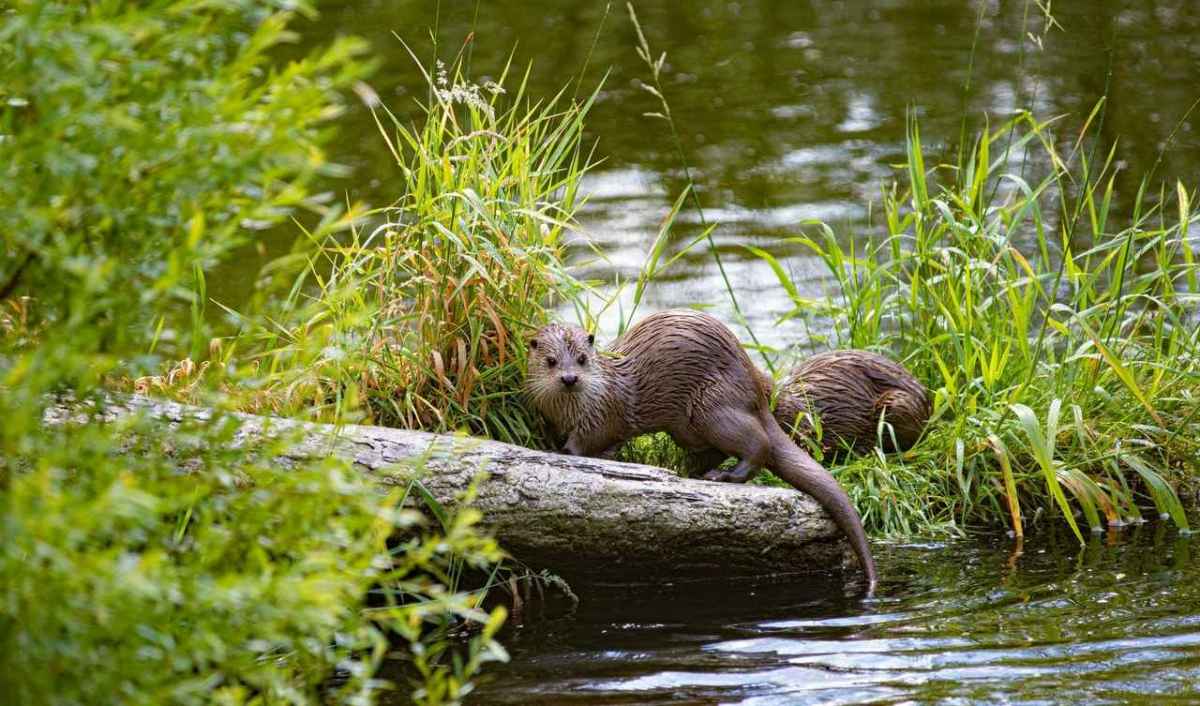
The Eurasian otter (Lutra lutra) is a master of the water. In 1888 the Confederation decided to exterminate it, and in 1989 the last otter vanished from Lake Neuchatel. In 2009 it returned under its own steam. Today it has again been recorded in several cantons in Switzerland, but it is still threatened with extinction.
Profile
- Family: Mustelids (Mustelidae)
- Size: 60 to 90 cm, plus a tail of around 40 cm
- Weight: males 7 to 12 kg
- Coat: up to 70,000 hairs per square centimetre
- Diet: mainly fish, plus crayfish, amphibians and mussels
- Territory: for the male, around 10 to 15 km of river course
- Red List Switzerland: critically endangered (CR)
- Status in Switzerland: protected
Otter or beaver?
- Otter: slender and streamlined, long round tail, eats mainly fish, hardly ever seen.
- Beaver: much heavier, flat, scaly tail (paddle), purely herbivorous, fells trees. More in the profile Beaver.
A life in the water
Nose, ears and eyes sit in a line, so the otter can see, hear and smell at the same time at the surface. When diving, the ears and nose close, and sensitive whiskers detect the movements of fish. It needs around 1 to 2 kg of food a day. Because it is tied to its territory, it does not overexploit its fish stocks: where otters live, the water is healthy.
Exterminated by law
The Fisheries Act of 1888 demanded that the extermination of the otter be 'encouraged as far as possible'. Cantons paid bounties, and the state funded hunting courses and traps. When it was finally protected in 1952, only around 150 otters were left in Switzerland. Modified waterways and environmental toxins such as PCBs finished it off.
Otters in Switzerland
Since 2009 the otter has been back, on the Aare, Emme, Rhine, Ticino, Rhone and Inn. According to WWF, it has now been recorded in nine cantons, and in Grisons and St. Gallen it is raising young again. The 2022 Red List, however, assumed barely more than ten animals. Every loss counts: in 2025 two otters were run over in the St. Gallen Rhine Valley. Even so, fishing circles are already calling for interventions again. More in the dossier 'The otter in Switzerland'.
Frequently asked questions about the otter
How many otters live in Switzerland?
There is no current official count. The 2022 Red List assumed there were barely more than ten animals, and since then otters have been recorded in nine cantons.
Is the otter protected?
Yes. It is protected in Switzerland and classified on the Red List as “critically endangered”.
Do otters eat the rivers empty?
No. As a solitary animal with a fixed territory, it depends on healthy fish populations and does not overexploit them.
Where can I see an otter?
Hardly ever, because it is active at dusk and at night. Tracks and droppings on stones along the bank are found more often.
What threatens the otter today?
Engineered waterways, roads without bank passages under bridges, legacy pollutants such as PCBs, and political demands for interventions.
What does Wild beim Wild do for otters?
We work to ensure that populations and their habitats are preserved and connected with one another. Natural corridors enable genetic exchange between individual populations. We do this by defending wild animals against unnecessary recreational hunting and poaching wherever possible.