Wolf monitoring in Germany: population barely growing, nine wolves illegally killed
The 2025/26 monitoring counts 288 territories and at least 1,682 recorded wolves. Even so, the federal states are relaxing the rules on kills.
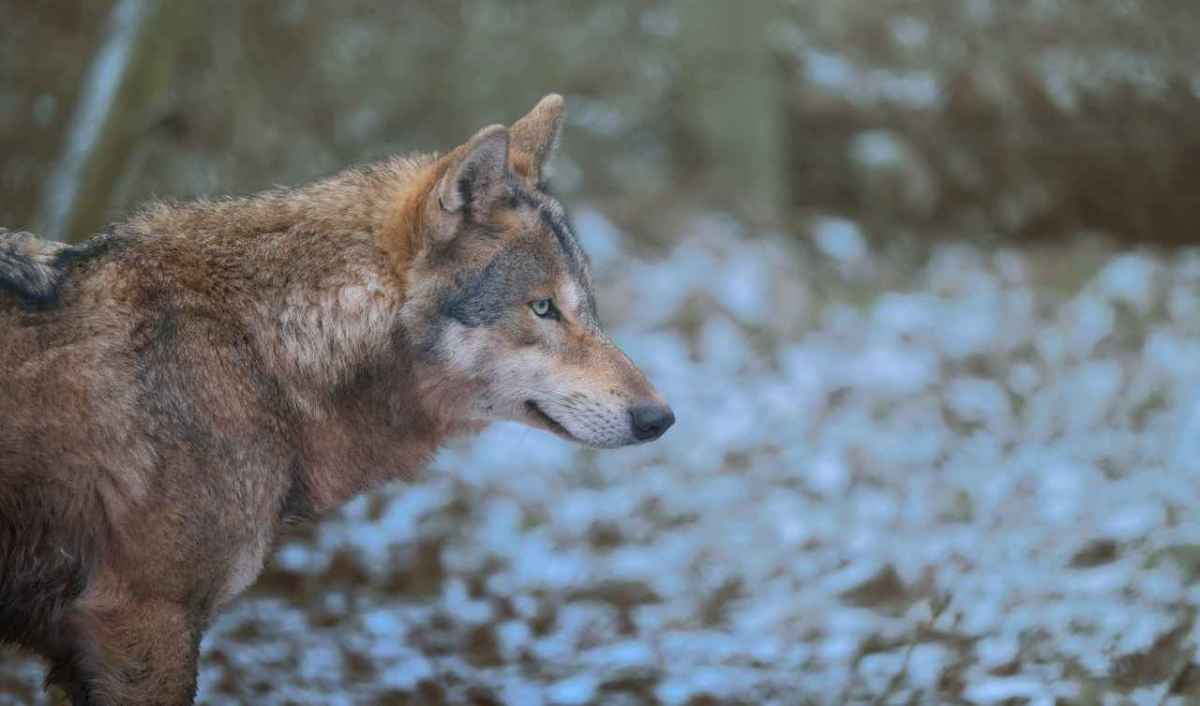
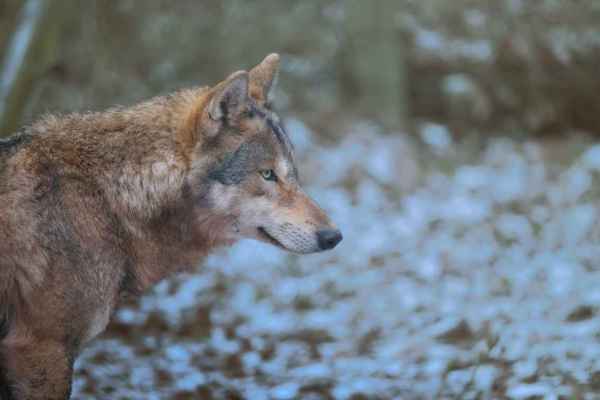
European wolf in a winter forest. Photo: Ma Ti / Unsplash
“Wolf Song”
The number of wolves in Germany is barely growing any more. This is shown by the federal states' wolf monitoring for the 2025/26 monitoring year, running from 1 May 2025 to 30 April 2026. The Federal Documentation and Advisory Centre on Wolves (DBBW) published the figures on 23 November 2026. A total of 288 territories are confirmed, twelve more than the previous year.
The monitoring figures
The 288 territories are divided into 238 packs, 38 pairs and 12 territorial individual animals. A year earlier, there were 276 territories according to the knowledge at the time. During the monitoring year, at least 1,682 wolves were recorded, including young animals. The previous year the figure was 1,636. The most territories are in Brandenburg (64), Lower Saxony (62), Saxony (48), Saxony-Anhalt (40) and Mecklenburg-Western Pomerania (32). Wolf territories exist in all the non-city states except Saarland.
The Nature and Biodiversity Conservation Union (Nabu) notes in response to the report that there can be out of the question uncontrolled growth. In some regions the natural limits have already been reached, and hardly any new wolves are arriving there.
Road traffic and poaching
During the monitoring year, 172 dead wolves were found. The most common cause of death was road traffic, accounting for 118 animals. In nine cases illegal killing has been proven, and according to Nabu the true figure is probably higher. A further suspected case is currently occupying the public prosecutor: a euthanasia drug was found in the stomach of the wolf GW1129m from Schluchsee.
More kills despite minimal growth
Since 2 April 2026 the wolf has been listed in the Federal Hunting Act, and the federal states are now implementing it. Since 1 November, Lower Saxony has also been authorising the killing of adult wolves in the intervention areas of Werlte and Dörpen, as our dossier «Recreational hunting in Germany» shows. On 19 November, Brandenburg put into force a general decree that permits up to ten kills in the 2026/27 hunting year. And in the Netherlands, the provinces are to be allowed in future to shoot wolves even without problem behaviour.
The situation in Switzerland
In Switzerland, at least 58 wolves have been killed by the authorities in the current regulation period since 1 September 2026, as our wolf kill counter shows. The KORA balance sheet for 2025/26 lists 40 known packs. The dossier «Wolf in Switzerland».
Commentary: More kills despite only a slight increase in numbers
The new figures do not fit the picture of an 'exploding' wolf population that farmers' associations and recreational hunters have been stirring up sentiment with for years. An additional 46 recorded animals and twelve territories in a year do not amount to exponential growth. Wolves are territorial, and NABU believes that in some regions the natural limits have already been reached.
Of all times, Germany is now bringing the wolf into hunting law and relaxing kills state by state. Among the recorded carcasses, road traffic is the most common cause of death, not a shortage of guns. Anyone who introduces kill quotas for a barely growing population is not regulating a population. They are meeting the demands of those who never wanted the wolf back in the first place.
Do you have a tip, a source or a correction for this article? Write to us.
Seen something yourself?
A driven hunt next to a hiking trail, a shot fired near houses, a trap in the forest or an injured wild animal: report it to the Recreational Hunter Radar. We check every tip-off and treat your details confidentially.
More on the subject of recreational hunting: In our dossiers on recreational hunting gather fact-checks, analyses and background reports. What the research says about this is shown by Hunting fact-checked: the state of research.
The position of IG Wild beim Wild: IG Wild beim Wild rejects recreational hunting. Our model is the canton of Geneva, which has managed without recreational hunting since 1974: without hunting seasons, without hunting dogs, without driven hunts, without high seats, without the animal cruelty and crime that go hand in hand with hunting season elsewhere. What has worked there for over fifty years disproves every position paper by JagdSchweiz. An association that bases its policy on claims it refutes in its own documents is not a professional organisation, but a factory for misinformation.
Support our work
With your donation you help protect animals and give their voice a hearing.
Donate now →