The Renaissance of the Parsnip: A Culinary Comeback
The parsnip is a classic winter vegetable that had to fight its way back into local kitchens: written off as a relic of the past, it has made a remarkable comeback and is today very much back in vogue.

In the Middle Ages, the starchy parsnip played a similarly important role to that of the potato today.
Until the mid-18th century, its low susceptibility to disease made it one of the most important staple foods in our latitudes.
But it was increasingly displaced by potatoes and carrots, and eventually fell almost entirely into oblivion. Unlike in Switzerland, Austria and Germany, however, the vegetable remained popular in England, the USA, France, the Netherlands, Scandinavia and Hungary throughout all those decades.
The long-underestimated vegetable has nonetheless reclaimed its place on local plates, as cultivation figures demonstrate: while in 2010 around 55 tonnes of parsnips were harvested on just over 5 hectares, last year Swiss vegetable growers harvested around 1,600 tonnes of parsnips on almost 50 hectares.
Beneath the Soil
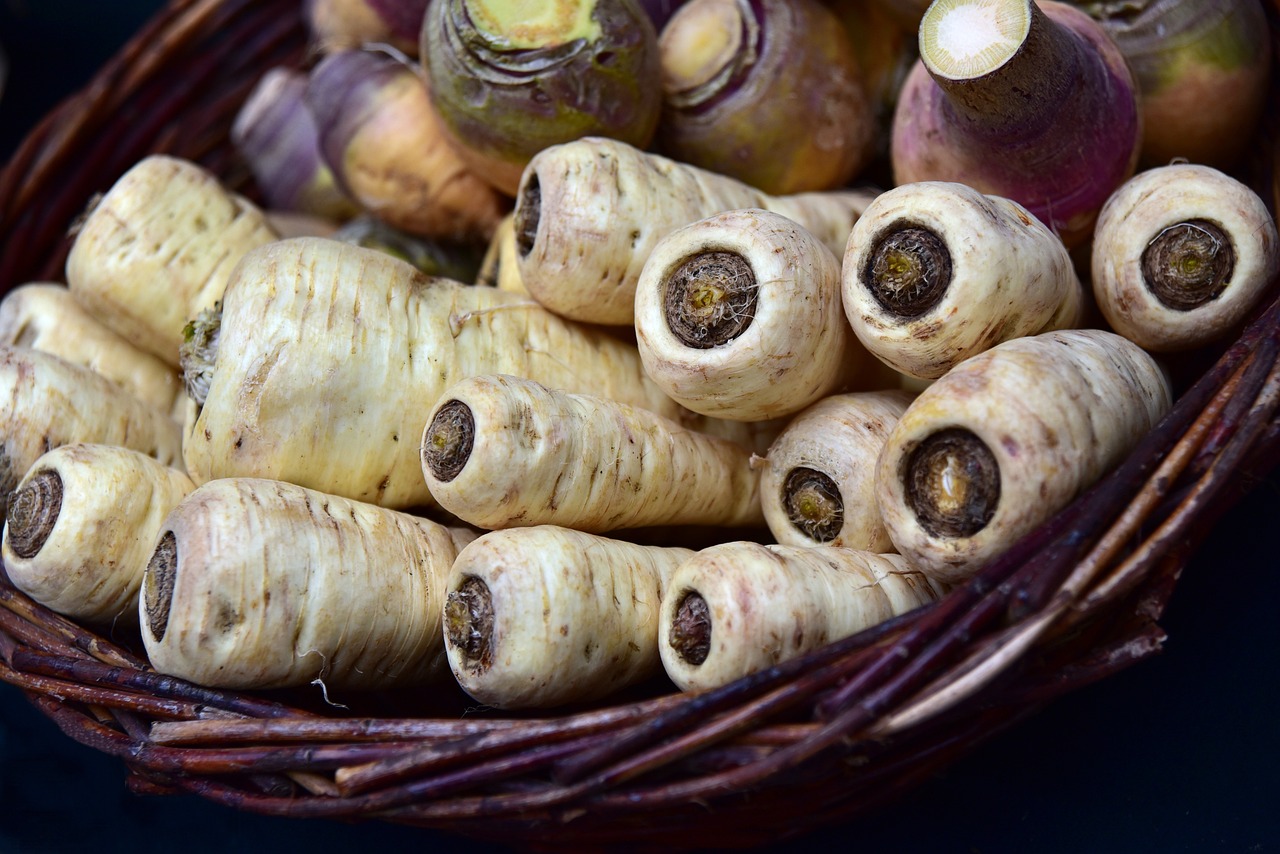
The parsnip grows underground, like the carrot or the radish. Its roots are whitish-yellow in colour. The parsnip belongs to the Apiaceae family. This family membership is easy to recognise during the flowering season from July to September by the compound umbel flower clusters. Compared to other root vegetables, the parsnip is a true nutritional powerhouse. It contains, for example, niacin, pantothenic acid, folic acid, calcium, potassium and zinc.
Versatile in the Kitchen
The parsnip has a delicate sweetness and a slightly earthy, nutty flavour. If the roots are harvested after the first frost, they have an even milder aroma. They can be freshly harvested on frost-free days throughout the entire winter and taste wonderful as oven-roasted vegetables, gratin, raw in salads, or prepared as a fine soup. It is easy to digest and gentle on the stomach, which is why it is often used for baby food. Its season begins as early as midsummer and lasts until around March. A perfect winter vegetable for a plant-based diet and a sustainable kitchen.
| You can help all animals and our planet with compassion. Choose empathy on your plate and in your glass. Go vegan. |