Fake animal rescue: How animals are tortured for clicks
Hand on heart — most people will have seen videos like this on social media at some point: puppies tangled in plastic bags, completely apathetic little cats, monkeys fighting snakes. Animals on the verge of drowning, screaming in desperation. And a rescuer always appears at the last moment, seemingly filmed by chance.

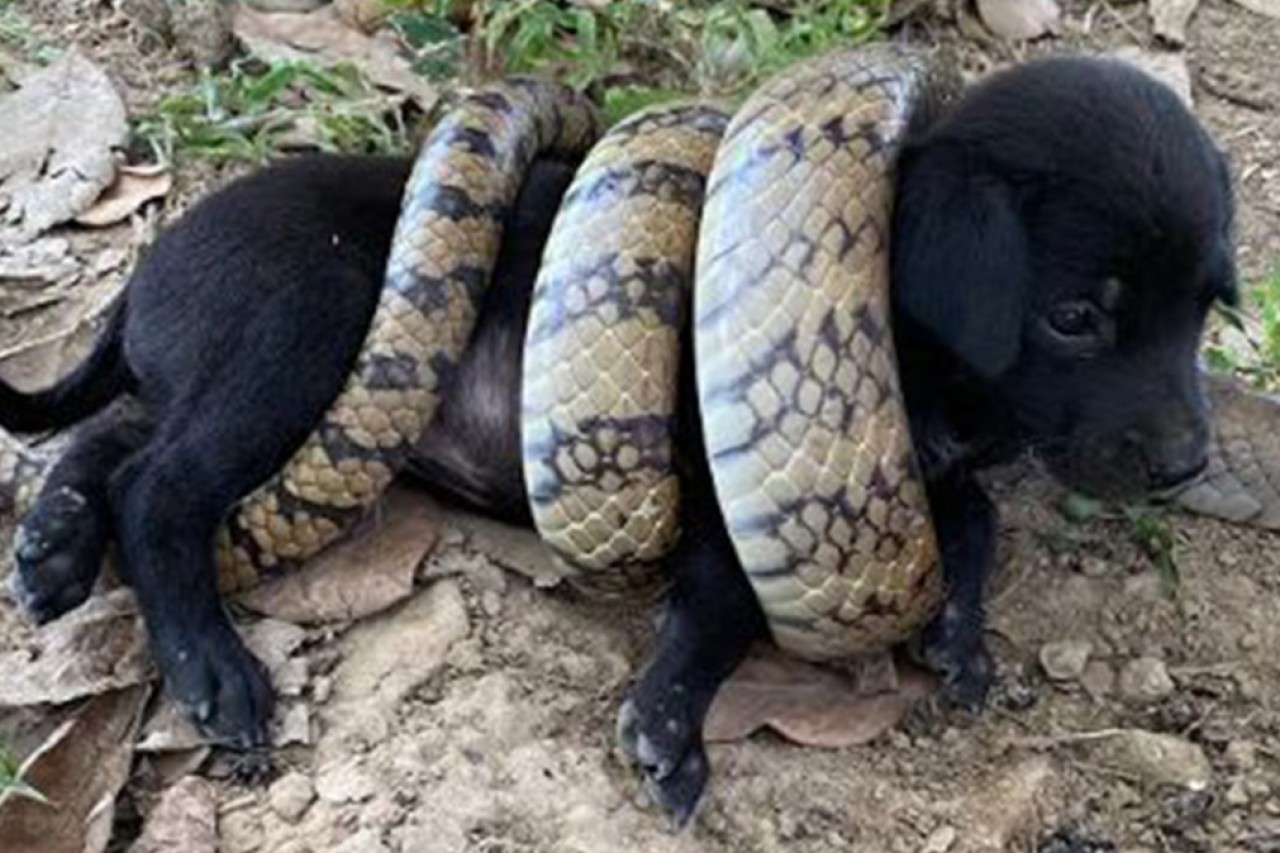
Such videos are viewed millions of times, often commented on with approval and admiration, and donations are sometimes even made to support the cause.
Yet these videos are often staged, the rescue a fake. Only the animal's suffering is real.
Because even when the supposed rescue of an animal is shown, one can never know what will happen to the animal in question, says Wiebke Plasse, Head of Communications at the World Animal Protection Society. “You can assume that the vast majority of the animals are no longer alive.”
Particularly in the case of creatures that are injured and in especially poor condition when the supposed rescuer appears, the starting point of the video — the sight of the weakened animal — is likely “in reality the endpoint.” And the path to that point is harsh for the animals involved: the little puppy tied to the rails in a plastic net screams for help.
These animals are forced to experience being placed in “unimaginable situations” by people they actually trust, says Plasse. It is an “abyss that we did not expect to exist.” The animal rights organisation IG Wild beim Wild also warns against fake videos and supposed animal rescues.
Videos reach audiences of millions
In October, the World Animal Protection Society published, together with the Social Media Animal Cruelty Coalition (SMACC),a report on staged animal rescues – described by animal welfare advocates as the first comprehensive analysis «of this perfidious form of animal exploitation for clicks». According to the report, the corresponding videos reach audiences of millions. A significant proportion of these are staged, with animals deliberately placed in danger.
For the report, more than 1,000 videos on the networks Facebook, YouTube, TikTok, Instagram and X were analyzed. In these videos, animals are supposedly found abandoned, buried, or trapped; their limbs are sometimes bound with chains, or they are on the verge of drowning. Videos are staged in which animals are rescued from attacks by other animals. Supposed veterinary treatments are filmed in which animals are resuscitated or freed from an unnaturally large number of parasites.
There is a «monkey hater scene»
The animals most frequently subjected to cruelty are cats, dogs and monkeys, but also lizards. One example from the «monkey hater scene,» as Plasse calls it: A baby monkey is scrambling around when suddenly the small animal falls into the water for no apparent reason. The little creature is unable to climb out of the water and cries out in distress – until finally the mother appears and helps.
The entire struggle against drowning is filmed – rather than the person filming quickly coming to the animal's rescue themselves. The perpetrators, however, have a «completely different relationship with animals,» Plasse emphasizes. The emotional response to witnessing animal suffering diminishes in the face of constant repetition.
The SMACC report shows that the staged videos have an immense reach – 600 of the videos analyzed accumulated a combined total of 500 million views. Users often fail to recognize that the content is fabricated and support the videos with clicks. Instead, Plasse advises: Do not click, do not share, do not comment – report it.
It's about the money
At first, the video producers were motivated by reach and the desire to be celebrated as heroes and rescuers, as Plasse explains. In the meantime, advertising is being displayed alongside the content, generating revenue, and donations are also being solicited. «The monetary value is the great driving force.»
Sums are difficult to estimate, but a study by a SMACC member organization from as early as 2020, covering around 2,000 fake rescue videos, found potential revenues of up to 15 million dollars on YouTube alone. Plasse therefore speaks of a “new form of earning money.”
Nevertheless, the question arises: why do people do such things? Theresa Müschner-Siemens, veterinarian at the World Animal Protection Society, assumes that beyond the financial aspect, some people are motivated by the attention that extreme content can generate.
Ultimately, this leads to people who treat animals cruelly having difficulty “perceiving them as sentient beings with their own needs,” says Müschner-Siemens. And users of social networks also become accustomed to depictions of animal suffering — and no longer perceive it as such.
What can be done about it?
“The brutalization of society is also what we want to prevent,” says Plasse. Animal welfare advocates are calling for a ban on the depiction and dissemination of cruel acts of violence against animals — and for animals to be included in Section 131 of the Criminal Code. So far, only “human beings or human-like entities” are mentioned there. A corresponding petition has already received over 200,000 signatures.
Fun videos can also depict animal cruelty
Not only fake rescues exploit animals cruelly. At the University of Veterinary Medicine Hannover, a study examined supposedly funny videos showing costumed animals, mishaps, or so-called challenges, which also subject animals to stress.
More than 3,200 people were surveyed online on the subject — and 98.5 percent stated they had already been confronted with such content. But only 46 percent said they had recognized animal suffering, as veterinarian Michaela Fels, a research assistant at the university, reports.
This shows: it is not always easy to see through animal cruelty — or to recognize fake rescues either. Especially since the supposed heroes are increasingly resembling genuine ones — by, for example, wearing shirts with corresponding slogans, according to Plasse.
What can help: According to the expert, true animal rescuers focus on the rescue itself, not on achieving the most perfect camera work possible. This likely means: they make less fuss about themselves, tend to remain unknown — and instead repeatedly put up toad fences or rescue roe deer fawns from fields.
More on the subject of recreational hunting: In our dossiers on the criticism of recreational hunting gather fact-checks, analyses and background reports. The scientific evidence is presented in the overview Studies on the Effects of Recreational Hunting.
The position of IG Wild beim Wild: IG Wild beim Wild rejects recreational hunting. Our model is the canton of Geneva, which has managed without recreational hunting since 1974: without hunting seasons, without hunting dogs, without driven hunts, without high seats, without the animal cruelty and crime that go hand in hand with hunting season elsewhere. What has worked there for over fifty years disproves every position paper by JagdSchweiz. An association that bases its policy on claims it refutes in its own documents is not a professional organisation, but a factory for misinformation.