Sarajevo Safaris: The Lugano Lead in Focus
A group of hobby hunters gathered around a Lugano art dealer are alleged to have travelled to Bosnia for the “people safaris”. Evidence is lacking, serious research raises doubts, and that is exactly why a second look is worthwhile.
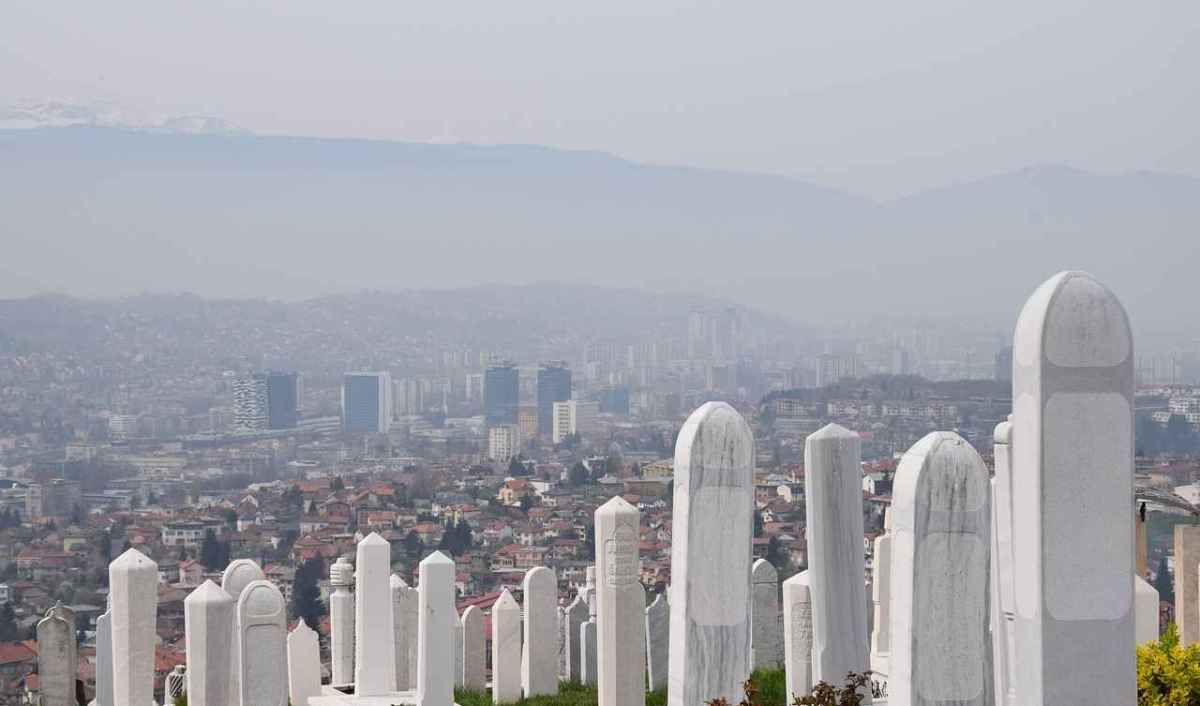
Around ten months ago, we first took up the serious suspicion that wealthy Western Europeans are alleged to have paid to shoot at civilians from the hills around Sarajevo during the Bosnian War.
At the time, the focus was on the analogy that becomes apparent as soon as one is familiar with the milieu. Now, for the first time, a concrete link to Ticino has emerged. At the same time, it is becoming clearer just how thin the publicly known body of evidence remains.
What is new
As «Blick» reported on 13 September 2026, criminal complaints containing information on possible perpetrators and accomplices from Switzerland have been submitted to the Swiss Office of the Attorney General. Spokesman Maximilian Tikhomirov confirms the complaints but declines to comment on details. He merely states that the complaints are being examined according to standard procedure, and emphasises that no criminal proceedings have been opened so far. It remains unclear whether there is sufficient suspicion of an offence and whether the Office of the Attorney General would even have jurisdiction.
This brings a geographically concrete Ticino dimension into focus for the first time. Milan-based author Ezio Gavazzeni, who set the international investigations in motion with his book «I cecchini del weekend» (“The Weekend Snipers”), is for the first time substantiating his earlier hints. According to Gavazzeni, the group consisted of Swiss and Italian nationals who had gathered around an art dealer in Lugano at the time. The group is said to have consisted of hunters who travelled to Bosnia together for the “sniper safaris”. The art dealer himself is not alleged to have fired shots, but is said to have learned in detail of the claimed trips and acts. «Blick» reports that two independent sources corroborate this account; however, no publicly verifiable evidence exists.
A crucial sentence appears in «Blick»: solid evidence for this is still lacking.
The origin of the suspicion
It all began with the Slovenian documentary film «Sarajevo Safari» (2022) by Miran Zupanič. Gavazzeni saw the film and began investigating. In his book, published in March 2026, he claims that around 230 Italians and several hundred foreigners in total could have been involved. Rates are also circulating that border on sheer cynicism: according to figures that have not yet been independently verified, up to 25,000 euros is said to have been paid for shooting a man, 40,000 for a woman, and just under 50,000 for a child. The “customers” are said to have mostly travelled via Trieste and been brought to the positions by members of the Bosnian Serb army.
The investigative landscape is real and international. In Milan, proceedings have been under way since 2025; in February 2026, a now 80-year-old man from northern Italy was questioned, who denies the allegations. In Austria, an investigation has been ongoing since April 2026 against an Austrian citizen and an unknown person. At the end of June, an exchange between Italian, Belgian and Bosnian investigators was also announced within the framework of the EU judicial authority Eurojust; details on the location and exact composition of the meeting are inconsistent across public reports. Gavazzeni says he has been questioned by the public prosecutors in Bern and Brussels and has also provided the Office of the Attorney General with the names of alleged witnesses.
Why we remain cautious here
And now the part that is often left out of sensationalist headlines. Research by the Balkan Investigative Reporting Network (BIRN) substantially calls the body of evidence into question, and we take these doubts seriously, because credibility cannot be selective.
BIRN took the account apart in July 2026: the evidence is thin, and the statements of key sources are contradictory and unconfirmed. Two key sources named in the account later distanced themselves from the depiction in the book. A researcher at the Belgrade-based Humanitarian Law Center searched the archives of the UN war crimes tribunal and found nothing apart from one known witness statement and the case of a Canadian volunteer — and that Canadian was, notably, not a paying tourist but a foreign fighter. A former UN spokesperson points out that the world's most renowned war correspondents were stationed in Sarajevo throughout, and finds it hard to imagine that something this serious could have escaped their notice. Observers who have followed the case for a long time also point out that Gavazzeni's narrative has grown over time, from a small number of participants to busloads of shooters and over 300 people, complete with an alleged secret landing strip near Sarajevo for which there is no evidence. In a recent joint investigation, ARTE and BIRN once again concluded that conclusive proof remains absent.
Gavazzeni counters that this is the finger pointing that obscures the moon — a diversionary manoeuvre intended to make an investigation supported by several European public prosecutors fail.
What the case reveals about hunting culture
Whether the allegations will be substantiated remains open. Precisely for this reason, this case must not serve as evidence for sweepingly linking hobby hunters with war crimes. Such an equation would be wrong.
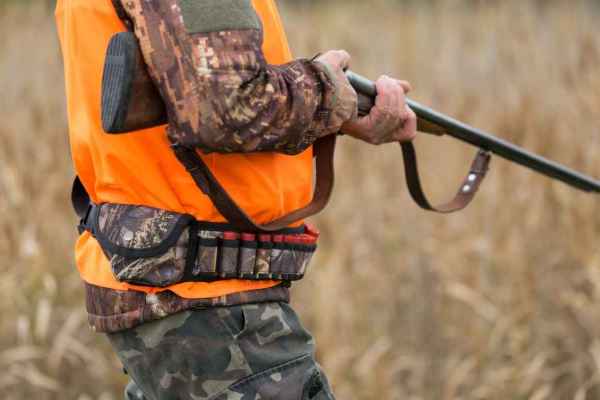
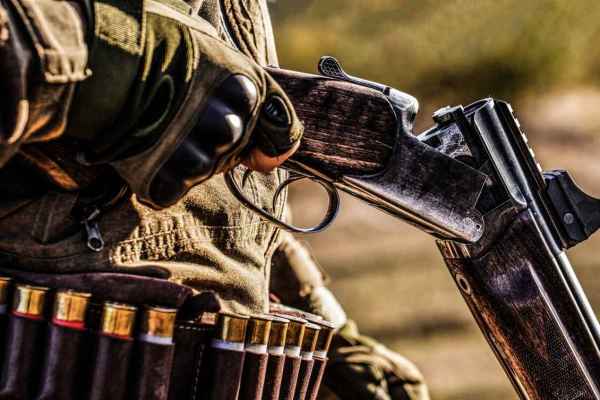
Nevertheless, it is striking that the accounts, complaints and media reports to date repeatedly refer to people from a milieu in which weapons, shooting and organised hunting trips are taken for granted. The theory that possible trips could have been arranged through structures that otherwise organise hunting trips to countries such as Hungary, Croatia or Romania is likewise, so far, an investigative assumption rather than a proven finding.
For us, the relevance therefore does not lie in a hasty apportioning of blame. It lies in the question of what cultural images underpin hunting as a leisure pursuit: the animal as trophy, the telescopic sight as an instrument of distance, killing as an experience and a status symbol. This critique of hunting for pleasure stands on its own. It does not need an unproven case to be justified.
Should the Sarajevo allegations be confirmed, it would nevertheless need to be established which networks, which intermediaries and which normalisation of violence might have enabled or facilitated such acts. Until then, the rule is: investigate, distinguish precisely, and neither play things down nor claim what is not proven. We will stay on this story and report back as soon as the Office of the Attorney General provides clarity, in one direction or the other.

All articles are written by IG Wild beim Wild as well as by external co-authors. Research, structuring and editorial processes may be supported by AI-assisted tools.
Support our work
With your donation you help protect animals and give their voice a hearing.
Donate now →