Valais hunt 2026/27: incidents, violations and developments at a glance
Wild beim Wild continuously documents the 2026/27 hunting season in Valais. The ticker features official announcements, incidents, violations, kills and other notable events – updated chronologically.
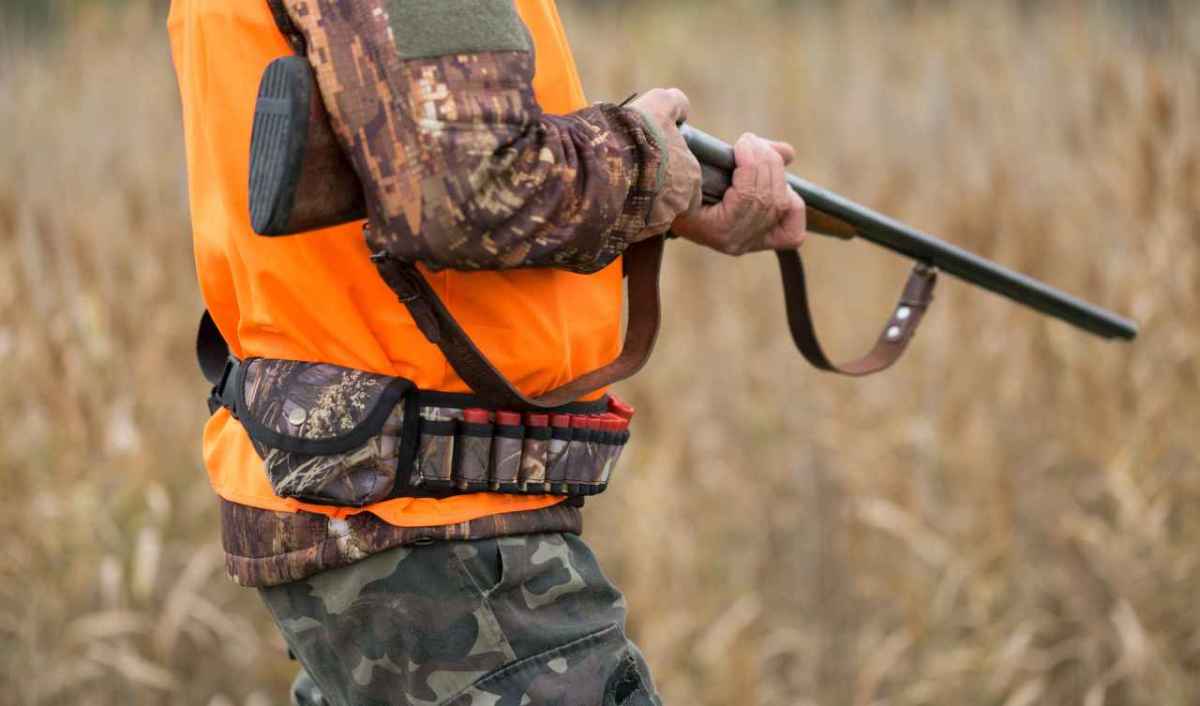
Valais officially opens the 2026/27 recreational hunting season on 21 September and intends to be the first canton in Switzerland to apply for a kill permit for the lynx.
At the same time, a new trophy hunting model for ibex and repeated herd protection failures following wolf kills are causing controversy. Just how deeply recreational hunting is culturally rooted in Valais is shown in the article The Psychology Of Recreational Hunting In The Canton Of Valais.
Ticker
25.09.2026
Fri 12:50
University of Bern counts 37 lynx instead of 80: kill request under scientific pressure
Researchers at the University of Bern estimate the Valais lynx population for winter 2025/26 at 37 independent animals (confidence interval 26 to 52). The figure of 80 lynx cited in politics is based on an extrapolation using data from Vaud and Bern. State Councillor Darbellay states a density for north-western Valais that is three times higher than what the study measures.To the article.
25.09.2026
Fri 04:30
15 francs per fox, 20 per badger: Valais keeps paying bounties
While the canton of Zug has scrapped its kill bounties for foxes and crows for this season, prompting six recreational hunters to take the matter all the way to the Federal Supreme Court (Zug recreational hunters challenge follow-up search obligation and abolition of fox bounties before Federal Supreme Court), Valais is sticking unwaveringly to its bounty scheme. The decree on the exercise of hunting 2026/27 (SGS 922.110) stipulates: the cantonal office for hunting, fisheries and wild animals pays every recreational hunter 15 francs per fox killed and 20 francs per badger. The canton also covers the cadaver disposal fees. Proof consists simply of the two severed front paws, which must be handed in to the game warden within ten days of the close of the hunting season. Foxes may be shot under permit E until 27 February.
The scale: according to cantonal hunting statistics, around 1,556 foxes and 68 badgers were killed in Valais in 2025, and nearly 1,900 foxes in 2024. That amounts to roughly 25,000 francs a year in bounty money from the public purse, not counting disposal costs. Such bounties were introduced in the 1970s to combat rabies. Rabies has been eradicated in Switzerland since 1998 — the bounty in Valais has not.
How little this bounty actually achieves was scientifically examined by the canton of Zug in 2026. The study commissioned by the Zug Office for Forests and Wildlife, conducted by the SWILD bureau under Dr Claudia Kistler and Dr Fabio Bontadina, concluded in May 2026 that licence hunting of foxes neither sustainably reduces populations nor curbs wildlife diseases: hunted populations compensate for losses through greater reproduction, higher survival rates and immigration (Canton of Zug stops promoting fox hunting). Zug drew the consequence and abolished the bounty as a relic. Valais continues to reward the killing of predators per head and, alongside Uri (30 francs per fox), is one of the last cantons with this system. Background: End fox hunting and dossier «The fox in Switzerland».
Sources: Canton of Valais, Decree on the exercise of hunting in Valais 2026-2027 (SGS 922.110); Statistics of Valais hunting 2025 (DJFW, as at 17.04.2026); SWILD, Fox hunting in the canton of Zug, May 2026; NZZ am Sonntag, 13 May 2023.
24.09.2026
Thu 10:28
Federal Office releases young wolves from two packs, three Valais packs to be eliminated entirely
On 18 September, the FOEN approved two applications from the canton: from the Nendaz-Isérables and Les Toules packs, up to two-thirds of the young wolves born in 2026 may be killed by 31 January 2027. Three further applications are still pending, with which Valais wants to completely eliminate the Nanz, Augstbord and Réchy-Anniviers packs. This means that five of the eleven Valais packs are wholly or partially at stake. The canton does not disclose the number of kills per pack, information on herd protection in the affected alpine pastures, or genetic evidence, even though livestock kills across Switzerland fell from 402 to 183 during the 2026 alpine summer. The full analysis in the article Valais permitted to kill young wolves: Three packs still await total removal.
24.09.2026
Thu 10:16
«More than shooting»? Canal9 portrays the high hunt as a nature experience
The Valais regional broadcaster Canal9 accompanied a young recreational hunter on the Riederalp in its "Tagesinfo" programme of 23 September, under the title "Hunting: more than shooting". The portrait presents recreational hunting as tradition and a nature experience. Little room is given to its downsides: the high hunt falls right in the middle of the red deer rut, during which recreational hunters in Schwyz prefer not to hunt because the meat of the stags is barely palatable. The kill quota of 1700 red deer is rising again despite three years of missed targets, Upper Valais butchers criticised frequent gut shots in 2024, and the kill of a protected female wolf in Herbriggen cost 300 francs. The full context is available in the article «More than shooting»? The Valais High Hunt between Image Film and Red Deer Rut.
19.09.2026
Sat 06:10
1,700 red deer as the target: Valais high hunt starts with the same quota as in 2015
On Monday, 21 September, the high hunt begins in Valais. According to the «Walliser Bote» (pomona.ch, 18.09.2026), around 2,100 recreational hunters are taking part, with the kill target for red deer set at 1,700 animals. This figure is nothing new. As far back as 2015, the target was also 1,700 red deer, at that time with 2,700 licence holders. In 2022, 1,630 were planned and 1,744 were shot. In 2023, 1,700 were planned and 1,411 were achieved; in 2025, 1,650 were planned and 1,415 were achieved. Despite three consecutive missed targets, the quota rises again to 1,700 in 2026.
Anyone who has had the same number of non-human animals killed year after year for over a decade is not regulating a population but managing it. The red deer compensate for the losses through higher reproduction rates, the target figure remains, and the cycle begins anew. We have compiled the relevant research in Hunting Fact Check. The role predators could play is shown in the article No Forest Without Wolf.
What is remarkable is how the canton secures the quota. According to the decree on the exercise of hunting for 2026/27, the wildlife wardens will shoot additional animals if recreational hunting fails to meet the target figure. Sub-areas of cantonal reserves may be opened up for the killing of hinds, yearling hinds and calves. Appeals against the decree are stripped of suspensive effect. Protected areas and legal recourse thus apply only for as long as they do not stand in the way of the kill tally.
The comparison with Grisons shows two paths to the same goal. Grisons protects lactating red deer hinds and calves in September and releases them for the special hunt in November and December, which effectively takes place every year. Valais has no institutionalised special hunt; instead, it shoots hinds and calves already during the high hunt, opens protected areas for this purpose, and has the wildlife wardens shoot additional animals if the quota is not met. And while Grisons places the first hunting phase before the rutting season, the Valais high hunt falls entirely within those weeks in which Schwyz recreational hunters consider the meat of the stags barely palatable and the disturbance not in keeping with hunting ethics. Background on the Grisons model is provided in the article Nine Questions on the 2026 Red Deer Kill Quota, the season is documented by the Grisons Tracker.
At the same time, the Office for Hunting, Fisheries and Wildlife is warning of acute natural hazards. In Blatten in the Lötschental, the landslide exclusion zone remains closed to recreational hunting, while in the Blinnental a large rock mass is being monitored. Near Randa, ice falls—potentially escalating into larger ice avalanches—threaten from the Weisshorn hanging glacier and the Bis glacier. A mountain range in motion, combined with 2,100 armed individuals in the midst of the red deer rut: for wild animals as much as for the recreational public the most turbulent time of year is beginning.
18.09.2026
Fri 16:20
300 Francs for a Shot Female Wolf: Herbriggen Exposes Valais' Justice Problem
In Herbriggen in the Mattertal valley, a recreational hunter shot a protected female wolf, claiming to have mistaken her for a fox. According to the «Walliser Bote», the public prosecutor's office of Upper Valais fined him 300 francs, and his hunting licence remains valid. For comparison: a discarded cigarette butt now costs 80 francs in Valais. The same excuse was already given in January 2024 in Goms, when a recreational hunter killed a female wolf during a nocturnal wait hunt for foxes. Of the 13 wolves proven to have been poached in Switzerland since 1999, seven occurred in Valais. While Norway sends ten wolf poachers to prison and France demands over 30,000 euros for a killed lynx, Valais settles the case of a female wolf at the rate of a minor fine. The full analysis in the article 300 Francs for a Female Wolf: How Swiss Justice Trivialises Poaching.
12.09.2026
Sat 07:15
Valais: The high hunt starts in a week, right in the middle of the red deer rut, while Schwyz recreational hunters reject exactly that
In about a week, the high hunt begins in Valais – right in the middle of the onset of the red deer rut (mid-September to mid-October). That this timing is contentious even among recreational hunters themselves is currently evident from a look at Central Switzerland. In the canton of Schwyz, recreational hunters are up in arms against hunting rutting red deer, for two reasons.
First, meat quality: venison from a stag taken during the rut has a very intense, strong taste of its own and is therefore usually not recommended for normal consumption. In plain terms: the killed animal is deemed barely edible.
Second, among recreational hunters it is considered not «sportsmanlike» to disturb the animals during the rut, when stags gather at the rutting grounds to establish rank. Nevertheless, hunting pressure ultimately prevailed: following protests from the hunting community, the Schwyz hunting administration granted a short-notice «stag day» so that recreational hunters could still kill multi-tined stags – that is, male animals with antlers – before the rut-related deterioration in taste set in.
Valais, by contrast, makes hunting during the rut a regular model. What Schwyz recreational hunters shun as questionable both in terms of taste and hunting ethics is a fixed component of the high hunt in Valais. We are documenting the Valais season from its start.
05.09.2026
Sat 16:52
Killed again: sheep summered without herd protection despite last year's attack
As early as 2025, 54 unprotected sheep were killed by wolves on an alp near the Topali hut in the Matter Valley. Nevertheless, sheep were again summered in the same area this year without herd protection, at altitudes of 2600 to 2900 metres above sea level, where grazing brings no ecological benefit. The renewed kills were the predictable result. More on the connection between herd protection and kill rates in the article Halfway Through Alpine Summer: Wolf Kills Cut In Half.
19.06.2026
Fri 17:30
Valais wants to be the first canton in Switzerland to allow the lynx to be killed
State Councillor Christophe Darbellay announces that by the end of summer he will submit an application to the Federal Office for the Environment for lynx regulation, even though roe deer hunting is already being significantly restricted. It would be the first kill permit for lynx in the history of Switzerland. More on this in the detailed article.
18.03.2026
Wed 00:00
New trophy hunting model: Valais to allocate ibex kills differently in future
Because the kill quotas for ibex have repeatedly been missed in recent years, Valais is introducing a new regulation model from 2026: every licensed recreational hunter receives a basic quota of two animals – first a female ibex, then a male ibex of the assigned age category. The new model replaces the previous «Ibex Campaign» and makes trophy hunting of ibex in Valais even more systematically accessible. More on the previous criticism in the article Controversial Ibex Hunting In Valais.
Background
- Dossier: Wolf in Switzerland: facts, politics and the limits of hunting
- Dossier: Herd Protection In Switzerland: What Works And What Fails
- Valais Demands Lynx Kill: Shooting Instead Of Protecting
- Wolf Kill In Staldenried: Federal Government Sues Valais, Darbellay Continues To Rage
More on the subject of recreational hunting: In the dossier Poaching and hunting crime in Switzerland we document cases, legal questions and recurring patterns. The scientific evidence is presented in the overview Studies on the Effects of Recreational Hunting.
The position of IG Wild beim Wild: IG Wild beim Wild rejects recreational hunting. Our model is the canton of Geneva, which has managed without recreational hunting since 1974: without hunting seasons, without hunting dogs, without driven hunts, without high seats, without the animal cruelty and crime that go hand in hand with hunting season elsewhere. What has worked there for over fifty years disproves every position paper by JagdSchweiz. An association that bases its policy on claims it refutes in its own documents is not a professional organisation, but a factory for misinformation.

All articles are written by IG Wild beim Wild as well as by external co-authors. Research, structuring and editorial processes may be supported by AI-assisted tools.
Support our work
With your donation you help protect animals and give their voice a hearing.
Donate now →