Controversial Ibex Hunt in Valais
The hunting of ibex in Valais regularly sparks controversial debates among nature conservationists, hobby hunters and the public.

Trophy hunting refers to the practice of killing wild animals for recreational or sporting activities.
This is often done with the intention of keeping a part of the animal's body as a trophy or souvenir. The practice is, however, controversial and frequently criticized, as it has negative impacts on wildlife conservation efforts and is ethically questionable.
Trophy hunting is cowardly and a reflection of poor character. Those who promote militant hobby hunters lack the spirit and will to do what is right and show no respect for nature, in which they, like wild animals, are merely guests. The canton of Valais consistently damages its own reputation far beyond its cantonal borders — whether in matters of wildlife, flooding, illegal construction, the military, political ethics or nepotism.
Killing animals for trophies is in part criminal, but always wrong — a sign of cultural depravity. The killing of animals by trophy hunters is unethical and contravenes animal protection law. Driven purely by the pleasure of killing, hobby hunters reduce wildlife populations across the globe. Obtaining a hunting trophy and satisfying the hunting instinct do not constitute a legitimate reason for killing an animal. For foreign hobby hunters, the cost amounts to 25,000 francs per ibex shot in Valais; for Swiss hunters from other cantons, the fee is half that.
Swiss animal protection law prohibits the killing of animals to produce animal feed; only offcuts not used for human food may be used for this purpose. Ibex hunting is driven by nothing more than the desire for a trophy.
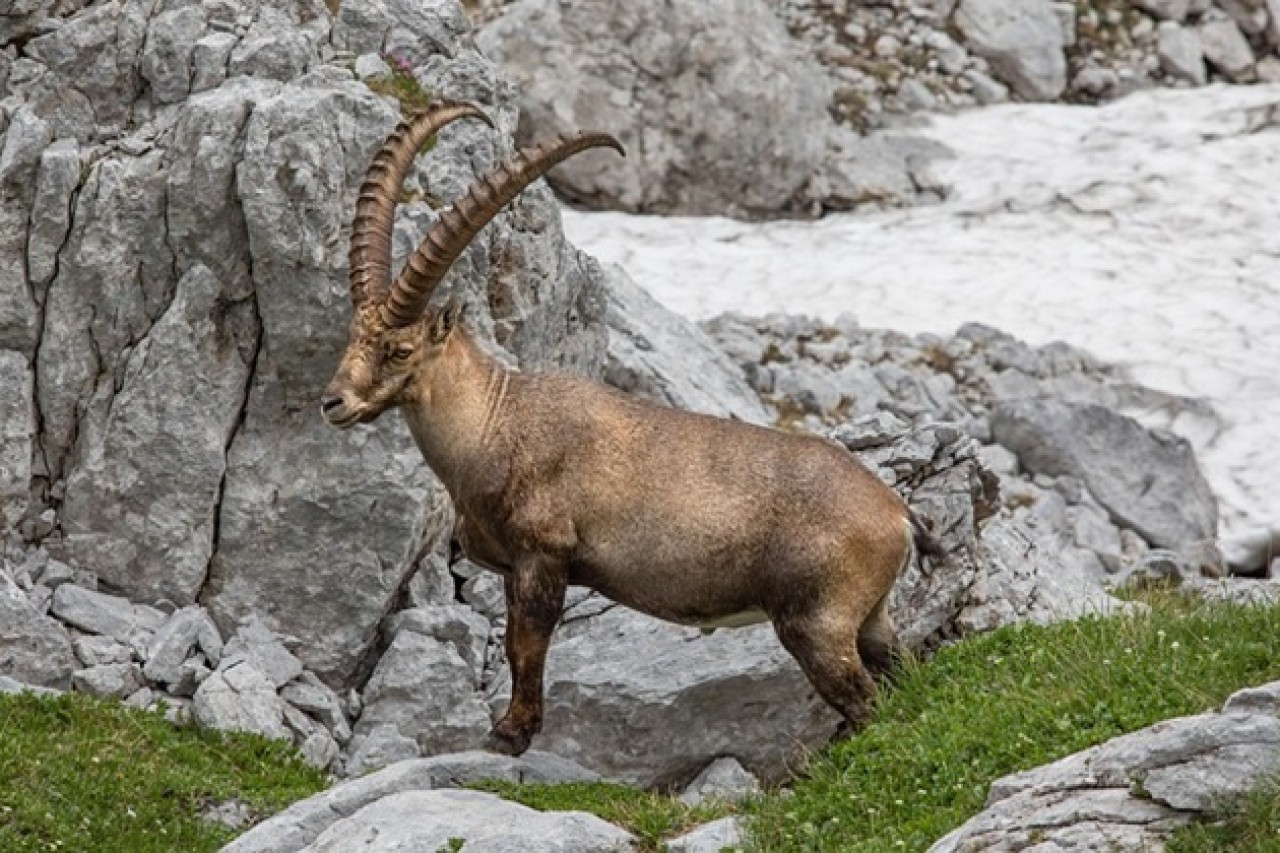
The ibex, as a symbol of the Alps, holds not only cultural significance but also an important place in the region's ecosystem.
All Alpine ibex living in Europe today descend from a small gene pool originating in Italy. They are weaker, lighter, their horns smaller as before their near-extermination. Today's wild animals are also more susceptible to disease and react more sensitively to changes in the environment – most recently caused by climate change. Due to inbreeding, today's ibex also reproduce more slowly than in the past.
Hobby hunters take great pleasure in causing suffering to other living beings and disturbing nature. The UN estimates that a high percentage of all extinct animal species were wiped out with the help of hobby hunters. Hobby hunters demonstrably contribute to the reduction of biodiversity.
Points of criticism
Opponents of ibex hunting accuse the hunting industry of acting primarily for commercial reasons while ignoring the environmental impact of recreational hunting. Conservation organizations emphasize that recreational hunting disturbs the ibex's habitat and can endanger their reproduction. They call for more intensive research into population stocks and alternative means of regulating the population, such as deterrence measures or relocations.
Nothing has changed in the way Valais reports on its kills despite years of criticism. Why is this problematic? Because hobby hunters have lastingly weakened the ibex species through trophy hunting. And could continue to weaken it.
As researchers have since discovered, old males with large horns are central to the survival and health of the population. For female ibex, large horns are considered a sign of genetic fitness.
For humans, however, large horns have remained popular trophies. Especially in Valais. This is shown by data from 2018.
In that year, Valais distinguished for the first time in its publicly accessible hunting statistics between female and male ibex. It also disclosed for the first time which age groups had been hunted and to what extent.
The result: in 2018, hobby hunters shot 32% more ibex aged 11 years and older than they were permitted to shoot according to BAFU on the hunt . Specifically, it was 78 ibex instead of 59.
In the view of IG Wild beim Wild, recreational hunters annual medical-psychological fitness assessments modelled on the Dutch system, as well as a binding upper age limit. The largest age group among hobby hunters today is 65+. In this group, age-related limitations such as declining visual acuity, slowed reaction times, lapses in concentration and cognitive deficits increase statistically and significantly. At the same time, accident analyses show that the number of serious hunting accidents involving injuries and fatalities rises significantly from middle age onwards.
The regular reports of hunting accidents, fatal errors of conduct and the misuse of hunting weapons highlight a structural problem. The private ownership and use of lethal firearms for recreational purposes largely eludes continuous oversight. From the perspective of IG Wild beim Wild, this is no longer justifiable. A practice based on voluntary killing that simultaneously generates considerable risks for humans and animals forfeits its social legitimacy.
Hobby-hunting is furthermore rooted in speciesism. Speciesism describes the systematic devaluation of non-human animals solely on the basis of their species membership. It is comparable to racism or sexism and can be justified neither culturally nor ethically. Tradition does not substitute for moral scrutiny.
Critical scrutiny is particularly indispensable in the field of hobby hunting. Scarcely any other domain is so thoroughly shaped by euphemistic narratives, half-truths and deliberate disinformation. Where violence is normalised, narratives frequently serve as justification. Transparency, verifiable facts and an open public debate are therefore essential.