Half-time in the alpine summer: wolf kills halved, but the credit does not go to the rifles
More wolves, fewer kills. At the halfway point of the 2026 alpine season, livestock kills have dropped to under half of the previous year. The true reason is herd protection, not the kills of recreational hunting. Only one canton stays silent.
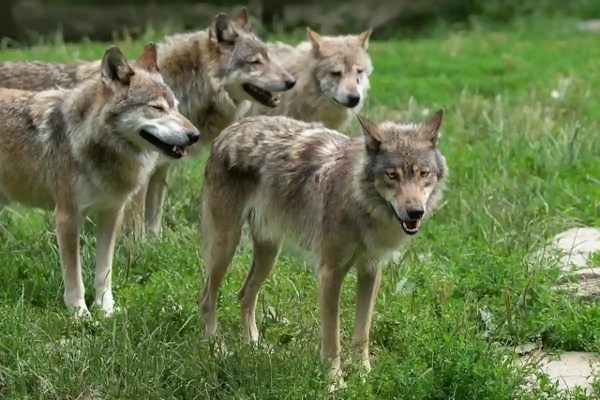
The bare figures are striking. By the end of July 2026, wolves had killed 183 livestock animals in Switzerland. In the same period of the previous year the figure was still 402. A decline of more than half, and this despite the fact that the wolf population, with more than forty packs and around 350 animals, is larger than ever since the wolf's return.
It is precisely this apparent contradiction that exposes the narrative of the agricultural and recreational hunting lobby. If the number of kills were indeed dependent on the number of wolves, the kills would have to rise, not fall. The opposite is the case.
The contrast that explains everything: Upper versus Lower Valais
Nowhere is the true cause as clearly visible as in the canton of Valais, the undisputed frontrunner when it comes to kills. There a remarkable discrepancy is revealed. While numerous kills continue to occur in the Upper Valais, only two confirmed attacks were registered in the whole of the Lower Valais during the current year.
The astonishing part: with around eight packs, considerably more wolves live in the Lower Valais than in the Upper Valais, which has about three to five. Yet things remain largely quiet there. The difference lies not with the wolves, but with the type of livestock husbandry and with herd protection. The popular argument of kills does not hold up here either: in both parts of the canton preventive regulation was carried out last autumn and winter, and individual kills were even more frequent in the kill-rich Upper Valais.
Where herd protection is implemented consistently, things stay quiet. Where it is lacking, the kills mount up. This finding is nothing new for the IG Wild beim Wild; it has run through the data for years. Even the analysis showing that 98 per cent of the livestock killed in Ticino were without herd protection, speaks an unmistakable language.
One canton stays silent: Ticino and its question mark
While eight cantons provide open figures, at one point in the statistics there is only a question mark. Ticino is the only wolf canton that publishes no current predation figures. This silence fits into a larger pattern.
For in parallel with the mid-term assessment, IG Wild beim Wild documents in Ticino a series of twenty-one cases between October 2025 and July 2026, with at least 78 killed livestock and enclosure animals. In the official findings of the Dipartimento del territorio, the same formula keeps appearing: «Animale non protetto adeguatamente», animal not adequately protected. And the affected areas are not remote high alpine regions, but also valley locations such as Iragna at around 300 metres above sea level, right next to the settlement area.
It is also revealing how the authority communicates. In sixteen cases between October 2025 and July 2026, the finding of the Ufficio della caccia e della pesca was without exception «Animali non protetti adeguatamente» or «non proteggibili», animals not protected or not protectable. From July 2026 a third formula suddenly appeared: «Protezione degli animali in esame», the protection was still being examined. This formula says neither one thing nor the other. That the assessment can indeed be made immediately was shown by the subsequent DNA results: in Vogorno, Serravalle and Brione sopra Minusio, the «in esame» classification was subsequently corrected to «not protected», and at the same time the analysis revealed that no predator was involved at all.
It is precisely these cases that are particularly revealing. In Vogorno, Serravalle and Brione sopra Minusio, according to the available results, the animals did not die from wolves but from other causes such as disease, weather or neglect, and in the official assessment they were nevertheless deemed not sufficiently protected. This underpins a finding that IG Wild beim Wild has been demonstrating for years: the actual animal welfare problem with sheep and goats is far greater than the wolf.
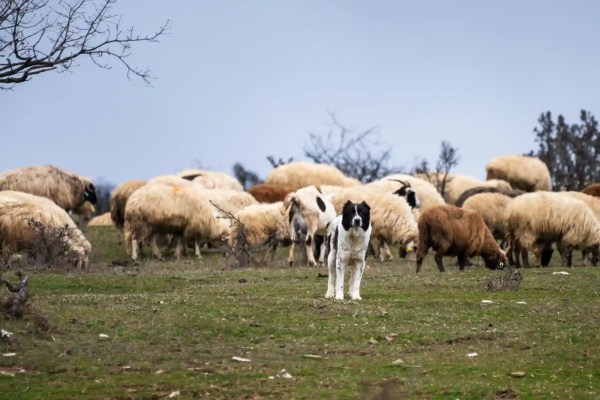
That a lack of protection is a question of will and not of terrain is demonstrated by the Alpe Bri/Ninagn. Classified by the canton as «not reasonably protectable», the manager nevertheless made the steep and rocky alp, spread across three valleys, protectable: with five livestock guardian dogs, extensive fencing material and a night pen for around 360 sheep. Caravan and mobile hut were flown in by helicopter. Where there's a will, there's a way. If 360 sheep can be protected on an alp classified as «unprotectable», a lack of protection in the valley next to the residence can hardly be justified.
The cantonal figures in detail
The decline runs across all the pack cantons. In Grisons the number of livestock killed fell from 67 to 29, a drop of more than half. It was even more drastic in Vaud: from 114 to just five. This particularly sharp collapse can be partly explained by the massive regulation of the pack at Mont Tendre, a local and temporary effect that nonetheless changes nothing about the large-scale trend.
| Canton | Kills as at the end of July 2025 | Kills as at the end of July 2026 |
|---|---|---|
| Grisons | 67 | 29 |
| Valais | 170 | 130 |
| Vaud | 114 | 5 |
| Neuchatel | 12 | 16 |
| Glarus | 2 | 1 |
| St. Gallen | 24 | 2 |
| Obwalden | 10 | 0 |
| Schwyz | 3 | 0 |
| Ticino | ? | ? |
| Total (excluding Ticino) | 402 | 183 |
In Obwalden and Schwyz not a single farm animal has been killed so far. Only in Neuchatel is there a slight increase, at a low level. The canton of Ticino continues to refuse to publish current kill figures, which is why no statements are possible for this canton, an intransparent special case that unfortunately has a tradition.
Kills work locally, herd protection works on a large scale
Even David Gerke, managing director of the Gruppe Wolf Schweiz, whose association compiled the figures, assesses the role of kills soberly. Yes, locally, preventive regulatory kills could bring relief, for example at Mont Tendre. But they are not responsible on a large scale for there being fewer kills. The decisive measure remains herd protection.
The fact that the kill figures have been declining since 2023, that is, before the start of the major waves of culling, while the wolf population continued to grow at the same time, is the striking proof. Anyone who ignores this connection is engaging in symbolic politics at the expense of a strictly protected species. The effectiveness of functioning protective measures has long been documented, as the example of Herd protection also works in the Surselva shows. Conversely, kills almost always occur where serious deficiencies in herd protection exist.
The costly detour: what a kill costs
The fixation on the kill is not only ineffective, it is expensive. A single wolf kill costs around 30,000 to 35,000 francs in Switzerland. In Ticino, during the 2025/26 regulation period, around 33,000 francs per wolf were spent according to calculations by the IG Wild beim Wild, for just six animals killed. For the same amount, seven to ten livestock guardian dogs could be financed for an entire year, a measure that demonstrably works because it tackles the problem at its root.
Particularly perfidious is that a lack of protection creates precisely the problem it supposedly combats. Where farm animals are easily accessible, individual wolves learn to specialise in them. The kill statistics rise, the call for kills grows louder, and the actual failure, the inadequate enforcement of the duty to protect, remains invisible. Whoever neglects herd protection produces the demand for kills along with it. The IG Wild beim Wild has already documented just how much the responsible authorities look away, when the Ticino veterinary office recorded ten attacks with fifty dead animals without consequence.
Conclusion: the wolf is not the problem
The half-time assessment of the 2026 Alpine summer is a slap in the face for all those who brand the wolf a scapegoat and demand kills as a cure-all. More wolves, fewer kills: this formula works only with consistent herd protection. The livestock owners who have invested in fences, dogs and shepherding do the real work. They deserve recognition, not the guns of the recreational hunters.
The long-term goal remains the coexistence of humans and wolves. The figures show: it is possible. One simply has to want it, instead of continuing to rely on the supposedly simple solution of the kill. In-depth analyses of this are gathered in our dossier on the ecological function and political reality of the wolf as well as our dossier on hunting and animal welfare.
LET'S STAY IN TOUCH!
We would like to send you the latest news and offers in our newsletter.
Support our work
With your donation you help protect animals and give their voice a hearing.
Donate now →