Latvia raises wolf quota to 400 despite audit report
The country's own audit office classifies the forestry authority's population data as unverifiable, yet the kill figure rises regardless.
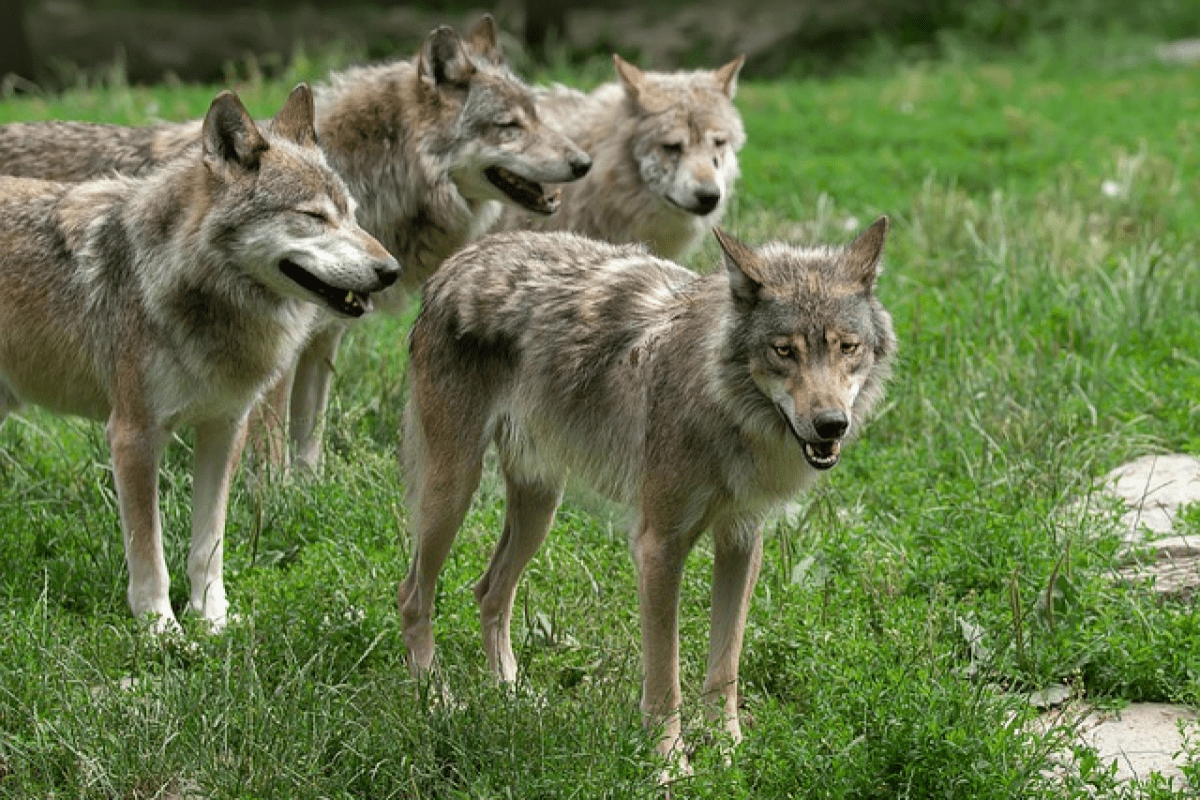
Latvia has raised the permitted kill volume for wolves for the 2026/2027 season from 370 to 400 animals; the hunting season has been running since 15 July 2026.
The Latvian audit office had already described the population assessment of the responsible forestry authority as incomprehensible and unverifiable.
What is fixed for the new season
The State Forest Service has divided the volume between two management units. In Unit A, which covers the largest part of the national territory and where wolves are permanently present, 330 animals have been released; the hunting season there runs until the quota is reached, at the latest until 31 March. In Unit B, with only sporadic occurrence, 70 animals apply, with a deadline of 31 December.
Decisive is an additional clause that goes unnoticed in the public perception: once the quota has been exhausted, the authority can release a further ten wolves for killing. The actual upper limit is therefore 410 animals.
The Forest Service puts the population at around 1’400 wolves. With 400 animals released, that corresponds to a removal rate of 28 per cent of the total population, and with the additional release exhausted, just under 30 per cent.
The record of the past season
In the three Baltic states, more than 800 wolves were killed together in the 2025/2026 season. Latvia fully exhausted its quota of 370 animals in January 2026. In Lithuania the limit stood at 307 animals; by the end of the season on 31 March 2026 a total of 275 wolves had been killed. In Estonia, 151 of 163 authorised animals were killed, plus a further 16 wolves under special permits from the environmental authority.
The Estonian trajectory deserves separate consideration. The initial quota in November 2025 stood at 84 animals, with twelve wolves already killed under special permits before the season even began. In December 2025, the environmental agency proposed an increase of 28 animals across five management areas, justified by new pack data from the first winter hunts. In the end, there were 163 authorised animals plus 16 special permits. A quota that is almost doubled over the course of the season does not follow population biology, but demand.
When your own auditing authority objects
In 2020, the Latvian Court of Audit presented an audit report on the question of whether state wildlife management is sustainable. Its overall verdict: responsible and sustainable management does not exist.
On population assessment of predators, the report notes that the methodology was developed around twenty years ago, when the forest administration was organised differently and forestry staff could cover considerably smaller areas on a daily basis. In spot checks in the forest districts, the auditors rated the reliability and usability of the data as questionable: the assessment builds on the previous year's figures, the changes to which cannot be traced and are not open to review. The longer this procedure is carried forward, the more likely the determined population size deviates from the actual situation. Neither the state at the time of EU accession nor a significant population increase can be substantiated with it.
The report also documents how widely the estimates diverge. For the lynx, the forest service put the population after the 2018 season at three times as high as the consulted expert and eight times as high as the special monitoring by the Silava research institute. For the wolf, the Court of Audit describes a comparable situation. Scientific calculations did not confirm the significant population increase over the last fifteen years assumed by the forest service.
Particularly noteworthy is a procedural finding: according to the assessment of the auditing authority, the working group tasked with setting the kill quotas has only a formal significance, and this expressly applies also to the nature conservation agency, which is actually responsible for protecting particularly protected species. In addition, the court of auditors found that the national reporting system does not provide reliable data on the animals actually killed.
Anyone wishing to hunt a protected species must demonstrate a favourable conservation status. If the underlying figures cannot be verified, the entire quota logic stands without a foundation.
The forestry service justifies the increase in part by claiming that wolf hunting gives the rural population a sense of security and makes coexistence with the wolf population easier. A sense of security is not a biological parameter. Moreover, the damage figures cited by the authority itself point in the opposite direction: by 13 July 2026, 24 confirmed wolf attacks with 67 injured domestic animals had been recorded, whereas in the same period of the previous year there were 82 attacks affecting 372 animals.
What the genetics show
The most robust findings are provided by the genetic monitoring conducted by the state research institute Silava. Between July 2009 and March 2021, 1’269 wolves killed in Latvia were successfully genotyped, around 42 per cent of all animals culled during this period. From this, 223 kinship groups could be reconstructed.
The result is twofold and is therefore regularly quoted in abbreviated form. Genetic diversity, heterozygosity and inbreeding values of the Latvian population remained unremarkable; the population is not fragmented. The social findings, by contrast, are striking.
In 46.1 per cent of the kinship groups, related animals could only be detected during a single hunting season, and in a further 15.6 per cent during two seasons. Fewer than a third of the groups persisted for four years or longer. In 64.6 per cent of the groups, at least one parent animal was lost. In 27.1 per cent of cases, a parent animal was killed while pups were still alive, and in 17.5 per cent these pups were between three and ten months old, on average 5.6 months.
Young wolves depend on care and guidance from adult pack members until they are nine to ten months old. The research group therefore recommends opening the hunt only once the young animals are at least six months old, which for Latvia would mean shortening the season to a start in October or November. With a period running from 15 July to 31 March, Latvia has the longest wolf hunting season of the Baltic states.
Also documented are pack dissolutions, the abandonment of ancestral territories and the premature dispersal of young animals. In nine families, young animals were killed 30 to 230 kilometres away after losing a parent. The narrative that kills are merely population regulation does not stand up to this finding: what is removed is not an anonymous surplus, but the reproductive and social structure itself.
Border fortification as a connectivity question
The report on the conservation status of the wolf in Europe, prepared under the Bern Convention, expressly names the newly erected security fences on the borders with Belarus and the Russian Federation as a cause for concern, because they reduce the degree of connectivity. Without precise monitoring and without this connectivity, a downgrading of the population is possible.
The fences do not lock wolves in, but they hamper exchange and immigration. This distinction is central, because the compensatory capacity of a hunted population depends substantially on whether adult animals move in from neighbouring areas. This is precisely what the Silava study also points to: part of the Latvian population depends on immigration for its stability, and the research group expressly names border fences as a factor that will have to be taken into account in future when setting hunting limits.
To the south, the corridor remains via Poland, where wolves have not been shot since 1998. The Polish-Lithuanian border, however, measures only about 100 kilometres.
Estonia: a court draws the line
In June 2026 the Estonian Supreme Court declared unlawful the order of the environmental authority for the 2020/2021 season, which permitted the killing of 140 wolves. In preparing it, the authority had failed to take into account the requirements of the Bern Convention, under which the wolf was then more strictly protected. The claim had been brought by the organisation Eesti Suurkiskjad.
The case shows that administrative habit and convenient statistics are not sufficient as justification for shooting protected species. What is required is scientific data, a robust legal framework and, in cases of doubt, the precautionary principle. Estonia thus joins a European trend in which courts are marking the limits of hunting-policy wish-figures, as previously seen in Sweden.
Relevance for Switzerland
Baltic practice is being marketed by European hobby hunting organisations as a model. Here too, the assessment of predator populations lies largely in the hands of administrative bodies close to hunting, and here too, figures are used for kill decisions whose origins can barely be verified from the outside. The Latvian case shows where this constellation leads when it goes unchecked for over two decades: it is not the population that is managed, but the demand for kills.
Further reading: The wolf in Europe: why hobby hunting is not a solution
LET'S STAY IN TOUCH!
We would like to send you the latest news and offers in our newsletter.
Support our work
With your donation you help protect animals and give their voice a hearing.
Donate now →