Wolf on Lake Zurich: What the sighting in Hombrechtikon means
A possible wolf was sighted on the right shore of Lake Zurich at the end of May. At the same time, the new FOEN report shows: Switzerland today counts 40 packs, and the growth of the population can only be slowed by preventive regulation, not stopped.
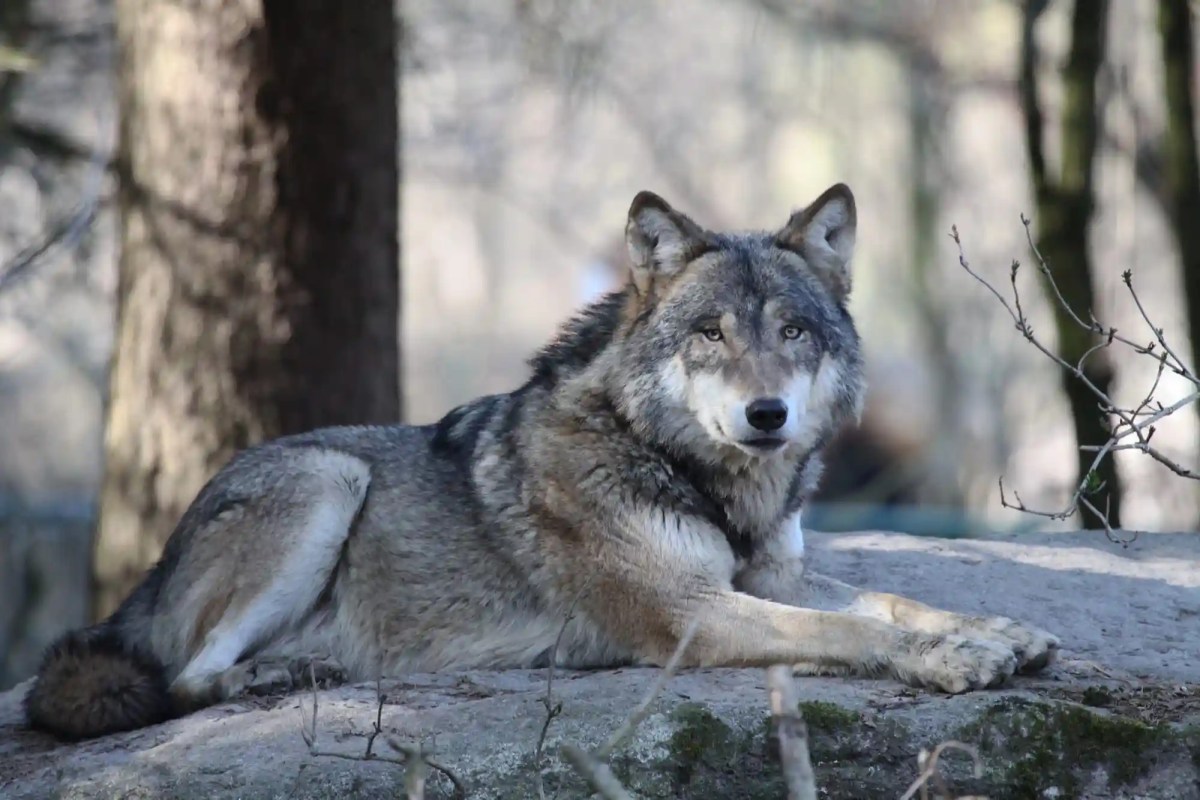
At the end of May, the cantonal wolf warning service reported a sighting in Hombrechtikon on the right bank of Lake Zurich.
It «cannot be ruled out» that it is a wolf. Livestock keepers should initiate herd protection measures. The report is not an isolated case, but the expression of a development that the federal government has captured in figures.
77 wolves killed, 40 packs
On 18 May 2026, the Federal Office for the Environment (FOEN) published its report on the third preventive regulation period. To date, the cantons have preventively regulated the wolf population three times. For the most recent regulation phase, the FOEN approved the regulation of approximately 115 wolves, which led to the killing of 77 wolves.
The result is sobering: the exponential growth of the population appears to be being slowed, yet the number of packs continues to rise. After the 2025/2026 regulation period, 30 packs living entirely in Switzerland and 10 cross-border packs were counted.
In the 2025/26 monitoring year, the presence of 43 packs was confirmed in Switzerland, two more than in the previous monitoring year.
Regulation with recreational hunter participation
What is rarely openly stated politically: in Valais, recreational hunters are permitted to take part in wolf regulation. The canton of Valais has decided once again to involve hunters in the proactive wolf regulation period 2025/2026. Hunters who hold a valid regulation permit are allowed to kill wolves in the corresponding regulation perimeters. At the beginning of May, this practice became concrete: on 3 May 2026, a wolf was killed in the municipality of Staldenried.
What the report does not answer
The FOEN report states that the regulation «works». At the same time, the number of packs grows from year to year. The question of whether slowing is sufficient to keep the population under control in the long term remains open. The Gruppe Wolf Schweiz also notes that livestock kills were already declining before wolves were first shot preventively. Whether the regulation or the expanded herd protection is responsible for this cannot be clearly derived from the available data.
A sighting at Lake Zurich fits this picture: the wolf is spreading, with or without regulation. Anyone wishing to learn more about predators in Switzerland and the political instruments behind it will find background information, facts and contextualised sources on this platform. The topic of the hunting act and the role of recreational hunting in wildlife management are dealt with in detail there.
More on the subject of recreational hunting: In our dossiers on recreational hunting gather fact-checks, analyses and background reports. What the research says about this is shown by Hunting fact-checked: the state of research.
The position of IG Wild beim Wild: IG Wild beim Wild rejects recreational hunting. Our model is the canton of Geneva, which has managed without recreational hunting since 1974: without hunting seasons, without hunting dogs, without driven hunts, without high seats, without the animal cruelty and crime that go hand in hand with hunting season elsewhere. What has worked there for over fifty years disproves every position paper by JagdSchweiz. An association that bases its policy on claims it refutes in its own documents is not a professional organisation, but a factory for misinformation.
Support our work
With your donation you help to protect animals and give their voice a hearing.
Donate now →