Spain: World's first octopus farm on Gran Canaria definitively fails
Nueva Pescanova withdraws application after five years of resistance and a stricter environmental assessment.
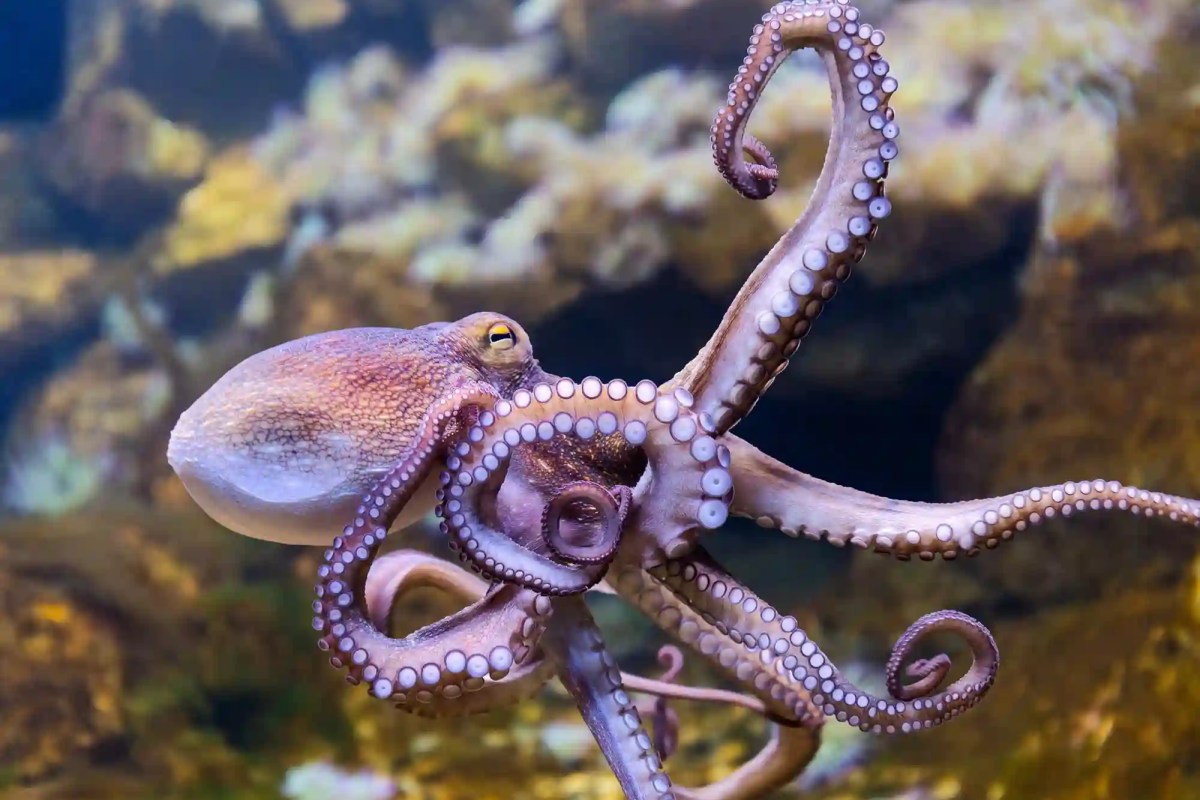
On 23 July 2026, the Spanish fishing group Nueva Pescanova withdrew its application for the world's first commercial octopus farm.
The facility was planned in the port of Las Palmas on Gran Canaria, at the «La Esfinge» dock, on an area of over 50’000 square metres, roughly the equivalent of seven football pitches. The plant, estimated at 50 million euros, was to have produced around 3’000 tonnes of octopus a year, more than 10 per cent of Spain's entire catch. According to leaked planning documents, around one million animals would have been reared and killed for this every year.
Regulatory bottleneck instead of a ban
The path to the end is remarkable: the project initially went through a simplified environmental assessment procedure, a lighter process for projects classified as unproblematic. Yet even this assessment identified «possible significant negative impacts», as stated in the company's withdrawal letter. This forced the Canary Islands government to order a full, ordinary environmental assessment procedure, a considerably stricter process that can drag on for years and completely block a project. Nueva Pescanova never completed this assessment. In the end, the specific detailed assessment of the site was decisive: it found that the facility could cause odour nuisance at the passenger terminal and worsen the water quality in the port through organic waste.
The company itself spoke exclusively of «business and regulatory considerations» and denied that the project had failed for ecological or ethical reasons. The case, opened in 2021, is now being permanently shelved by the port authority. A new application at the same site would have to go through the entire authorisation procedure from scratch.
Bred in captivity for five generations
According to its own account, Nueva Pescanova had developed conditions at its research centre in Galicia under which octopuses could supposedly live together without aggression and cannibalism, and had already bred five generations of these normally solitary animals there. Earlier breeding attempts had repeatedly failed due to high mortality, aggression, cannibalism and self-mutilation. To this day there is no internationally recognised method for a commercially accepted, animal-welfare-compliant slaughter technique on an industrial scale; the plan was to kill the animals in ice water, a method criticised by experts as cruel.
An evaluation of over 300 scientific studies, coordinated at the London School of Economics, found «very strong evidence for sentience» in cephalopods. The authors concluded that welfare-compliant commercial octopus farming under the planned intensive conditions was fundamentally impossible. Further studies showed that octopuses avoid places where they had experienced pain and prefer places where they had been given painkillers, a clear indication of consciousness and the capacity for memory.
Years of pressure from animal welfare organisations
The plans were first submitted in 2021 and made public in 2023 through leaks. Since then, organisations such as Compassion in World Farming (CIWF), PETA, Eurogroup for Animals, AnimaNaturalis and the Aquatic Life Institute had continuously mobilised against the project. CIWF calculated that in its first year of operation alone the farm would have required up to 28,000 tonnes of wild-caught fish as feed – a considerable setback for the argument put forward by Nueva Pescanova itself that the farming would relieve pressure on wild stocks. According to PETA, over 200,000 emails reached the responsible authorities demanding that the project be stopped; a large protest rally was additionally planned at the port for 25 July, which became obsolete when the project was withdrawn two days earlier.
Debate not over
Despite the withdrawal, the issue is not off the table for Spain. Nueva Pescanova's aquaculture website continues to list octopus as one of the new species being studied at the company's own Pescanova Biomarine Center. Other companies too, including in Mexico and Japan, are still pursuing similar farming projects. Animal welfare organisations are now calling for an EU-wide ban on commercial octopus farming to permanently prevent future projects. Whether the Spanish parliament will push for a corresponding national ban remains open.
LET'S STAY IN TOUCH!
We would like to send you the latest news and offers in our newsletter.
Support our work
With your donation you help to protect animals and give their voice a hearing.
Donate now →