“Quite common in hunting circles”: what rulings and hunting reports from three cantons show
A St. Gallen recreational hunter shot red deer at night and calls it standard practice. Rulings, hunting reports and association codes of conduct from Grisons and Ticino show how far the self-image of recreational hunting diverges from actual practice.

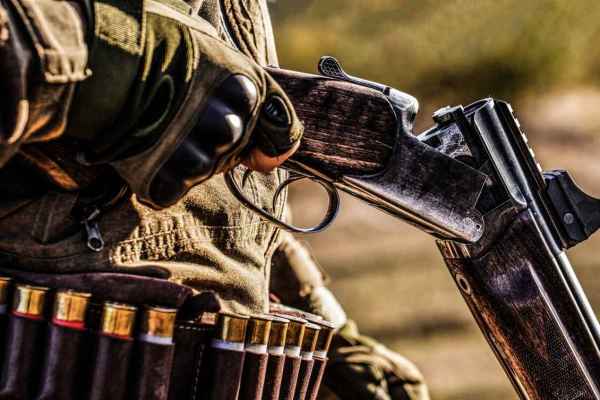
In mid-September 2026, a St. Gallen single judge convicted a recreational hunter from the Amden hunting ground of multiple violations of the hunting act and the weapons act, as well as intentional animal cruelty.
According to the court reporting by the «Linth-Zeitung», which was summarised by Nau.ch, the man had shot red deer at night on several occasions between 2023 and 2025, backdated the kill times in his reports, and failed to carry out a follow-up search for a deer he had wounded. He considered the sentence sought by the public prosecutor excessive. His justification: “But that is quite common in hunting circles.”
On the same day, Davide Corti, president of the Ticino hunters' federation, told tio.ch that serious violations and poaching had “almost disappeared”. Ten days earlier, a recreational hunter in Avers, in Grisons, had shot a horse in a pasture because he mistook it for a red deer. And the Grisons cantonal licence hunting association has been promoting a code of conduct in recent weeks, according to which respect for the wild animal must always be at the centre of hunting conduct.
The three cases are not alike. Amden concerns a repeated rule violation assessed by a court, Avers a fatal misidentified kill, and Ticino the statement of an association president set against the figures in the cantonal hunting report. Together, they raise the same question: how robust is a hunting ethic when control over kills, follow-up searches and reports rests, at the decisive moment, often alone, in the half-light and without witnesses, with the person pulling the trigger?
Amden: night kills, false reports and a follow-up search that never happened
According to the reporting, the recreational hunter went stalking at night on several occasions between 2023 and 2025 and killed four red deer, all of which he reported as shot before sunset. According to the indictment, in at least one case it was already completely dark. He is said to have tracked the deer using a thermal imaging camera. He wounded one deer and did not search for the injured animal afterwards. According to the indictment, he also did not hold the required weapons carrying permit.
He was accompanied on these outings by his then partner and his underage son. A separate proceeding is underway against the son, because three unregistered air rifles were found in his possession. What a teenager learns on such nightly outings about rules, wild animals and responsibility is not covered by any association code of conduct.
In court, the man was largely cooperative and admitted to having altered the times in his reports. He only denied using a night vision device and a silencer. The public prosecutor sought a suspended custodial sentence of nine months, a fine of 2,500 francs, and revocation of his hunting licence.
The single judge imposed a suspended monetary penalty of 180 daily rates of 160 francs each, totalling 28,800 francs, with a three-year probation period, an unconditional fine of 1,800 francs, procedural costs of 10,300 francs, and a five-year revocation of his hunting licence. It was not clear from the reporting whether the ruling is final.
The conviction for intentional animal cruelty is not a side issue. It concerns the deer that fled with a gunshot wound and was never searched for. In the associations' own self-portrayal, the follow-up search is a non-negotiable duty. The reporting does not give a motive for the omission. What can be established, however, is this: a follow-up search with a blood-tracking dog would have documented the location and approximate time of the shot, thereby exposing an illegal night kill. The case shows how vulnerable an injured animal is when its rescue would simultaneously expose a rule violation.
“Quite common”: what the convicted man's statement means
The recreational hunter combined his criticism of the sentence sought with the remark that one might think he had killed a human being. The comparison is revealing. The killing of a non-human animal is measured only against the killing of a human being, and everything below that threshold appears trivial. It is precisely this hierarchy that underpins recreational hunting, even where it is practised legally.
In the reasoning for his ruling, the single judge stated that he considered it entirely possible that such behaviour was widespread in hunting circles. It was precisely this thought that alarmed him almost more than the act itself. Nevertheless, he said, it was not acceptable.
The convicted man's statement is not statistical proof. But it allows for only two readings, and both are uncomfortable for the hunting associations. Either it is at least partly true, in which case the image of a law-abiding, self-policing hunting community is false. Or it is not true, in which case a trained recreational hunter with years of hunting experience genuinely believed that his peers tolerated night kills and backdated reports. That too says something about the culture, the training and the life of the associations.
A comparable case from central Switzerland shows how seriously courts already take even minor violations. In Nidwalden, a recreational hunter killed two red deer around 15 minutes after the end of the permitted shooting time. The cantonal high court upheld the conviction for negligent violation of the hunting act. The man had to pay over 8,000 francs. In Amden, it was not a matter of minutes or negligence, but of repeated kills in darkness over three hunting years and deliberately false statements to the authorities.
In its recommended code of conduct on fair hunting practice, JagdSchweiz requires recreational hunters to act openly, honestly and responsibly, to avoid unnecessary suffering of animals, and to identify an animal precisely before shooting. The Amden case violates all three principles at once.
Kill reports: where self-declaration reaches its limits
The case exposes a weakness that extends far beyond Amden. The kill report relies to a considerable extent on the statements of the person who fired the shot. Whoever shoots enters the time, location and animal themselves. Wildlife wardens are not stationed next to every high seat, and verifying afterwards whether the information is accurate requires considerable effort. The St. Gallen case only came to light after several years.
The flip side of this self-declaration is shown by the Ticino hunting report: 190 self-reported offences in the 2024 hunting year. The system primarily captures those who report their own mistakes. Anyone who does not do so remains invisible until chance, a tip-off or targeted surveillance brings them to light. In the case of the Ticino recreational hunter who was convicted of poaching in Mendrisio in April 2026, the wildlife wardens had observed the man over an extended period. Registered violations are therefore always the product of actual violations, the density of controls, and reporting practice. They represent the documented lower bound. How large the undetected number of cases is cannot be determined from the available figures, and that is precisely the problem.
Avers: a horse shot dead, and talk of an “isolated case”
In the early hours of Sunday morning on 6 September 2026, a recreational hunter in the Avers hamlet of Cröt shot a horse standing in a pasture. He had mistaken it for a red deer, reported the incident, and lost his hunting licence on the spot. The Office for Hunting and Fishing told «Blick» that shooting times are based on light conditions, but that ultimately it is the recreational hunter themselves who decides when they can correctly identify an animal. The office called the incident an “isolated case”.
Every recreational hunter learns the basic rule during training. In cantonal hunting operating regulations, it appears as a maxim: “And what you do not know, do not shoot dead.” A horse in an open meadow is not a borderline case of identification. That the shooter reported himself is better than a cover-up. It does not bring the horse back to life, and it is not proof that the system works. It documents that the system had already failed.
The word “isolated case” does not hold up against the authority's own statistics. In 2016, 5,512 people took part in the Grisons high hunt; the authority recorded 1,201 administrative fines and reports, of which 1,013 fell into the category of mis-kills. In 2017, with 5,532 participants, there were 1,384 fines and reports, of which 1,146 were mis-kills. For 2016, SRF also reported that 516 red deer had to be tracked down after being shot, and nearly half of them were never found. Behind this figure are animals that died somewhere in the terrain from gunshot wounds, or survived them. We categorised these figures in the article Horse shot dead, two deaths in Ticino.
Fair chase ethics: association code or verifiable standard?
Against this backdrop, the BKPJV's new code reads like a text from another world. It invokes respect for wildlife before, during and after the hunt. The same association was led for years by a president who himself described the small-game hunt on fox, badger and hare as “not necessary, but justified”. And a section president who is also training coordinator circulated trophy photos — precisely the kind of imagery the code now condemns.
It is revealing how case law categorises the term all these codes invoke. In rulings based on Grisons court practice, fair chase ethics originally counts as unwritten professional custom that hunters have developed among themselves over the centuries. It only becomes binding where the law incorporates it. Whoever hunts illegally does not hunt in accordance with fair chase ethics. The ethics that associations advertise are thus a form of self-attribution. They are checked by wildlife wardens, public prosecutors and courts — and the record of that scrutiny is found in the annual reports.
Ticino: the figures behind “almost gone”
Davide Corti, president of the Federazione Cacciatori Ticinesi, told tio.ch on 16 September 2026 that serious violations and poaching had almost disappeared, leaving only a diminishing number of administrative errors. The canton's 2024 hunting report, however, documents 190 self-reports, 82 disciplinary fines and 186 opened contravention proceedings. Nine offences fell under the jurisdiction of the public prosecutor, and in twelve serious cases the hunting licence was provisionally withdrawn.
A discrepancy in the report itself stands out: the running text cites 16 rulings on the withdrawal of hunting rights and two pending cases, while the table on the same page lists 37 withdrawals. Without explanation, it remains unclear whether different time periods, categories or procedural stages were counted. The Ufficio della caccia e della pesca must publicly clarify this discrepancy.
Corti himself described the unlawful use of night vision devices as his association's main concern. A problem that the association itself declares to be its main concern cannot simultaneously have disappeared. The Mendrisio case illustrates what is at stake: a 68-year-old recreational hunter shot a wild boar sow two hours before the opening of the 2024 high hunt, using an illegally shortened barrel, a homemade silencer and a thermal night vision device. Thermal imaging, darkness, banned equipment: the elements mirror those from the Amden case, in a different canton and a different hunting system.
We document the ongoing incidents of the season in the Ticino Ticker 2026/27 and in the Grisons Ticker 2026/27.
Three cantons, one control problem
Placing the statements from the three cantons side by side reveals a pattern. The Grisons authority speaks of an “isolated case”. The Ticino association president declares serious violations to be “almost gone”. The Grisons association promises “respect for wildlife”. And the convicted recreational hunter from Amden calls his conduct “quite common”.
The first three formulations come from the authority and the associations, and they minimise the problem. The fourth comes from an offender within the milieu, and it normalises it. The direction is opposite, but the effect is the same: in both cases, the breach of law does not appear as the outcome of a system that grants thousands of private hunting licence holders firearms, hunting hours at dusk, and self-oversight of their own reports. It appears either as a rare exception or as a trivial offence.
Then there is the question of who controls recreational hunting. The co-head of the Grisons Office for Hunting and Fishing, who publicly defends the wolf kills, is, by his own account, himself an avid recreational hunter. The associations co-negotiate the kill quotas. This personal closeness between the hunting administration, the associations and the active hunting community raises the question of how much institutional distance an oversight body has — one that ought to be questioning the word “isolated case” in the first place.
The real problem is the dark figure. Nobody knows how many nighttime kills, backdated reports and omitted follow-up searches there actually are. Not the authorities, not the associations, and not Davide Corti. Precisely for this reason, any claim that serious violations are rare or have disappeared is not a factual record, but association communication.
Questions to authorities and hunting associations
- To RevierJagd St. Gallen: How does the association assess the statement of a convicted recreational hunter that nighttime kills and backdated reports are common practice in hunting circles, and what consequences does it draw from this?
- To the St. Gallen Office for Nature, Hunting and Fishing: How many kill reports are independently checked for time and location each year, and how was the Amden case discovered?
- To the Grisons Office for Hunting and Fishing: How can a shot horse be called an “isolated case” when the authority itself recorded over 1,000 fines and reports per high hunt in 2016 and 2017, of which over 1,000 each fell into the category of mis-kills?
- To the Ticino Ufficio della caccia e della pesca: Why does the 2024 hunting report cite 16 hunting right withdrawals in the text and 37 in the table?
- To all three cantons: Why is there no complete, public statistic on wounded animals that were never found?
Commentary: Why words of honour do not protect wild animals
The hunting associations demand trust: trust in their training, in their fair chase ethics, in their members' self-oversight. Yet what they call ethics is never visible where they claim it to be — in the code, in the interview, in the mission statement. It becomes visible in the reasoning of a St. Gallen sole judge's ruling, in the report of a dead horse on a Grisons pasture, in the tables of a Ticino hunting report.
For the non-human animals affected, it makes no difference whether a shot is fired by mistake, negligence or intent. The horse in the Avers valley is dead. The wounded red deer in Amden was left to its fate. And nearly half of the red deer tracked in a single Grisons hunting year were never found.
From Wild beim Wild's point of view, ethics that depend on people with rifles being honest in the dark is no protective mechanism. It is a word of honour. And a system that manages its own failures only after the shot — through self-reporting, fines, licence withdrawals and court proceedings — is not practising wildlife protection, but damage control for a hobby.
Where interventions in wildlife populations are demonstrably unavoidable, they belong in the hands of a professional, state-employed wildlife wardens service: with independent oversight, complete documentation and public accountability. The canton of Geneva has shown since 1974 that this works. Our Argument paper for game wardens gathers the arguments for this. As long as the cantons cling to private recreational hunting, they must at least disclose what they know about its violations — and admit what they do not know.
Sources: Nau.ch, “Eastern Swiss hunter shoots red deer at night – punished”, 16 September 2026, based on the «Linth-Zeitung»; tio.ch, interview with Davide Corti, 16 September 2026; Canton of Ticino, Ufficio della caccia e della pesca, «Rapporto sulla stagione venatoria e indirizzi gestionali 2024»; Pretura di Mendrisio, ruling April 2026; Office for Hunting and Fishing Grisons, hunting statistics 2016 and 2017; SRF on the Grisons follow-up search statistics 2016; «Blick» on the incident in Avers Cröt, September 2026; BKPJV, «Our stance – our responsibility»; JagdSchweiz, recommended conduct on fair chase ethics; Cantonal High Court of Nidwalden, ruling of 7 November 2024; Canton of Schwyz, General Hunting Operating Regulations.
More on the subject of recreational hunting: In the dossier Poaching and hunting crime in Switzerland we document cases, legal questions and recurring patterns.
More on the subject of recreational hunting: In the dossier The Role and Criticism of Recreational Hunters we shed light on the training, power and self-image of recreational hunters.

All articles are written by IG Wild beim Wild as well as by external co-authors. Research, structuring and editorial processes may be supported by AI-assisted tools.
Support our work
With your donation you help protect animals and give their voice a hearing.
Donate now →