Wounded young wolf vanished: Schwyz wolf kills under pressure
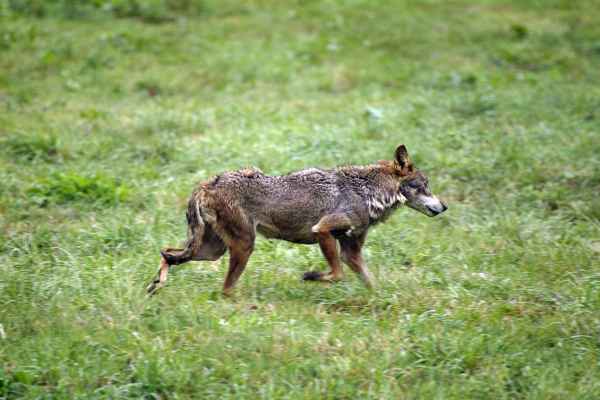
A wounded pup from the Chöpfenberg pack is reported to have not been found. While CHWolf is challenging the kill order, Wolfshirten is calling for transparency regarding the follow-up search and the handling of telemetry data.
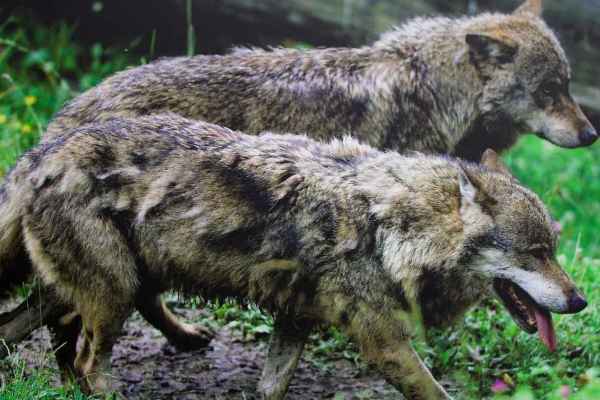
The canton of Schwyz intends to have four of the six young wolves from the Chöpfenberg pack killed by the end of January 2027.
Now the officially approved cull is facing additional criticism: according to the organisation Wolfshirten, a wounded wolf pup was not found. The incident was reportedly not mentioned in the canton's situation report.
On 18 August 2026, the Schwyz cantonal government ordered the killing of two-thirds of this year's offspring of the wolf family in the Wägital. The six pups belong to the Chöpfenberg pack, the only known pack in the canton of Schwyz. The kills are scheduled to take place between 1 September 2026 and 31 January 2027.
An injured animal disappears
The claim that a wounded pup was not found carries serious weight. For an injured wild animal, an unsuccessful or inadequate follow-up search means the risk of prolonged, avoidable suffering. Especially in the case of a state-ordered kill, it must be fully traceable what happens after a shot is fired.
The Schwyz follow-up search organisation itself states that every animal that has been shot must be tracked in a manner consistent with animal welfare. This is meant to include notifying the responsible game warden, coordination through the follow-up search organisation, and a written record of location, time, shooting distance, duration, search route, and outcome of the search. In the case of an unsuccessful search, the reasons for its failure are also supposed to be documented.
This is precisely why concrete answers are needed:
- When and where was the pup shot?
- Was the game warden informed immediately?
- Was a trained follow-up search team deployed?
- How long, and over what distance, was the search conducted?
- What traces were found?
- Why is the incident missing from the cantonal situation report?
As long as these points remain unanswered publicly and verifiably, suspicion will persist that a possible mis-shot was handled without sufficient accountability.
Kill without proven damage
CHWolf has filed a supervisory complaint against the ruling and demands its immediate annulment. The association points out that the Chöpfenberg pack has so far been unremarkable. According to the assessment by the Office for Forests and Nature cited in the report, no livestock from adequately protected herds were killed within the pack's area of influence during the current alpine grazing period.
The kill order therefore does not concern a pack that has become conspicuous through proven attacks on properly protected herds. Instead, the canton is having four young animals of a wolf family killed, even though effective herd protection can prevent possible conflicts. This is not responsible wildlife policy, but a preventive decimation of a protected species.
CHWolf describes the ruling as disproportionate and incompatible with the hunting act as well as international agreements.
Telemetry must not become a hunting aid
In addition to the missing young wolf, Wolfshirten also criticises a further issue: the Schwyz hunting administration was apparently unable to rule out that data from a radio-collared female wolf could be used to coordinate kills. Telemetry data serves scientific research, monitoring, and species conservation. It must not become a technical hunting aid for tracking down a wolf family.
This is a fundamental boundary. Anyone who radio-collars animals for research and population monitoring creates a special relationship of trust with regard to species conservation. If such data were used, directly or indirectly, to kill young animals of the same family more efficiently, the purpose of monitoring would be perverted.
Sources
- CHWolf, press release of 3 September 2026: Supervisory complaint against the regulation of the Chöpfenberg pack.
- Linth24, 7 September 2026: Resistance against wolf kills in Mörschwil.
- Schwyz hunting: Requirements of the cantonal follow-up search organisation for shot animals.

All articles are written by IG Wild beim Wild as well as by external co-authors. Research, structuring and editorial processes may be supported by AI-assisted tools.
Support our work
With your donation you help protect animals and give their voice a hearing.
Donate now →