No wood without the wolf: what predators mean for Switzerland
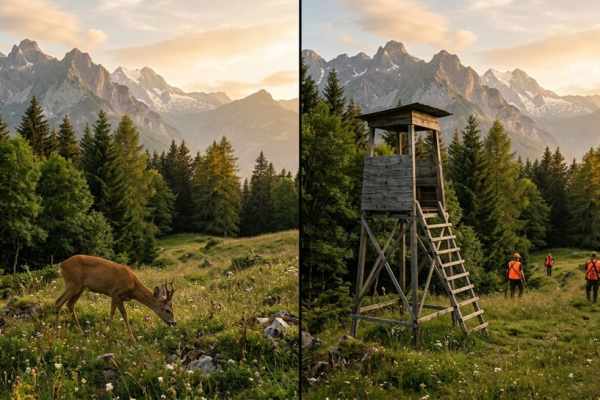
Where predators are absent, roe deer browse the forest bare and the taxpayer foots the bill.
In autumn 2011, the first wolf pair returned to Switzerland.
In the years that followed, the first present-day Swiss wolf pack established itself at the Calanda massif in the Chur Rhine Valley. What happened next made forestry experts sit up and take notice.
Between 2014 and 2018, WSL biologist Andrea Kupferschmid studied the state of the forest in the pack's core area. Her finding: browsing damage to fir, maple and rowan declined markedly in the pack's core area. Forestry workers reported that young growth became visible again in age classes that had been absent for decades. The decisive effect was not only the direct reduction in the number of wild animals through kills, but a change in the behaviour of cloven-hoofed game: red deer no longer linger long at the same resting sites, move about more frequently and spread browsing more widely across space. A similar effect is documented for the lynx: a master's thesis from the University of Natural Resources and Life Sciences in Vienna, carried out in the canton of St. Gallen, shows that silver firs were browsed significantly less after lynx settlement in the core area. Forestry engineer Martin Kreiliger from Disentis confirms, drawing on thirty years of professional experience: in forests where wolf or lynx are present, the regeneration situation improves markedly.
Studies and practical observations thus clearly show: wolf and lynx can locally reduce browsing damage. This applies in particular in areas where packs are permanently present. A nationwide reduction in browsing across the whole of Switzerland is not automatically tied to this, but the positive effect in core areas is documented.
Canton by canton: a national problem
The data from the individual cantons paints a worrying pattern.
Ticino: Around 90 per cent of Ticino's forests are protective forests. The red deer population is estimated at around 7,250 animals (cantonal figure, 2026). Andrea Pedrazzini, head of the Forest Section, notes that the presence of the animals has a «negative impact on natural forest regeneration» and indirectly favours invasive neophytes. At the same time, the forest is under heavy pressure from climate change, periods of drought and forest fires.
Grisons: 60 per cent of the forest is protective forest. The Office for Forests and Natural Hazards rates the impact of wildlife on 16 per cent of the forest area as «large» and on 7 per cent as «very large» – categories in which at least one main tree species fails to regenerate due to cloven-hoofed game. Former cantonal forester Reto Hefti: «We have conditions that are not tolerable in the long term.»
Valais: 61 per cent protective forest share. The canton is the first in Switzerland to consider the killing of lynx, even though a study by the University of Bern (Prof. Raphaël Arlettaz) shows that lynx density in Valais reaches only 12 to 20 per cent of the expected density, with poaching considered the main cause. The researchers found no evidence that the lynx is responsible for the decline in roe deer. Hobby hunters kill around 1,000 roe deer annually in Valais.
Vaud: The «Forêt-Gibier» concept was updated in January 2026. Cantonal surveys have shown severe browsing damage since 2016 – in the Jura and parts of the pre-Alps mainly caused by red deer, in the Broye region rather by roe deer.
National: The 2025 Forest Report by BAFU and WSL summarises: on the southern side of the Alps, 41 per cent of the protective forest area has a regeneration cover of less than 5 per cent, in the Alps 34 per cent, in the pre-Alps 19 per cent. The problem is real, but its severity varies from region to region.
150 million francs annually: the bill no one openly presents
Behind the ecological problem lies a fiscal one. In Switzerland, around 150 million francs flow each year from the federal government, the cantons and beneficiaries into the maintenance of protection forests. The federal government alone bears just under 60 million francs of this. The rest is borne by cantons, municipalities and infrastructure operators whose roads and railway lines are secured by the protection forests. On top of this come direct compensation payments for wildlife damage: according to a survey of the cantonal hunting authorities, around 6 million francs are spent nationwide each year on preventing and compensating wildlife damage to agriculture and forestry, with a rising tendency. In the canton of Thurgau alone, these expenditures averaged around 432,000 francs per year over the last five years, of which the hunting societies bear only 15 percent.
Added to this are further indirect subsidies: the federal government grants 2.5 million francs annually for surveillance in protected areas and, newly, an additional 2 million francs for protective measures in connection with predators – funds that, without the artificially inflated wildlife population maintained for decades and without the political battle against wolf and lynx, would not be needed on this scale. Technical replacement measures – protective structures, fences, barriers – would cost up to ten times more than the maintenance of functioning protection forests.
If wolf and lynx were tolerated as natural regulators instead of being fought, browsing damage and thus part of the multimillion-franc protection forest maintenance costs could decrease. Forest and woodland management would still be necessary even with predators – but the pressure created by artificially inflated ungulate populations would be smaller. This is not political speculation, but the conclusion that forestry experts draw from observations at the Calanda and elsewhere.
What Yellowstone teaches and what it does not
The Yellowstone example is often oversimplified in the debate. The return of wolves from 1995 onwards demonstrably changed the behaviour of the elk and locally contributed to the recovery of pastures and aspens. The same principle applies to Switzerland: the wolf is not an ecological miracle-worker that solves all forest problems. But it is a demonstrably effective factor that changes the spatial use behaviour of cloven-hoofed game, locally relieves browsing pressure – and does so without taxpayers' money.
The political logic is upside down
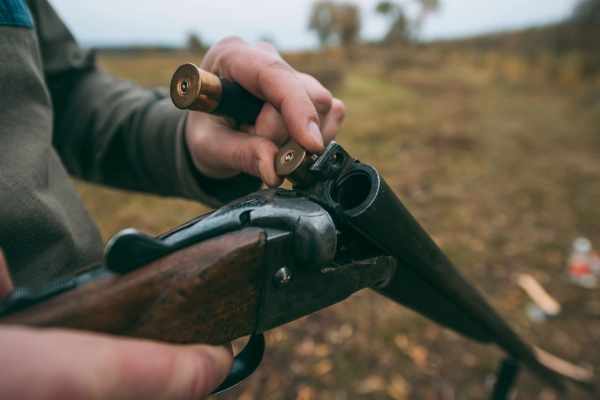
Instead of using wolf and lynx for what they demonstrably are, Swiss hunting policy since 2023 a preventive regulation: entire wolf packs may be shot before any damage has occurred. In the canton of Schwyz, hobby hunters have been specifically trained since the summer of 2026 for use in the hunting of predators. In Valais, lynx kills are planned, although the population has already lost 46 per cent of its genetic diversity through decades of snare traps. Every kill of a predator is, in economic terms, a further contribution to future protective-forest costs that the taxpayer will bear.
The pattern is consistent: the hobby hunting lobby systematically combats those species which, as natural competitors, prey on the same wild animals. The counter-model has existed for 50 years: in the canton of Geneva there is no hobby hunting, no excessive wildlife population, no corresponding follow-up costs of this kind. Twelve state professional hunters manage the game professionally, and the hare density is the highest in Switzerland.
LET'S STAY IN TOUCH!
We would love to send you the latest news and offers in our newsletter.
Support our work
With your donation you help to protect animals and give their voice a hearing.
Donate now →