Already three deaths during hobby hunting: hunting offices cannot shirk their responsibility
A horse is shot dead in Avers in the canton of Grisons, two men die on the first hunting weekend in Ticino, and another hunter is fatally injured during the high hunt in Grisons. These cases are not the same – yet they point to the risks of a state-approved system that cantonal hunting offices are supposed to organise and control.
«The pleasure hunt»
A horse in Grisons was apparently mistaken for a red deer and shot dead. Within a few days, three men died during the hunt in Ticino and Grisons following falls or suspected falls in mountainous terrain.
For the families and communities of those affected, these deaths are human tragedies. They must neither be downplayed nor misused for political slogans. At the same time, it would be wrong to dismiss all these events as mere private misjudgements. Hunting is not a private hike or a casual leisure pastime. It is a cantonally approved, regulated and fee-based system in which private individuals pursue and kill wild animals with firearms.
When this system produces mistaken kills, injured animals, follow-up searches, accidents and deaths, responsibility does not end with the person who pulls the trigger or moves through the terrain. The cantonal hunting offices set the framework: hunting seasons, areas, licence requirements, kill quotas, training, controls and safety rules.
Horse instead of red deer in Avers
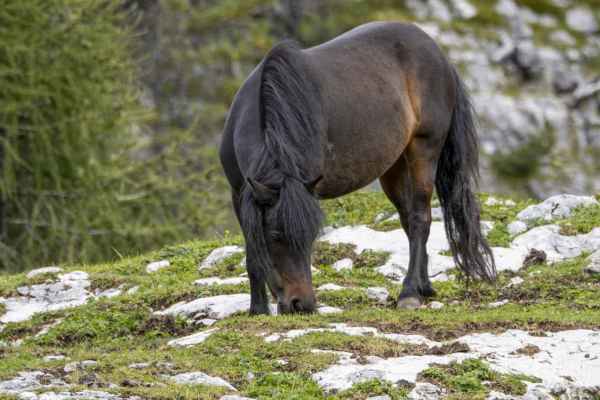
Early on Sunday morning, a horse was shot dead by a hunting bullet in a pasture in the Avers hamlet of Cröt, Grisons. The shooter had apparently mistaken the animal for a red deer. He reported the incident himself; his hunting licence was withdrawn.
For the farm involved and the people who cared for the horse, an animal remains dead. A person fired a shot even though the target had evidently not been identified beyond doubt.
The Grisons Office for Hunting and Fisheries told the media that the permitted shooting times are set out in the hunting operating regulations and are based on seasonal light conditions. Ultimately, however, it is up to the hunter themselves to judge whether they can correctly identify an animal. The incident was described as an «isolated case».
This explanation falls short.
Of course, the shooter bears immediate responsibility. Anyone who does not know with certainty which animal is in their sights, whether it is even permitted to be shot, and whether there is a safe backstop, must not fire. That a horse was shot dead shows, in any case, that the required unambiguous identification of the target did not, in this specific case, protect the animal.
Yet responsibility does not begin only in the final second before the shot. The office defines the hunting rules, approves hunting seasons, issues licences, plans kill quotas, and decides under what conditions several thousand licence hunters may be out in the terrain with rifles during the hunting season. Whoever creates this framework cannot fully shift responsibility for its foreseeable consequences onto individual licence holders.
«Isolated case» versus the statistics
That a horse was mistaken for a red deer is, in this specific form, unusual. However, mistaken kills, rule violations and follow-up searches are not isolated occurrences in Grisons.
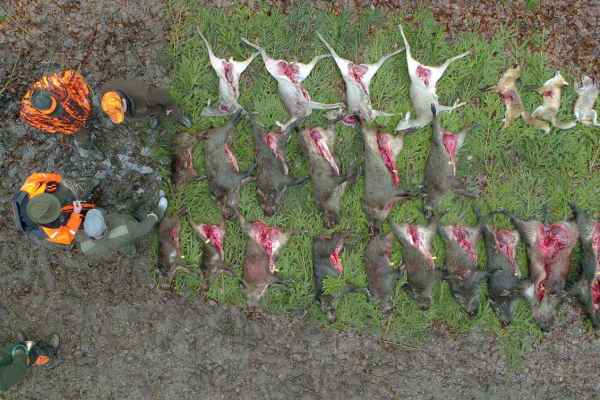
In 2016, 5,512 people took part in the Grisons high hunt. In the same year, the office recorded 1,098 fines and 103 reports for violations of hunting legislation – a total of 1,201 incidents. Of these, 1,013 cases involved mistaken kills.
In 2017, the figures rose further: 5,532 people took part in the high hunt, while 1,280 fines were issued and 104 reports filed. This amounts to 1,384 recorded incidents; 1,146 of these involved mistaken kills. These figures do not mean that every reported incident can be attributed to a different person. Several violations may involve the same person. Nevertheless, as a record of the hunting operation, the figures remain considerable.
The follow-up searches also show how often animals must be searched for after being shot. In 2016, 1,242 follow-up searches by blood-tracking dog handlers were recorded in Grisons, of which only 59 percent were successful. Not every follow-up search necessarily means a wild animal was wounded; the figures may also include control searches or traffic accidents. Nevertheless, the number reveals how often animals are searched for after hunting incidents and how frequently their fate cannot be determined.
For 2016, SRF reported that 516 red deer had to be searched for after being shot – around 9.5 percent of all red deer kills. Nearly half of these animals were never found. Over several years, the proportion of red deer for which a follow-up search was triggered after a shot ranged between 8.8 and 11 percent.
Hunting associations like to speak of the «ethical craft» and of «fair chase». A craft, however, would have to be measured by its actual reliability: by clean execution, effective quality control, transparent error rates, and consistent consequences for rule violations. Where mistaken kills are regularly recorded and a significant proportion of animals require a follow-up search, the self-description as a precise and controlled craft does not match the documented practice.
Three deaths within days
The risks of hobby hunting affect not only wild animals but also domestic and livestock animals. They also affect the people who take part in hobby hunting.
On the first weekend of the 2026/27 Ticino hunting season, two men died in mountainous terrain within a few hours of each other. On 5 September, a 69-year-old Swiss man fell from a slope in the Biasca area near the Riale Crenone. Despite resuscitation attempts, he died. The following day, a 54-year-old man from the Locarno region was found dead after a search operation on the Pizzo Sassariente. According to the authorities' initial reconstruction, a fatal fall during the hunt is also considered the likely cause there. The exact circumstances of both cases are still being investigated.
On 8 September, another man was fatally injured during the Grisons high hunt. The 66-year-old failed to appear at an agreed meeting point in Surcasti in the morning. His fellow hunters began a search and alerted the Grisons cantonal police. Shortly before noon, the man was found lifeless. According to initial findings, he fell in steep, rugged terrain. Rega deployed a helicopter with alpine specialists for the recovery. The Grisons cantonal police, together with the public prosecutor, are investigating the exact cause of death and the further circumstances.
This means that within a few days, three people have died during hunts in the Swiss mountains. These cases must not be hastily equated. In the death in Surcasti, the exact sequence of events is explicitly still unclear. Likewise, without the results of the investigations, it cannot be claimed that all these events had the same immediate cause.
What is certain, however, is that hunting takes people with weapons, ammunition, equipment and often heavy loads into steep, rugged and sometimes remote terrain. Hunters are confronted with physical strain, dusk, changing weather, solo excursions, and the searching, pursuing and retrieving of animals. This risk is not an abstract possibility but part of a hunting system that produces hundreds of recognised accidents every year.
Hunting accidents are not an abstract possibility. According to evaluated accident insurance (UVG) data, around 300 accidents are recognised each year in Switzerland in the context of hobby hunting – roughly one accident every 29 hours. However, the statistics do not fully cover all groups, in particular people without mandatory accident insurance. They therefore reflect the full scope of accidents only partially.
For the years 2000 to 2019, the Swiss Council for Accident Prevention recorded more than 75 deaths in a hunting context. These figures say nothing about the cause of each individual incident. But they do show that serious and fatal accidents in the context of hobby hunting are not a hypothetical residual risk.
State responsibility for a hobby
Hobby hunters decide for themselves whether to obtain a licence and head into the field with a rifle. Whoever pulls the trigger naturally bears personal responsibility for it. Whoever takes a risk also bears responsibility for their actions.
Yet hobby hunting is not a private matter. It is permitted, planned and regulated by the cantons. The hunting authorities determine when and where hunting may take place. They issue licences, set kill quotas, define examinations and safety rules, and monitor violations. They also collect fees for hunting licences.
That is why the authorities cannot simply say, in the case of mis-kills, injured animals or accidents, that it is solely a matter for the individual hunter. Immediate responsibility lies with the person who fired the shot. But the cantonal authorities bear responsibility for the rules they set, and for whether those rules actually protect people and animals.
If the state considers interventions in wildlife populations necessary, it must not largely delegate the associated risks to a seasonal leisure model. Professional specialists under clear public responsibility would be deployed on a regularly qualified, verifiable basis and subject to uniform documentation and accountability requirements.
Passing a hunting examination once is not enough. Anyone regularly carrying a lethal firearm must remain permanently fit to do so. This includes regular eyesight and reaction tests, health assessments, and independent checks where there is legitimate doubt. Such rules must not be introduced only after an animal, a person, or an accident victim has already suffered harm.
Abolition of hobby hunting
The horse killed in Avers and the three deaths in Ticino and Grisons are separate events. Yet they raise the same underlying political question: who takes responsibility when a state-organised leisure system creates foreseeable dangers for people and animals?
The shooter in Avers is responsible for his shot. The three deceased men bore responsibility for their personal decisions in the field. But that is not the whole picture.
The responsible cantonal hunting authorities set the structural conditions: hunting season, area, licence, training, kill planning, safety requirements, sanctions and controls. They organise and approve a system in which thousands of private individuals pursue and kill wild animals with lethal weapons. An authority cannot, on the one hand, sell licences, plan hunting seasons and set kill targets — and on the other hand, when a mis-kill, accident or death occurs, point exclusively to the individual hunter.
IG Wild beim Wild therefore calls for the abolition of private hobby hunting. Where interventions in wildlife populations are demonstrably unavoidable, they must be carried out by professionally trained, state-employed specialists — under independent oversight, with complete documentation and clear public accountability.
The canton of Geneva abolished private hunting as early as 1974. There, necessary interventions are prepared and carried out by specialists from the «Police de la nature». This model does not simply replace seasonal hunting by thousands of private licence holders with more shooting. It creates clearer responsibilities, professional training, institutional oversight and public accountability.
Modern wildlife management must also not begin with a rifle. Priority must be given to prevention and habitat protection: restoring ecologically valuable areas, wildlife corridors, protecting agricultural crops with non-lethal means, reducing traffic accidents, and promoting natural regulatory processes. Only when an intervention is demonstrably transparent from a professional standpoint and genuinely unavoidable may it take place, under strict criteria — with the aim of preventing all avoidable suffering.
Transparency instead of trivialisation
Hunting is often defended with terms such as «game management», «tradition», «regulation» or «connection with nature». But these terms cannot disguise what actually happens: people pursue wild animals, shoot at them, sometimes injure them, and kill them. In the process, domestic and livestock animals are also put at risk. At the same time, hunters expose themselves to considerable risk.
Speciesism describes the practice of weighting the interests of non-human animals as less important than human leisure interests, traditions or trophy culture, purely because of their species. This is exactly what is revealed in a hunting practice that subordinates the life and physical integrity of wild animals to a voluntary leisure activity.
A tradition does not replace ethical scrutiny. The fact that something has been done for generations does not automatically make it justifiable — especially not when mis-kills, follow-up searches, injured animals and human accident victims are regularly documented.
What is needed, therefore, is publicly accessible and cross-cantonally comparable data on hunting accidents, injuries, deaths, mis-kills, follow-up searches, animals not found, weapons violations and sanctions. The public has a right to know what consequences a state-approved hunting system has for animals, people and public safety.
Pointing to the «isolated incident» is not enough. The cantonal hunting authorities must transparently document, publicly disclose and effectively reduce risks, mis-kills, follow-up searches, accidents and sanctions. In the long term, there needs to be a shift away from private hobby hunting — towards a professional, scientifically grounded, publicly controlled and consistently prevention-oriented wildlife management, modelled on Geneva.

All articles are written by IG Wild beim Wild as well as by external co-authors. Research, structuring and editorial processes may be supported by AI-assisted tools.
Support our work
With your donation you help protect animals and give their voice a hearing.
Donate now →