Olivier Bouygues convicted: two years suspended for killed birds of prey
On the Fontenaille hunting estate, kestrels, buzzards and herons were killed so that hunting parties would not be disturbed. The court recognises ecological damage and awards nine organisations a combined 360,000 euros.

Kestrels are among the protected species killed on the hunting estate. Symbolic image. Photo: Ronan Hello / Unsplash
On 23 October 2026, the criminal court in Orléans convicted the French billionaire Olivier Bouygues of destroying protected bird species. He receives a two-year suspended prison sentence and a fine of 750,000 euros. He also loses his hunting licence for three years, as the news agency AFP reports (DH/AFP). His lawyer has announced an appeal; the verdict is not yet legally binding.
What happened on the Fontenaille hunting estate
Bouygues owns the Domaine de Fontenaille, a 650-hectare hunting estate in La Ferté-Saint-Aubin in the Loiret département, in the heart of the Sologne. He hosts hunting parties there. As Wild beim Wild reported at the start of the trial in September, birds of prey and other wild animals were regarded there as a nuisance for recreational hunting.
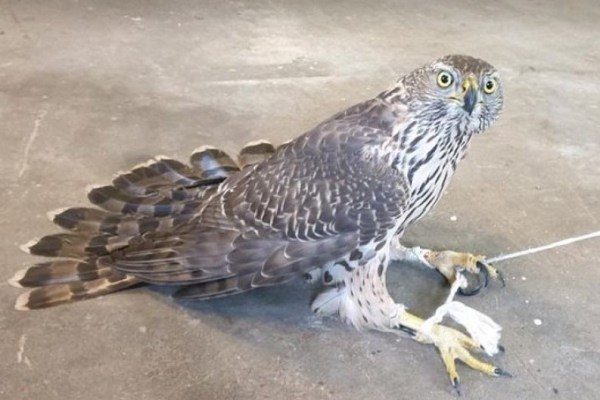
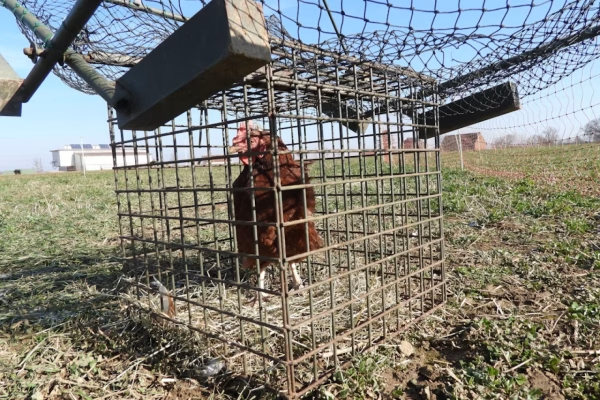
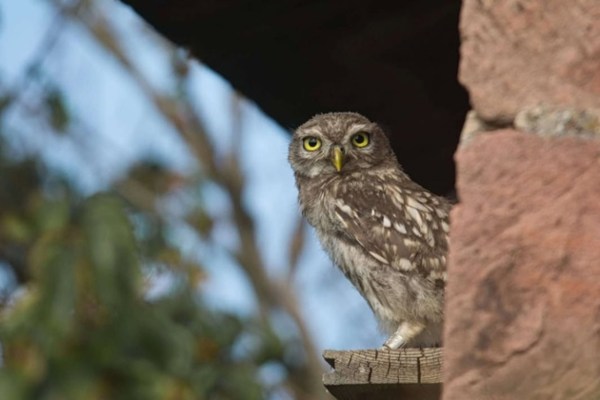
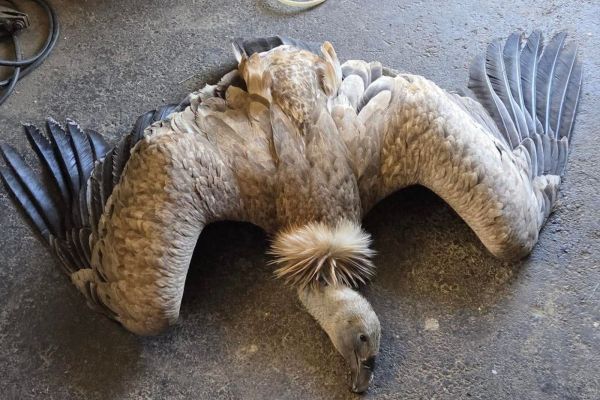
Investigators found a pit containing animal carcasses on the estate. According to AFP, these included kestrels, great egrets, harriers, common buzzards and cormorants, all of them protected species. Cats were also killed alongside the birds. Around a hundred leghold traps were also seized; they have been banned in France since 1995 (Brut/AFP). In court, the prosecutor Emmanuelle Bochenek-Puren spoke of prohibited and “barbaric” methods and of an “organisation that continues to exist”. The motive was well known and openly admitted by some: to protect the hunting parties.
The verdict in detail
Alongside Bouygues, five other people stood trial, including the estate's manager and game warden. They received suspended prison sentences of between six months and two years, fines and a temporary withdrawal of their hunting licence. According to the bird protection organisation LPO, the fines imposed on the co-defendants range between 3,000 and 10,000 euros (LPO press release of 23 October 2026).
The court expressly recognised ecological damage, for which the six defendants were held fully responsible. They must jointly and severally pay 40,000 euros each to nine organisations, a total of 360,000 euros. Around 70 per cent of this falls to Bouygues. The recipients are ASPAS, Centre Athénas, the Conservatoire d'espaces naturels Centre-Val de Loire, France Nature Environnement, LPO France, LPO Centre-Val de Loire, Loiret Nature Environnement, the Fondation 30 Millions d'Amis and One Voice (LPO). The lawyer for the Fondation 30 Millions d'Amis, Caroline Lanty, called the verdict "very satisfactory" (Brut/AFP).
In the case of the main defendant, the court stayed below what the prosecution had requested. The prosecution had demanded five years suspended, the maximum fine of 750,000 euros and a five-year ban on hunting-related activities. Bouygues denies all charges. His defence lawyer Eric Grassin said accepting this decision was out of the question and announced an appeal (DH/AFP). Until a final and binding judgment, the presumption of innocence applies.
Recreational hunters joined the lawsuit too
Remarkably, the recreational hunters' association of the Loiret département also appeared as a civil party. It claimed damage to the image of hunting. It is not among the nine organisations to which the court awarded compensation for the ecological damage. The association is thus concerned about the reputation of recreational hunting, not about the animals killed. Yet the principle that was apparently taken to extremes at Fontenaille is widespread in recreational hunting: predators and birds of prey are regarded as competitors for the small game that is released or bred for hunting. Wild beim Wild has examined this attitude in the article on the ideology behind fox hunting.
French courts are currently setting limits on recreational hunting on several fronts. At the end of October, a court halted official fox culls in the Alps. In the Forest of Orléans, also in October, there was again violence against activists filming a hunt with hounds. That the illegal persecution of birds of prey is not just a French problem is shown by cases such as the poisoned golden eagles in the canton of Schwyz.
Context
Convictions for the persecution of birds of prey are rare because the offences take place on enclosed private land and have hardly any witnesses. That a conviction was secured in Orléans is thanks to the investigation and to the environmental organisations that joined the proceedings as civil parties. The sentence is harsh by French standards but remains well below the maximum: according to the LPO, up to seven years in prison would have been possible had the offence been committed by an organised gang. For a billionaire it remains suspended, and three years without a hunting licence is little for what the court found to be years of interference with protected populations. Above all, the case shows where recreational hunting leads when it divides wild animals into useful game and troublesome competition. Whether the verdict will stand on appeal will be decided by the court of appeal.
More on the subject of recreational hunting: In the dossier Poaching and hunting crime in Switzerland we document cases, legal questions and recurring patterns. The scientific evidence is presented in the overview Studies on the Effects of Recreational Hunting.
The position of IG Wild beim Wild: IG Wild beim Wild rejects recreational hunting. Our model is the canton of Geneva, which has managed without recreational hunting since 1974: without hunting seasons, without hunting dogs, without driven hunts, without high seats, without the animal cruelty and crime that go hand in hand with hunting season elsewhere. What has worked there for over fifty years disproves every position paper by JagdSchweiz. An association that bases its policy on claims it refutes in its own documents is not a professional organisation, but a factory for misinformation.
Wild animals need a voice
Once a week: research, petitions and background information on recreational hunting. Free of charge and can be unsubscribed from at any time.

All articles are written by IG Wild beim Wild as well as by external co-authors. Research, structuring and editorial processes may be supported by AI-assisted tools.
Support our work
With your donation you help protect animals and give their voice a hearing.
Donate now →