Study: Early humans ate 80% plant-based
Gatherers and hunters in the Andes subsisted primarily on plant-based foods such as wild tubers.

Gatherers and hunters instead of hunters and gatherers
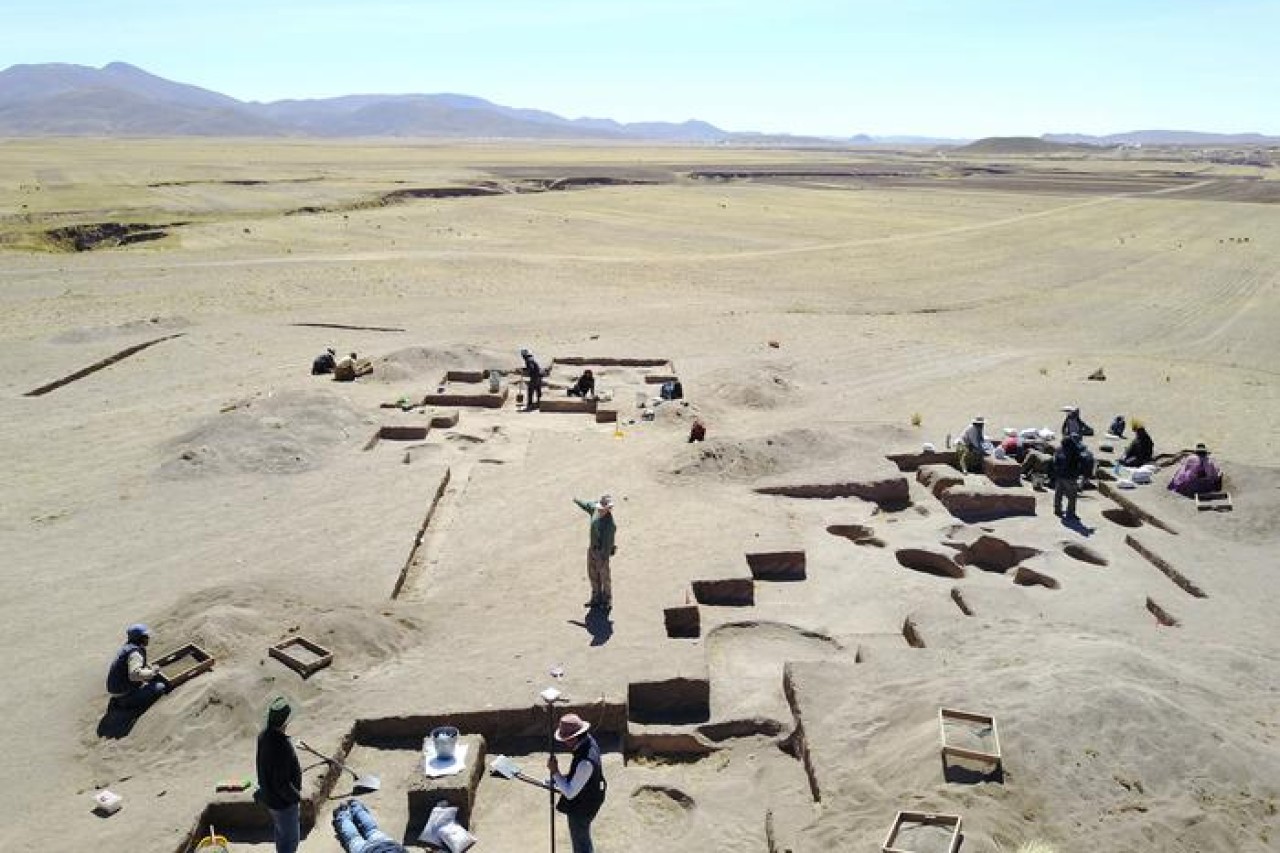
The commonly used description of early humans as “hunters and gatherers” should be changed to “gatherers and hunters,” at least in the South American Andes, according to a groundbreaking study led by archaeologist Randall Haas of the University of Wyoming (USA).
Archaeologists long assumed that early humans subsisted primarily on meat. However, analysis of remains from Peruvian burial sites shows that the diet of early humans in the Andes consisted of 80% plant-based matter and 20% meat.
The study, titled “Stable isotope chemistry reveals plant-dominant diet among early foragers on the Andean Altiplano,” was published in the journal PLOS ONE.
Tubers as the main food source
The study applies methods of isotope chemistry and statistical modelling to uncover a surprising twist in early Andean societies and traditional narratives about hunters and gatherers. “Conventional wisdom holds that the early human economy centred on hunting,” an idea that has given rise to a number of high-protein dietary trends such as the Paleo diet, says Haas.
However, the new analysis of the isotopic composition of human bones shows that plant-based foods made up the majority of individual diets, while meat played a subordinate role.
Furthermore, burnt plant remains from the sites and pronounced dental wear patterns on the upper incisors of individuals suggest that tubers — plants that grow underground, such as potatoes — were likely the most important resource.
"Our combination of isotope chemistry, paleoethnobotanical and zooarchaeological methods provides the clearest and most precise picture of early Andean diet to date," says Haas. "These results update our understanding of the earliest pastoral economies and the path to agricultural economy in the Andean highlands."
Biased Research
Haas notes that archaeologists today have the means to understand the dietary habits of early humans, and their findings do not match expectations. This case study shows for the first time that the early human economy, at least in one part of the world, was based on plants.
"Given that archaeological bias has long misled archaeologists in the Andes, it is likely that future isotope research in other parts of the world will also show that archaeologists have been mistaken elsewhere as well," he says.
Haas studies human behavior in past hunter-gatherer societies in order to better understand human behavior in the present. He leads archaeological excavations and survey projects in the Andes and mountain regions of western North America.
| You can help all animals and our planet with compassion. Choose empathy on your plate and in your glass. Go vegan. |
More on the subject of recreational hunting: In the dossier The Role and Criticism of Recreational Hunters we shed light on the training, power and self-image of recreational hunters. What the research says about this is shown by Hunting fact-checked: the state of research.
The position of IG Wild beim Wild: IG Wild beim Wild rejects recreational hunting. Our model is the canton of Geneva, which has managed without recreational hunting since 1974: without hunting seasons, without hunting dogs, without driven hunts, without high seats, without the animal cruelty and crime that go hand in hand with hunting season elsewhere. What has worked there for over fifty years disproves every position paper by JagdSchweiz. An association that bases its policy on claims it refutes in its own documents is not a professional organisation, but a factory for misinformation.