Recreational hunters begin the new year in true fashion
Headlines from the first week of January show: recreational hunters are neither well-trained nor do they meet ethical standards.


Headlines from the first week of January
The self-proclaimed protectors of animals and nature continue to fill column inches in the new year as well.
A few headlines from the first week of January clearly document that recreational hunting does not work. Recreational hunters are neither well-trained nor do they meet ethical or intellectual standards, and they are careless in their use of weapons.
- A recreational hunter near Hassfurt killed a dog belonging to a tourist couple. The case is now going to trial at the Hassfurt District Court.
- Recreational hunters are alleged to have shot two swans on the Rhine near Schwörstadt. Police are investigating on suspicion of poaching.
- At a private gravel pit lake in Velen, self-styled recreational hunters killed domestic geese. A passer-by filed a complaint.
- The dog of an 86-year-old recreational hunter severely injured a cat. The man threw it over a fence.
- Recreational hunter shoots Galloway cow instead of wild boar: only calf survives
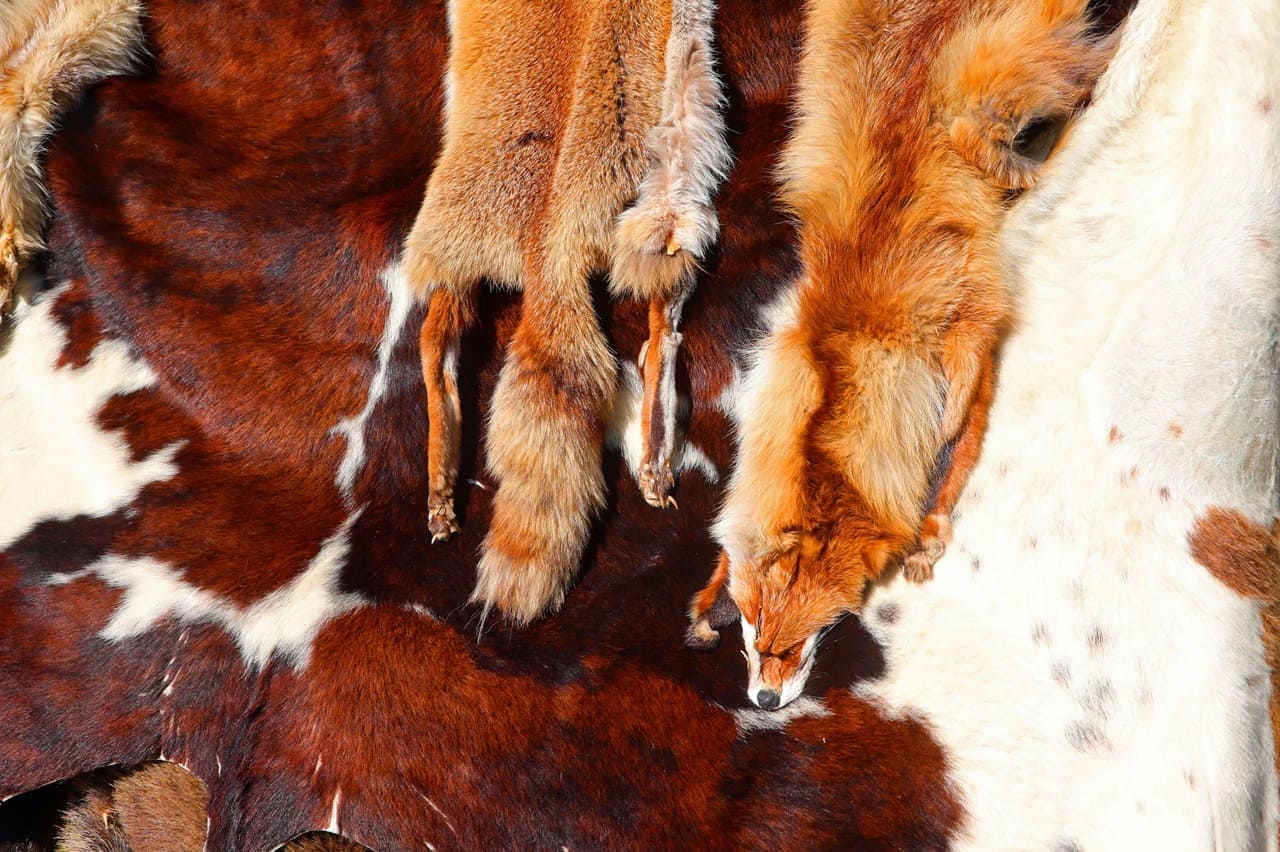
- «Fox week» organised by the Unna district hunters' association draws animal welfare advocates into action
Recreational hunting is not an honest trade
With regard to recreational hunting and the recreational hunting community in particular, it is absolutely essential that the public takes a very close look. Nowhere else is manipulation through falsehoods so prevalent. Violence and lies are two sides of the same coin. For decades, recreational hunting has been nothing other than a permanently costly construction site and a point of contention for politicians, forestry, agriculture, administrations, the judiciary, health insurers, insurance companies, animal welfare organisations, environmental and nature conservation organisations, the police, federal authorities, the media, and so on.
Recreational hunting is not an honest trade. There are no standards, ethics, sound science, or rules in hunting that can withstand social norms — not even within the recreational hunting community itself — and least of all arguments from an animal welfare perspective.
For decades, artificially high ungulate populations have been bred for the benefit of hunting. To now justify this with lame excuses about the absence of predators such as the fox — which recreational hunters in particular continue to combat — is simply despicable.
Self-regulation instead of recreational hunting
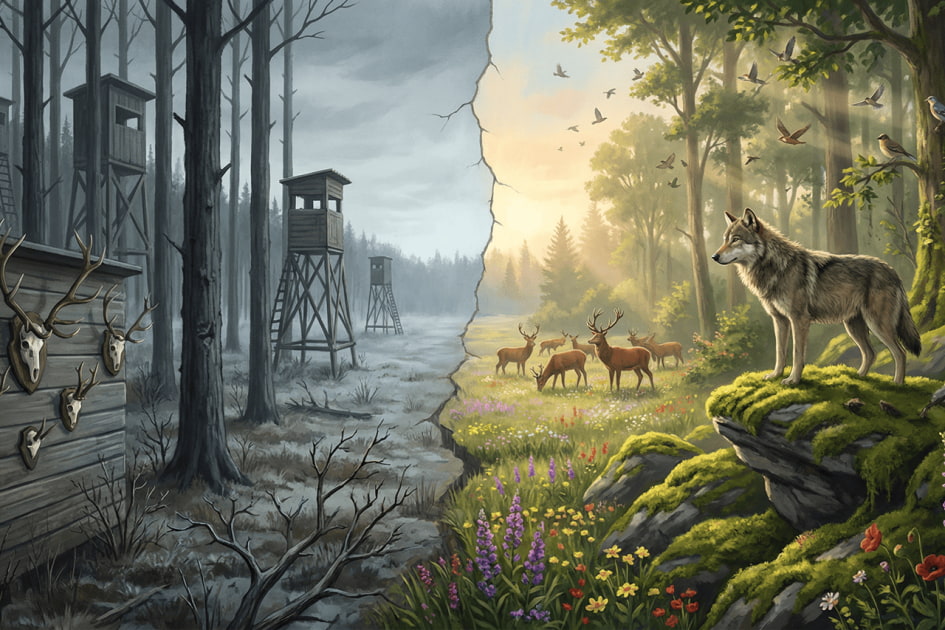
Wildlife biology studies demonstrate that animals living in a wildlife sanctuary lose a large part of their forced, unnatural shyness, thereby increasingly shifting their unnatural, nocturnal activities back into the daytime hours. This is also said to result in fewer road accidents involving wildlife. Wildlife biologists such as Karl-Heinz Loske repeatedly report with great enthusiasm on developments in areas free from hunting. One observes greater biodiversity, lower densities of huntable wildlife species, reduced damage, and fewer road accidents.
Experience from various countries and regions shows that wildlife populations in an intact wildlife sanctuary protected from recreational hunters largely regulate themselves. Should it nonetheless become necessary to intervene with regulatory measures, this must, from an animal welfare perspective, be carried out exclusively by professionally trained wildlife wardens who are engaged on a professional basis in contemporary wildlife management.
The introduction of ethical wildlife management will furthermore ensure that hunting accidents are avoided as far as possible in the future. In this way, the state once again increasingly enables nature experiences with wildlife observation, and — as in the Canton of Geneva, for example — promotes biodiversity as well as the general well-being and psychological welfare of the population.
| You can help all animals and our planet with compassion. Choose empathy on your plate and in your glass. Go vegan. |
More on the subject of recreational hunting: In the dossier The Role and Criticism of Recreational Hunters we shed light on the training, power and self-image of recreational hunters. The scientific evidence is presented in the overview Studies on the Effects of Recreational Hunting.
The position of IG Wild beim Wild: IG Wild beim Wild rejects recreational hunting. Our model is the canton of Geneva, which has managed without recreational hunting since 1974: without hunting seasons, without hunting dogs, without driven hunts, without high seats, without the animal cruelty and crime that go hand in hand with hunting season elsewhere. What has worked there for over fifty years disproves every position paper by JagdSchweiz. An association that bases its policy on claims it refutes in its own documents is not a professional organisation, but a factory for misinformation.