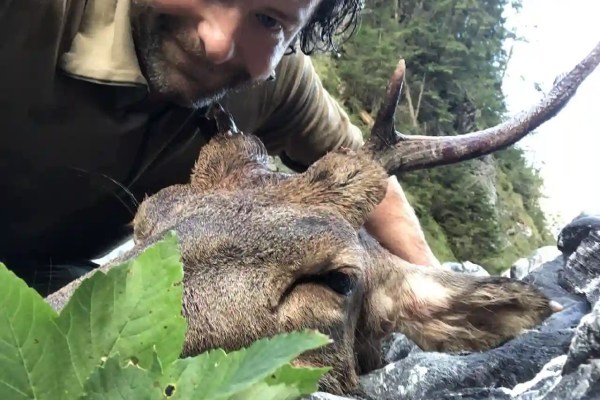
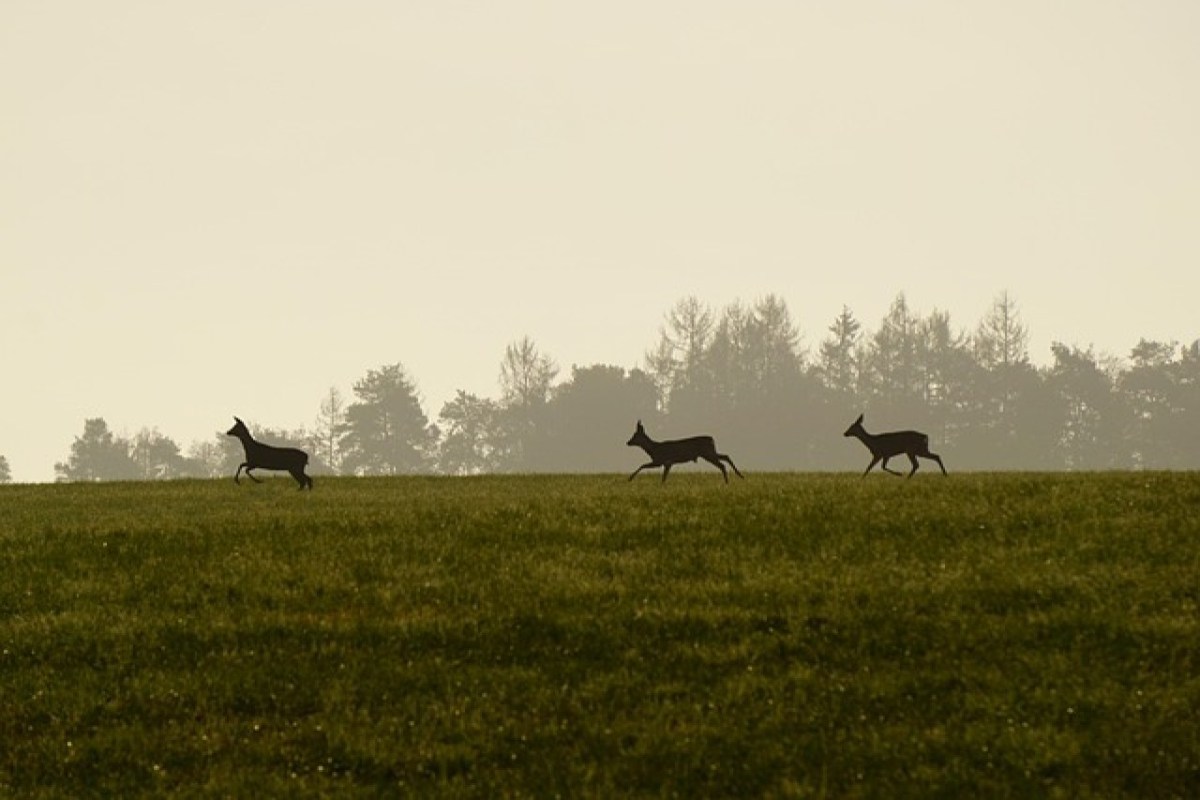
Bilten: recreational hunters shoot roe deer in nature reserve
At the peat-cutting lakes in Bilten in the canton of Glarus, recreational hunting is prohibited.
“Ban Broken”
Apparently, several recreational hunters did not abide by this in broad daylight and were caught in the act.
The case from Bilten is not an isolated event. Time and again, illegally killed wild animals are found in Switzerland, from roe deer to ibex. The perpetrators usually act out of a craving for trophies, a desire for recognition or sheer greed for the hunting experience without responsibility. In the Sarganserland region, a poacher recently shot a red deer, took its head as a trophy and left the rest of the body lying in the forest.
Such cases often go undetected or are barely addressed. Yet for the animals affected, poaching means a cruel death, and for conservation it is a growing problem.
The boundaries between legal hunting and illegal poaching are at times fluid. Both systems are based on the same idea: animals are killed to serve human needs, whether as a trophy, a source of meat or a leisure activity.
While legal recreational hunters often distance themselves from poachers, the moral contradiction remains: the death of the wild animal is celebrated, displayed, prepared, and not infrequently it is precisely this cult of trophies that provides the breeding ground for illegal imitators.
In Switzerland, poaching is officially prosecuted as an offence against the hunting act. Yet the clearance rate is low. Often there are no witnesses, evidence or traces. And as long as animals are perceived by the public as a “population” or “hunting objects”, the moral outcry remains muted.
The dead roe deer of Bilten are therefore more than just the victims of one individual; he stands symbolically for a society that only pities animals when they are unlawfully killed, but not when they are systematically and mostly for no reason killed treacherously and cowardly during recreational hunting.
According to IG Wild beim Wild, annual medical-psychological assessments are needed for hobby hunters following the Dutch model, as well as an upper age limit. The largest age group among recreational hunters is 65+, those with age-related, cognitive, visual, concentration and reaction impairments, as well as deficits in education and training. From the age of 45, the number of accidents involving people and animals rises dramatically. The alarming reports of hunting accidents and fatal crimes committed with hunters' weapons show: it is high time to abolish recreational hunting! Lethal firearms do not belong in the hands of senile recreational hunters, who can use them completely unchecked! Recreational hunters represent everything that is going wrong in the world.
Recreational hunters live speciesism. Speciesism is comparable to racism and sexism, and that is no culture or tradition.
With hobby hunting in particular, it is essential to look very closely. Nowhere else is there so much manipulation with untruths and fake news. Violence and lies are two sides of the same coin.
More on the subject of recreational hunting: In the dossier Poaching and hunting crime in Switzerland we document cases, legal questions and recurring patterns. What the research says about this is shown by Hunting fact-checked: the state of research.
The position of IG Wild beim Wild: IG Wild beim Wild rejects recreational hunting. Our model is the canton of Geneva, which has managed without recreational hunting since 1974: without hunting seasons, without hunting dogs, without driven hunts, without high seats, without the animal cruelty and crime that go hand in hand with hunting season elsewhere. What has worked there for over fifty years disproves every position paper by JagdSchweiz. An association that bases its policy on claims it refutes in its own documents is not a professional organisation, but a factory for misinformation.
Support our work
With your donation you help to protect animals and give their voices a hearing.
Donate now →