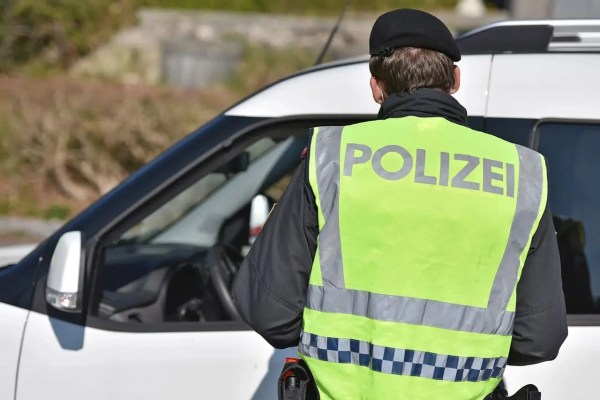
Dead lynx in the Jura: criminal proceedings against recreational hunter
In May 2026, French authorities confirmed criminal proceedings against a recreational hunter who is alleged to have illegally shot a protected lynx near Saint-Claude in the Jura department in autumn 2024.
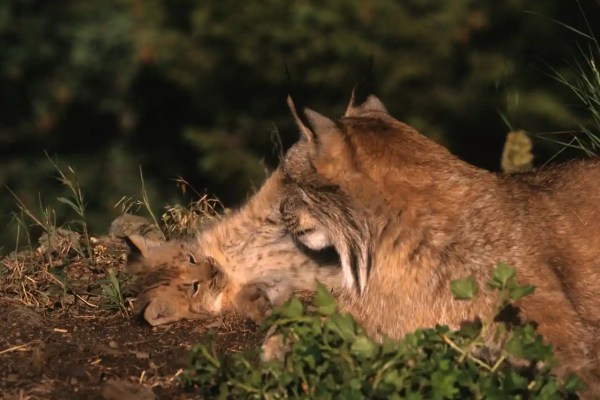
In autumn 2024, a dead lynx was found near Saint-Claude.
A forensic examination revealed that the animal had been killed by a gunshot. The authorities opened criminal proceedings; in May 2026 it became known that a recreational hunter who had taken part in a driven hunt in the region is considered a suspect.
The lynx is strictly protected in France and Switzerland; illegal killing is a criminal offence. Whether the final finding is “guilt” or “mistake” makes no difference to the outcome for the population: another individual of an already small and genetically vulnerable population has been lost.
Not an isolated case: lynx have also been killed illegally in Switzerland
The Saint-Claude case does not stand alone. In Switzerland, illegally killed lynx have repeatedly been discovered in recent years — in the canton of Jura and the canton of Aargau, each time with criminal complaints and often sluggish investigations. The number of unreported cases is likely to be higher, as many killings are never uncovered.
At the same time, the federal government and cantons are investing considerable resources in lynx protection. In the canton of Grisons, lynx have most recently been translocated from the Jura in order to establish new populations there — while in the areas of origin animals are disappearing or being shot. This simultaneity of protection programmes and poaching is no coincidence, but the expression of a structural contradiction.
More on this: Lynx in Switzerland: population, threats and politics
Why lynx are particularly at risk in a hunting-dominated system
The lynx competes with recreational hunters for roe deer and chamois. In parts of the recreational hunting community it is therefore regarded as unwelcome competition — an attitude that is openly expressed in hunting circles and occasionally leads to poaching. In addition: where hunting associations help draft kill quotas, occupy oversight bodies and shape political debates, the threshold for framing protected species as a “problem” falls.
Wild beim Wild has repeatedly documented how closely hunting administration, hunting associations and political decision-makers are intertwined in Switzerland. In this environment, every lynx that ends up in the sights of a recreational hunter faces an increased risk – regardless of what the Federal Hunting Act (JSG) states.
More on this: Dossier: The lynx in Switzerland – predator, keystone species and political bone of contention
Geneva since 1974: wildlife protection works without private recreational hunting
The canton of Geneva has demonstrated for over fifty years that there is another way. Since the hunting ban of 1974, trained game wardens have taken over the necessary wildlife management. Lynx are not perceived there as hunting competition, because there is no private recreational hunting that could feel competed against.
The Geneva model is not an exception that cannot be transferred – it is proof that political will is the decisive factor. As long as other cantons and France equip private recreational hunting with far-reaching privileges, the lynx's protection status will remain fragile.
What is needed now: enforcement, transparency, hunting-free zones
After every publicly known kill, the same reactions follow: expressions of dismay, announcements of investigations, references to “isolated cases”. For the lynx, none of this changes anything. What would actually help:
- Consistent criminal prosecution of poaching, even when the evidence is difficult
- Transparent statistics on poaching cases and their outcomes in court
- A clear separation between hunting authorities and oversight bodies
- Expansion of hunting-free zones modelled on Geneva
- An end to the political equation of recreational hunting with nature conservation
The Saint-Claude case is therefore not merely an ongoing criminal proceeding. It is a stress test for the credibility of wildlife protection in a landscape in which recreational hunting still helps to write the rules.
More on this: Swiss lynx in grave danger
More on the subject of recreational hunting: In the dossier Poaching and hunting crime in Switzerland we document cases, legal questions and recurring patterns. What the research says about this is shown by Hunting fact-checked: the state of research.
The position of IG Wild beim Wild: IG Wild beim Wild rejects recreational hunting. Our model is the canton of Geneva, which has managed without recreational hunting since 1974: without hunting seasons, without hunting dogs, without driven hunts, without high seats, without the animal cruelty and crime that go hand in hand with hunting season elsewhere. What has worked there for over fifty years disproves every position paper by JagdSchweiz. An association that bases its policy on claims it refutes in its own documents is not a professional organisation, but a factory for misinformation.
Support our work
With your donation you help to protect animals and give their voice a hearing.
Donate now →