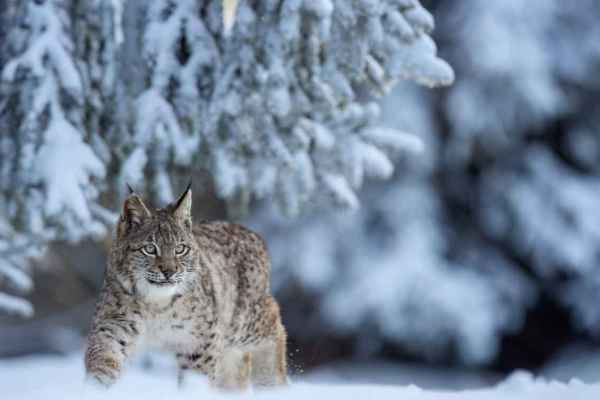
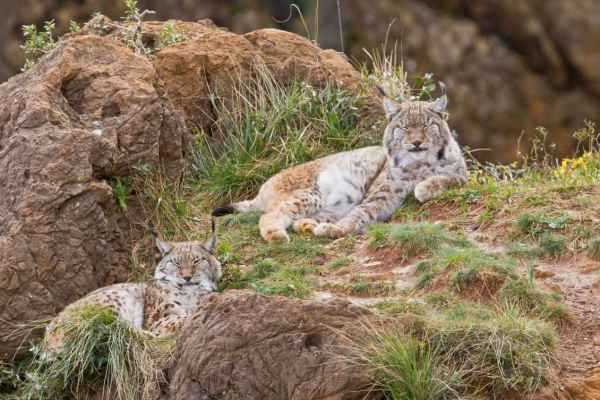
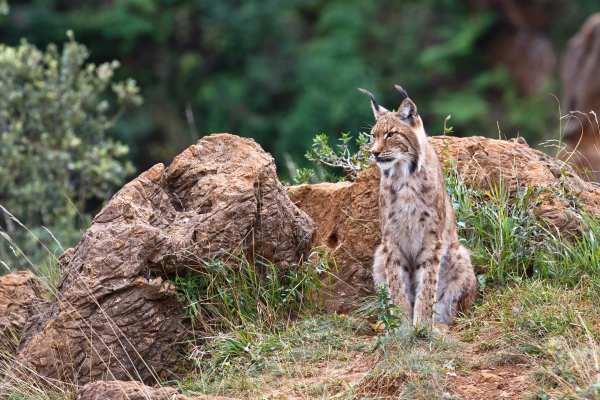
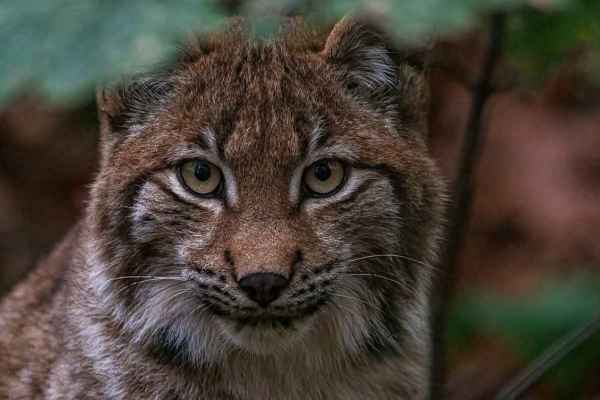
Swiss Lynx in Great Danger
It is urgently necessary for the lynx population in Switzerland to be refreshed with new blood. Genetic diversity is insufficient. That is why there is a desire to release lynx, but there are no suitable animals available.
In past centuries, the Eurasian lynx was heavily persecuted and in many places even wiped out.
In Europe it survived only in small numbers in remote regions, such as Scandinavia, the Carpathians and the Balkans. Since 1962, the Lynx has been protected in Switzerland under the hunting act.
On 23 April 1971, a few lynx were released in the canton of Obwalden, in the federal game reserve “Hutstock” in the Melchtal valley.
The lynx were wild-caught animals from the Slovakian Carpathians, brought to Switzerland via Ostrava Zoo and Basel Zoo. The reintroduction of the lynx was based on a Federal Council decision of 18 August 1967 and, at the request of the then cantonal forester Leo Lienert, on the approval of the Obwalden government.
The first release in the Melchtal valley marked the start of further official and unofficial releases in the Swiss Alpine region and the Jura. In the north-western Alps and the Jura, local lynx populations became established over the following decades.
Two thirds of the lynx live in the Alps, one third in the Jura. In order to strengthen the Alpine population, several individuals from the Jura and the north-western Alps were successfully relocated to north-eastern Switzerland between 2001 and 2008. Today only around 300 lynx live in Switzerland, descended from some 20 individuals. Both the Alpine population and the Jura population in Switzerland are therefore considered highly endangered. The gene pool of the species is far too small and consequently very fragile.
As a predator of small cloven-hoofed animals such as roe deer and chamois, the lynx plays an important role in our ecosystem. Together with the wolf it sits at the very top of the food chain and fills an ecological niche that is occupied by no other animal in western Europe.
Amid a worldwide crisis that is leading to a widespread collapse of biodiversity, conservationists believe that wolves and lynx help keep the species they hunt healthy by preying on weak or sick animals and reducing the spread of diseases such as Lyme disease. They keep populations of roe deer, wild boars and other ungulates in check and on the move, so that plants and shrubs which might otherwise be eaten have a chance to grow. Their presence is celebrated by environmentalists as a sign of hope for nature's recovery.
If too many cloven-hoofed animals live in a woodland area, the forest has hardly any chance to regrow. By regulating the numbers of cloven-hoofed animals, lynx and wolf promote the natural regeneration of the forest. Structurally rich forests made up of old and young trees provide a habitat for a wide variety of animals. They also protect us from natural hazards and give us an attractive space for recreation.
Today, Switzerland is home to the only continuous, significant lynx populations in the Alpine region. Switzerland therefore bears a particular Europe-wide responsibility for the conservation and protection of this species.
As the genetic diversity of the species declines, the lynx population in Switzerland is not secure in the long term. It is essential that the lynx populations be connected with one another in order to allow an exchange within the gene pool.
To strengthen the genetic foundation, a number of measures could be considered:
- Translocation: The targeted introduction of lynx from other, genetically more diverse populations could help to increase genetic diversity. It is important that these animals come from regions that are ecologically compatible, in order to ensure reproductive success.
- Breeding programmes: Setting up captive breeding programmes can help to breed suitable animals for later release. Such programmes could pay particular attention to genetic diversity.
- Habitat protection: The conservation and protection of the lynx's natural habitat must likewise be a priority. An intact habitat not only supports the existing population, but also provides room for newly settled animals.
- Public relations and support: Raising public awareness of the importance of genetic diversity and of protecting the lynx from Hunting can help to win support for conservation measures.
- Research: Further research is needed in order to assess the current genetic status of the lynx populations and to develop the best strategies for strengthening diversity.
Careful planning and implementation of these measures are crucial in order to stabilise the lynx population in Switzerland and secure it in the long term.
Lorenz Hess, hunting president of the canton of Bern
Here, too, one can see just how fact-free and incompetent the politicking of recreational hunters, or rather of Bern's hunting president, really is. Back in 2020, gun-waver and fox-basher Lorenz Hess already wanted the lynx to be added, alongside the beaver, grey heron and goosander, to the list of species that may be regulated pre-emptively during the parliamentary debate on the botched hunting act. These wild animals could then have been shot without having caused any damage at all.
Wherever wild animals are hunted and their family and social structures destroyed, their own population control within the biotope breaks down.
In the chaos in which nature finds itself after decades of «care and management» by Swiss recreational hunters, the proportion of threatened species is, according to the UN, nowhere in the world as high as in Switzerland.
For decades, recreational hunters have been creating an ecological imbalance in the cultural landscape, with at times dramatic consequences (protective forest, diseases, agricultural damage, and much more).
For genuine wildlife management a handful of game wardens is enough, as the example of Geneva or entire countries with a hunting ban shows. Wild animals would no longer be shooting-gallery targets for people with poor ethical hygiene and psychological problems.
In the view of IG Wild beim Wild, recreational hunters require annual medical-psychological fitness assessments modelled on the Netherlands, as well as a binding upper age limit. Today, the largest age group among recreational hunters is 65+. Within this group, age-related limitations such as declining eyesight, slower reaction times, reduced concentration and cognitive deficits increase significantly, statistically speaking. At the same time, accident analyses show that the number of serious hunting accidents involving injuries and fatalities rises significantly from middle age onwards.
The regular reports of hunting accidents, fatal mistakes and the misuse of hunting weapons highlight a structural problem. Private ownership and use of lethal firearms for leisure purposes largely escapes continuous oversight. In the view of IG Wild beim Wild, this is no longer justifiable. A practice based on voluntary killing, which at the same time poses considerable risks to people and animals, loses its societal legitimacy.
Hobby Hunting is also based on speciesism. Speciesism describes the systematic devaluation of non-human animals purely on the basis of their species. It is comparable to racism or sexism and cannot be justified either culturally or ethically. Tradition is no substitute for moral scrutiny.
Critical scrutiny is particularly essential in the field of recreational hunting. Hardly any other area is so shaped by sugar-coated narratives, half-truths and targeted disinformation. Where violence is normalised, narratives often serve to justify it. Transparency, verifiable facts and an open societal debate are therefore indispensable.
Do you have a tip, a source or a correction for this article? Write to us.
Seen something yourself?
A driven hunt next to a hiking trail, a shot fired near houses, a trap in the forest or an injured wild animal: report it to the Recreational Hunter Radar. We check every tip-off and treat your details confidentially.
More on the subject of recreational hunting: In our dossiers on recreational hunting gather fact-checks, analyses and background reports. What the research says about this is shown by Hunting fact-checked: the state of research.
The position of IG Wild beim Wild: IG Wild beim Wild rejects recreational hunting. Our model is the canton of Geneva, which has managed without recreational hunting since 1974: without hunting seasons, without hunting dogs, without driven hunts, without high seats, without the animal cruelty and crime that go hand in hand with hunting season elsewhere. What has worked there for over fifty years disproves every position paper by JagdSchweiz. An association that bases its policy on claims it refutes in its own documents is not a professional organisation, but a factory for misinformation.
Wild animals need a voice
Investigations, petitions and background on recreational hunting. As a thank-you, you will immediately receive our free guide «Recreational hunting on your doorstep: what you can do».
Support our work
With your donation you help protect animals and give their voice a hearing.
Donate now →