From medicinal plant to kitchen vegetable: Celery stalks
Celery stalks, an ancient vegetable with Mediterranean roots, have become an indispensable part of Swiss cuisine today. Its Swiss season runs from May to December.

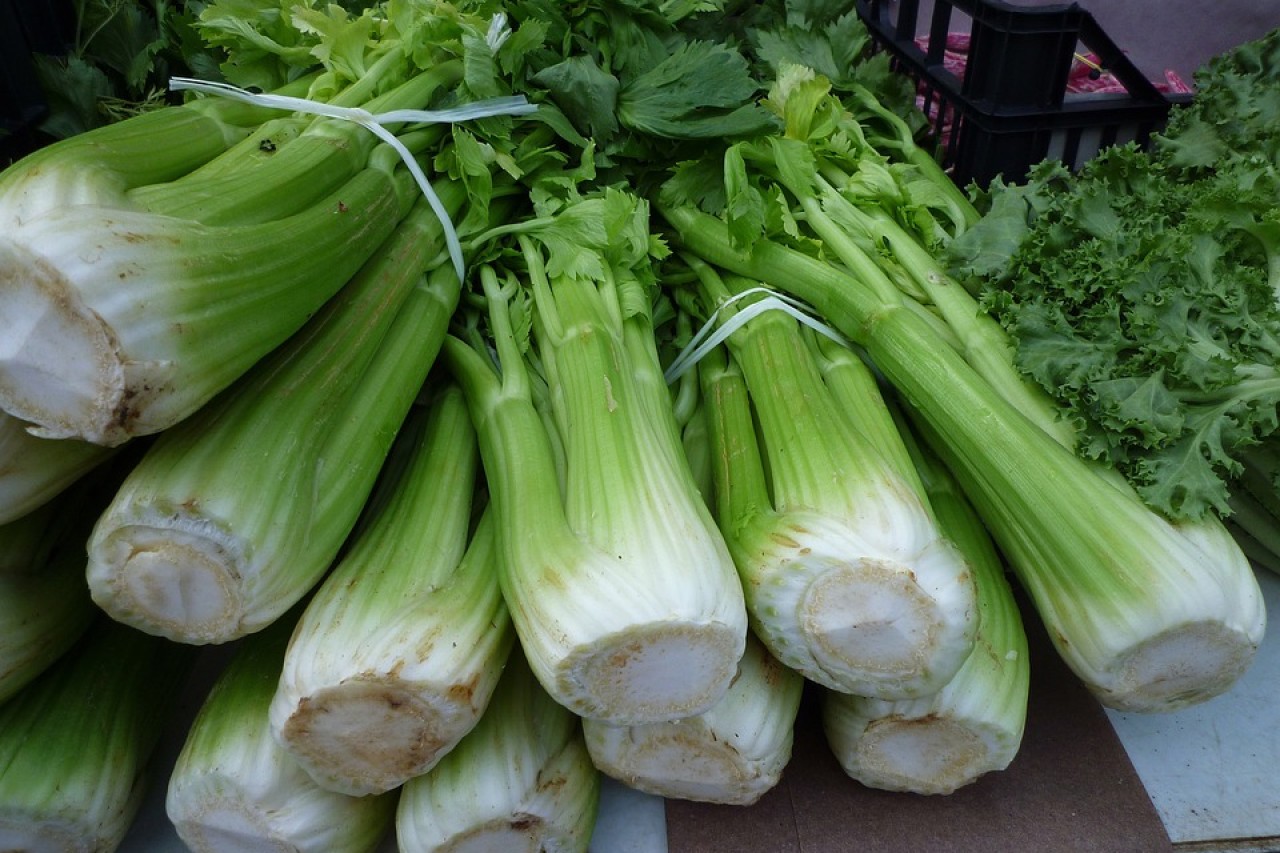
Celery stalks are a cultivated form of celery.
True celery belongs to the family of umbellifers, and the wild-growing plant was already known to the ancient Egyptians and Greeks as a medicinal and therapeutic herb. The cultivation of celery accordingly likely began in the Mediterranean region.
Since the late Middle Ages, the vegetable has also been grown north of the Alps and is now found worldwide. The three cultivated forms of true celery — stalk celery, leaf celery, and celeriac — emerged from the 17th century onwards.
Celery stalks have relatively thick, long stems, at the ends of which the leaves grow. Celery stalks have the typical "celery spice" flavour, but taste somewhat milder than celeriac.
75 Hectares of Swiss Celery Stalks
Celery stalks can be enjoyed raw — e.g. for dips or in salads — as well as cooked. Whether gratinated with cheese in the oven or finely chopped in tomato sauce, the possibilities are varied. Find out more about plant-based nutrition here.
The green vegetable is in season in Switzerland from May to December. The cultivation area amounts to around 75 hectares, of which 30 hectares are under organic farming. As a small niche, vegetable growers also cultivate blanched celery stalks. In 2023, the harvest stood at 2’580 tonnes. Together with imports of 2’750 tonnes, this results in a per capita consumption of 600 grams per year. You can find more interesting articles in our category Education.
More on the subject of recreational hunting: The scientific evidence is presented in the overview Studies on the Effects of Recreational Hunting.
The position of IG Wild beim Wild: IG Wild beim Wild rejects recreational hunting. Our model is the canton of Geneva, which has managed without recreational hunting since 1974: without hunting seasons, without hunting dogs, without driven hunts, without high seats, without the animal cruelty and crime that go hand in hand with hunting season elsewhere. What has worked there for over fifty years disproves every position paper by JagdSchweiz. An association that bases its policy on claims it refutes in its own documents is not a professional organisation, but a factory for misinformation.