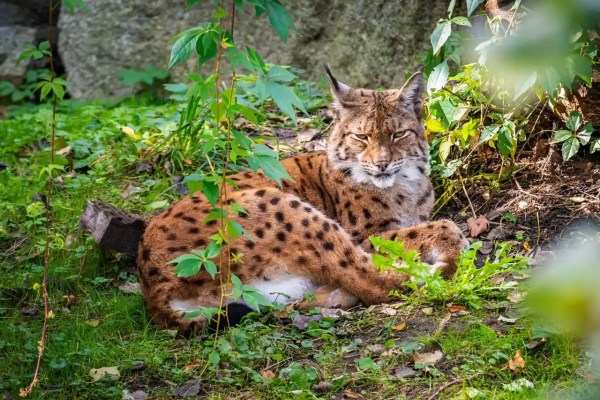
Wildlife-friendly travel in Switzerland: The Ethical Wildlife Travel Guide
25 of 26 cantons practise recreational hunting – with stray shots, poaching and the risk of hunting accidents for hikers. Only Geneva is safe.
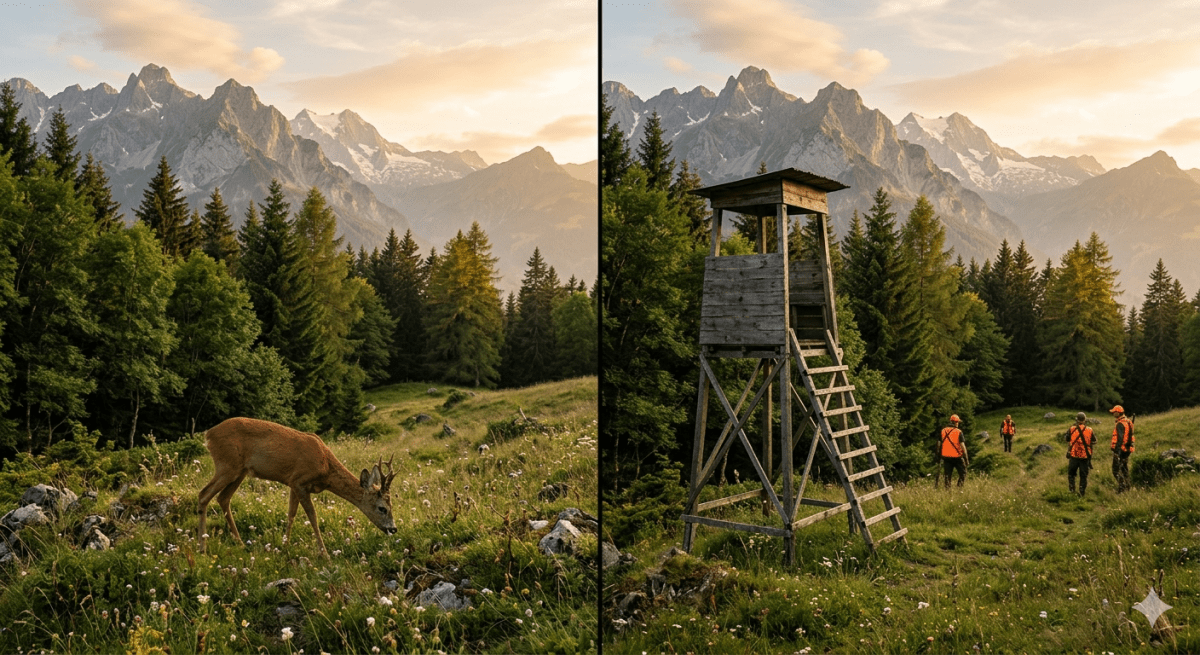
Switzerland markets itself worldwide as a natural paradise.
But anyone who looks more closely will realise: only a single canton actually keeps this promise. In 25 of 26 cantons recreational hunting takes place – with documented consequences for wild animals, the landscape, the safety of hikers and travellers – and the health of people who consume game meat.
This guide assesses all 26 Swiss cantons. It is the first complete overview of its kind. It is based exclusively on publicly accessible sources: official data, SUVA statistics, SRF reports, Pro Natura, WWF Switzerland, Swiss Animal Protection STS, KORA, the FSVO and the analyses of wildbeimwild.com.
This guide is updated annually. It is based exclusively on published official data and media reports.
The classification: only Geneva is safe
SAFE: Geneva. Recreational hunting completely banned since 1974. Wild animals demonstrably visible more often. No hunting infrastructure. No risk of hunting accidents. No poaching risk. No lead ammunition. Trained game wardens instead of recreational shooters.
DANGEROUS: All other 25 cantons. In every canton except Geneva, recreational hunting takes place. Risk of hunting accidents, wild animals under permanent hunting pressure, high seats in the landscape, lead ammunition and game-meat health risks – and in several cantons structural impunity for poaching.
Complete cantonal table: all 26 cantons
| Canton | Classification | Key information for travellers | WBW source |
|---|---|---|---|
| Geneva | SAFE | Recreational hunting completely banned since 1974. The only canton without the risk of hunting accidents, without hunting infrastructure, without a lead ammunition problem. Wild animals demonstrably visible more often. The lowest risk of wildlife-related road accidents nationwide. | Geneva analysis |
| Grisons | DANGEROUS | Every tenth red deer only wounded (SRF); 9% unlawful kills annually; high hunt in September/October; driven hunts increase the risk of wildlife accidents; confrontations with recreational hunters documented. | GR analysis |
| Valais | DANGEROUS | Repeated wolf killings; recreational hunting lobby politically dominant; hunting accidents (SUVA); high seats in tourist areas; lead ban only from 2025; game meat widely distributed without official inspection. | VS analysis |
| Schwyz | DANGEROUS | Poisoned golden eagles (2016), shot llama (2021), snare traps (2024), illegal carcass bait by the canton itself (2025); structural impunity; poaching risk all year round. | SZ analysis |
| Bern | DANGEROUS | Recreational hunting active; initiatives for recreational hunting in hunting reserves; protected areas under lobby pressure; hunting accident risk; driven hunts increase the risk of wildlife accidents. | BE analysis |
| Zurich | DANGEROUS | Recreational hunting in immediate proximity to the urban population; over 5’000 wild animals killed annually in road traffic; driven hunts acutely increase this risk. | ZH analysis |
| Lucerne | DANGEROUS | Recreational hunting active; recreational hunters from Lucerne involved in a driven hunt on pregnant animals in Vorarlberg (2019); hunting accident risk. | LU analysis |
| St. Gallen | DANGEROUS | Recreational hunting active; pressure on wolves from the hunting lobby; hunting accident risk; wildlife accident risk from driven hunts. | SG analysis |
| Glarus | DANGEROUS | Oldest wildlife sanctuary in Europe (Freiberg Kärpf, 1548), partly opened to recreational hunting (2023); wolf killings despite an 80% decline in livestock losses; joggers and cyclists endangered by errant shots. | GL analysis |
| Jura | DANGEROUS | Recreational hunting active; highest cantonal wildlife accident rate in Switzerland (AXA); driven hunts drive wild animals onto roads; hunting accident risk. | JU analysis |
| Thurgau | DANGEROUS | Recreational hunting active; highest cantonal wildlife accident rate in Switzerland (AXA); driven hunts acutely increase the risk; hunting accident risk. | TG analysis |
| Fribourg | DANGEROUS | Recreational hunting active; highest cantonal wildlife accident rate in Switzerland (AXA); driven hunts drive wild animals uncontrolled onto roads; hunting accident risk. | FR analysis |
| Aargau | DANGEROUS | Recreational hunting active; in 2023 around 2’000 wild animals killed in road traffic (cantonal hunting statistics); driven hunts increase this risk; hunting accident risk. | AG analysis |
| Solothurn | DANGEROUS | Recreational hunting active; hunting accident risk; wildlife accident risk from driven hunts; high seats in the terrain. | SO analysis |
| Ticino | DANGEROUS | Recreational hunting active; border location for wolf migration; driven hunts on wild boars; hunting accident risk. | TI analysis |
| Vaud | DANGEROUS | Recreational hunting active; documented fatality during a driven hunt (Oulens-sous-Echallens); pressure on wolves; hunting accident risk. | VD analysis |
| Uri | DANGEROUS | Recreational hunting active; transit canton for predators under regulatory pressure; hunting accident risk; alpine hiking trails affected during the high hunt season. | UR analysis |
| Nidwalden | DANGEROUS | Recreational hunting active; hunting accident risk; predator regulatory pressure; high seats in alpine terrain. | NW analysis |
| Obwalden | DANGEROUS | Recreational hunting active; hunting accident risk; predator regulatory pressure; high seats in the terrain. | OW analysis |
| Neuchatel | DANGEROUS | Recreational hunting active; hunting accident risk; wolf pressure; wildlife accident risk from driven hunts in the Jura. | NE analysis |
| Basel-Landschaft | DANGEROUS | Recreational hunting near the agglomeration; hunting grounds border on recreational areas; wildlife accident risk from driven hunts; hunting accident risk. | BL analysis |
| Basel-Stadt | DANGEROUS | Cantonal hunting law in force; recreational hunting on the city outskirts; structurally contradictory for urban travellers. | BS analysis |
| Schaffhausen | DANGEROUS | Recreational hunting active; hunting accident risk; wild animals under hunting pressure; driven hunts in autumn. | SH analysis |
| Appenzell AR | DANGEROUS | Recreational hunting active; hunting accident risk; wild animals under hunting pressure; high seats in the pre-alpine terrain. | AR analysis |
| Appenzell IR | DANGEROUS | Recreational hunting active; hunting accident risk; traditionally strong recreational hunting culture; high seats in the terrain. | AI analysis |
| Zug | DANGEROUS | Recreational hunting in one of the most densely populated cantons; hunting grounds overlap with recreational areas; hunting accident risk even near settlements. | ZG analysis |
Hunting weapons, domestic violence and femicides: a taboo subject
One aspect of recreational hunting that is almost entirely absent from public debate concerns the safety of women in hunters' households. In Switzerland, according to wildbeimwild.com, firearms are used in half of all domestic homicides. How many of these acts are committed by people holding a hunting licence is something no one in Switzerland knows: the statistics do not record hunting weapons separately. This is not a data gap – it is a political decision against transparency. Source: wildbeimwild.com/jagdwaffen-und-gewalt-was-die-schweizer-daten-zeigen/
International studies clearly demonstrate: the availability of firearms in private households significantly increases the risk of lethal violence – particularly towards women in the domestic context. In hunters' households, a weapon is not an exceptional item but a fixed part of leisure equipment. Hunting rifles are technically designed to kill living beings – this structurally raises the potential for escalation in conflict situations. The Swiss parliament has so far not enacted any mandatory recording of hunting weapons in femicides, although corresponding initiatives are documented via wildbeimwild.com. Source: wildbeimwild.com/dossiers/jagd-und-waffen/
Added to this is the self-perception of recreational hunters: a study documented on wildbeimwild.com shows that young people who have already killed or tortured animals commit violent offences three times more frequently than animal-loving peers. The criminologists Martin Killias (University of Zurich) and Sonia Lucia (University of Geneva) analysed data from a Swiss sample of more than 3,600 pupils from twenty cantons for an international delinquency study, published in the journal «Psychology of Violence». Cruelty to animals goes hand in hand with offences of rage and violence, the researchers say. Source: wildbeimwild.com/jagd-und-jaeger-psychoanalyse/
Game meat from recreational hunters: what authorities really warn about
Recreational hunting associations aggressively market game meat as a «natural organic product». What the responsible health authorities actually recommend is fundamentally different – and is consistently concealed by the recreational hunting lobby.
What authorities officially warn: The Federal Food Safety and Veterinary Office (FSVO) recommends that children up to 7 years of age, pregnant and breastfeeding women, and women wishing to have children should, as far as possible, not eat game killed with lead ammunition. The Federal Institute for Risk Assessment (BfR) has reassessed the health risk posed by lead ammunition residues in game meat and arrives at elevated risk assessments. The World Health Organization (WHO) classifies processed red meat as carcinogenic.
What recreational hunters conceal:
- In Switzerland, game meat is not subject to any mandatory veterinary inspection like slaughterhouse products – recreational hunters hand it over directly, without official examination
- Raw or undercooked game meat can transmit pathogens such as Trichinella, Salmonella, E. coli, Toxoplasma or the hepatitis E virus
- With delayed recovery and inadequate cooling – common in recreational hunting – the decomposition process begins within minutes of the shot
- Game meat is contaminated with pesticide and fertiliser residues from agricultural fields where wild animals graze
- Lead cannot be removed from the meat by cooking or freezing
- In Canada there is a broad ban on the sale of game meat from recreational hunters in restaurants and shops – among other reasons due to safety concerns
The discrepancy between hunting advertising language and official caution is glaring. Anyone offered game meat by a recreational hunter should know: it is a foodstuff without mandatory inspection, with documented health risks and no transparency obligation regarding the type of ammunition, storage or animal health. Sources: wildbeimwild.com/wildbret-macht-krank/, wildbeimwild.com/achtung-warnung-vor-wildfleisch-vom-hobby-jaeger/, wildbeimwild.com/wildfleisch-natuerlich-gesund-oder-gefaehrlich/
Wildlife accidents caused by driven hunts: an underestimated risk
Each year around 20’000 wildlife accidents occur on Swiss roads – on average one roe deer dies every hour. Driven hunts play a direct role in this, which is hardly ever publicly addressed. During driven hunts, wild animals are deliberately flushed out by beaters, dogs and noise and set in uncontrolled motion. The startled animals flee in panic – often across roads and railway lines. The Swiss driving school platform l-drive.ch explicitly warns: «Avoid areas where driven hunts are signposted.»
According to AXA insurance data, Jura, Thurgau and Fribourg have the highest frequency of wildlife accidents – up to seven times higher than in other cantons. All three have intensive recreational hunting with regular driven hunts. Geneva – no recreational hunting – has the lowest wildlife accident rate. In areas with a presence of predators (lynx, wolf) comparatively fewer wildlife accidents occur – because natural hunting pressure stabilises wildlife behaviour, whereas driven hunts trigger uncontrolled mass movements.
Then there is alcohol: on many driven hunts, the shared consumption of alcohol is part of the hunting culture. In Switzerland, there are no nationwide statutory alcohol bans for recreational hunters during active hunting operations. Source: wildbeimwild.com/jagdunfaelle-schweiz/
Safety advice for hikers and motorists
Recreational hunting takes place in 25 of Switzerland's 26 cantons. This means: a risk of hunting accidents during the high hunt season, possible confrontations with armed recreational hunters, an increased risk of wildlife accidents on roads due to driven hunts – and, in certain cantons, a year-round risk of poaching. Only in Geneva does none of these risks exist.
The danger posed by recreational hunting is nationwide: walkers, joggers and cyclists have found themselves in the line of fire of active recreational hunting. Bullet impacts have been found in bedrooms, schoolhouses and tractors.
- Grisons: high hunt from September to October – large parts of the canton affected
- Valais: autumn – alpine hiking areas included
- Schwyz: poaching risk documented year-round
- Glarus: mis-shots endangering people documented
- Jura / Thurgau / Fribourg: highest wildlife accident rates – driven hunts acutely increase the risk
- Zurich / Aargau / Zug: recreational hunting close to settlements and recreation areas
- Bern: motions for recreational hunting in protected areas
- Geneva: no risk – safe year-round, lowest wildlife accident rate in Switzerland
Zurich: recreational hunting in urban areas
The canton of Zurich is urban in character and densely populated. At the same time, recreational hunting is practised here in the immediate vicinity of the population. Residential areas, recreation areas and hunting grounds overlap. Every year, more than 5’000 wild animals die in road traffic in the canton – driven hunts acutely increase this risk during the high hunt season.
Glarus: the paradox of Europe's oldest wildlife sanctuary
No canton embodies the contradiction between the idea of protection and recreational hunting practice more clearly than Glarus. The Freiberg Kärpf – Europe's oldest wildlife sanctuary, founded in 1548 – was partially opened to recreational hunting in 2023. At the same time, wolf packs were regulated, even though livestock damage caused by wolves had fallen by 80 per cent (Pro Natura). Incidents are documented on wildbeimwild.com in which joggers and cyclists were endangered by mis-shots.
Cows in the Alps: the underestimated danger
In Switzerland, the wolf has demonstrably never fatally attacked a human. Cattle on hiking trails kill people in Switzerland every year – documented by the bfu and SRF. Anyone who takes alpine safety seriously must know the statistically relevant dangers – not those that are politically instrumentalised.
- Cows with calves: take a detour, never walk between mother and calf, leash the dog
- Bulls: give the pasture a wide berth
- Wolf: no documented fatal risk to humans in Switzerland
- Recreational hunters and driven hunts: wear bright clothing, use marked paths, observe hunting calendars and driven hunt warning signs
Missed shots and animal suffering: the figures
Documented figure (SRF / Office for Hunting and Fishing Grisons): During the 2022 high hunt around 9,200 wild animals were killed. 9 per cent of the kills were unlawful. Every tenth red deer was initially only wounded. Switzerland-wide, the Foundation for the Animal in the Law (TIR) estimates 3,000–4,000 head of fleeing game annually.
Lead ammunition: contaminated wild animals, risk to humans
Documented figures (Swiss Animal Welfare STS, 2022): In 5 of 13 game meat samples lead exceeded 0.05 mg/kg. In 2 samples the limit was exceeded two- to fourfold. BLV recommendation: children up to 7 years old, pregnant and breastfeeding women, and women wishing to have children should avoid eating game killed with lead ammunition as far as possible. Predators such as golden eagles die from lead in wild animal remains.
Schwyz: Five documented cases, structural impunity
The canton of Schwyz is a documented special case. It is not only individual recreational hunters who break the law – the canton itself demonstrably acted illegally in 2025 with carcass bait in the wolf core area.
- 2016: Two golden eagles killed by poison bait. Canton confirms. Perpetrator never identified.
- 2019: Recreational hunters from Schwyz/Lucerne hunt pregnant animals in Vorarlberg. Provincial hunting master: violation of «all hunting ethics».
- 2021: Recreational hunter shoots herd protection llama in the Muotathal. Only comes forward after media reports. No verdict.
- 2024: Snare traps near Pfäffikon SZ. Penalty order of 13,039 francs, no hunting ban.
- 2025: Canton of Schwyz itself places illegal carcass bait in the wolf core area. CHWOLF criminal complaint. Three of five pups shot.
Full documentation: wildbeimwild.com/kanton-schwyz-vergiftete-steinadler-erschossene-lamas-illegale-wolfsfallen/
Geneva: The only safe option
Geneva is the only Swiss canton where wild animals are demonstrably more often visible, where the natural landscape is free of hunting infrastructure, where there is no risk of hunting accidents or wildlife collisions caused by driven hunts, where no game meat is put into circulation without official inspection, and where the problem of lead ammunition structurally does not exist. All these advantages go back to the recreational hunting ban of 1974.
- Wildlife watching during the day: roe deer, foxes, beavers along the Rhône and in protected areas on Lake Geneva
- La Sauge Nature Reserve (canton of Fribourg, Lake Geneva region): one of the most important bird sanctuaries in western Switzerland
- Wild animals significantly more often visible than in comparable cantons burdened by recreational hunting
- Unchanged natural landscape: no high seats, no hunting infrastructure in the canton
- Safe hiking and driving all year round: no risk of hunting accidents, no driven-hunt-related risk of wildlife collisions
- Trained state game wardens instead of recreational shooters
Tourism associations respond to market information. When travellers specifically search for «Ethical Travel», «safe hiking» and «wildlife watching», economic incentives arise. This guide shows: Geneva is the only region in Switzerland that lives up to this claim. All other cantons cannot make the promise of «untouched nature» credible as long as recreational hunting, driven hunts, lead ammunition, uncontrolled game meat and poaching remain a structural reality.
Support our work
With your donation you help to protect animals and give their voice a hearing.
Donate now →More on the subject of recreational hunting: What the research says about this is shown by Hunting fact-checked: the state of research.
The position of IG Wild beim Wild: IG Wild beim Wild rejects recreational hunting. Our model is the canton of Geneva, which has managed without recreational hunting since 1974: without hunting seasons, without hunting dogs, without driven hunts, without high seats, without the animal cruelty and crime that go hand in hand with hunting season elsewhere. What has worked there for over fifty years disproves every position paper by JagdSchweiz. An association that bases its policy on claims it refutes in its own documents is not a professional organisation, but a factory for misinformation.