Canton Fribourg Has Wild Cats Again
The European wildcat has returned to the Pre-Alps. An animal was caught on a camera trap in the Intyamon Valley in the canton of Fribourg. Wildcats had been virtually wiped out in Switzerland through intensive hunting in the 18th and 19th centuries. The wildcat was already photographed last March as part of lynx monitoring, as Elias Pesenti, research officer at the office


The European wildcat has returned to the Pre-Alps.
An animal was caught on a camera trap in the Intyamon Valley in the canton of Fribourg. Wildcats had been virtually wiped out in Switzerland through intensive recreational hunting in the 18th and 19th centuries.
The authorities assume that the photographed animal migrated into the canton from the Jura, where several hundred wildcats are already once again at home. The wildcat is a protected species in Switzerland and is listed on the Red List of animals severely threatened with extinction.
Until 2007, the total wildcat population across Swiss territory was estimated at around 40 animals. According to a 2011 study by the Federal Office for the Environment, the wildcat has been recorded, in addition to the canton of Jura, in the neighbouring cantons of Basel-Landschaft, Solothurn, Geneva, Ticino and Bern.
When wildcats celebrate their mating season, the toms attract females with long-drawn-out, guttural meowing during their nightly roaming. The mating call during the rutting season is impossible to miss. After mating, the pair immediately go their separate ways. In spring, playful wildcat kittens come into the world, and “Mama Wildcat” must care for them entirely on her own.
Appearance
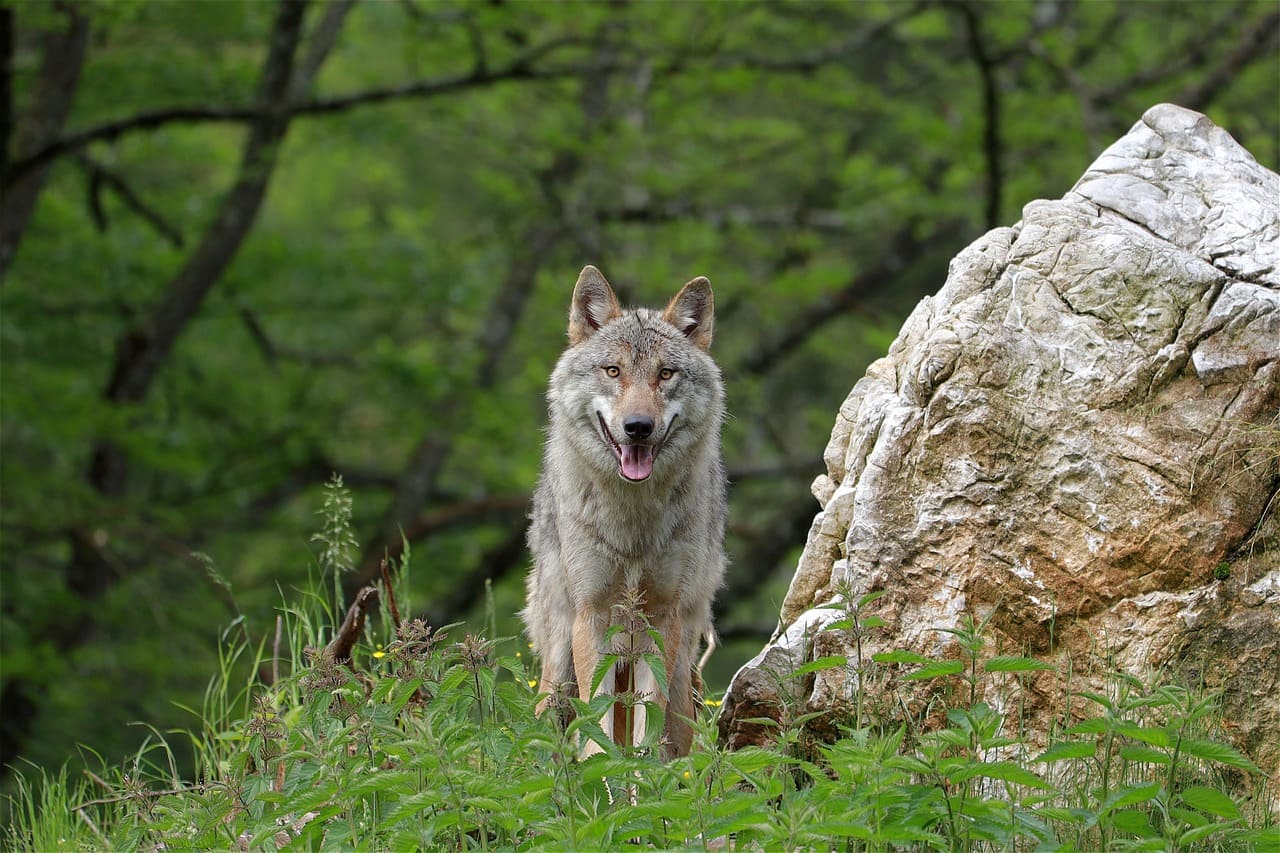
The wildcat is considerably larger and more powerfully built than the domestic cat. Males (toms) measure 53 to 68 cm and weigh 3 to 8 kg; females measure 47 to 65 cm and weigh 2.4 to 5 kg. Their coat is yellow-grey to grey with black longitudinal stripes on the head and neck. The bushy tail has 3 to 4 black rings and a black tip. The risk of confusion with wild-coloured domestic cats is high.
Habitat and Diet
The wildcat is a typical forest dweller. It prefers southward-facing locations at moderate elevations with dense undergrowth and rocky outcrops that provide hiding places. Its prey consists mainly of small rodents, but also birds, mammals up to the size of a hare, insects, and amphibians.
Reproduction and Behaviour
The mating season falls in February and March, with a gestation period of 63 to 69 days. Around 2 to 6 young are born in April or May. The wildcat is primarily active at dusk and during the night, and is a territorial solitary animal. The home range of a female can be up to 3’500 ha, and that of a male up to 5’500 ha. The maximum lifespan in the wild is 12 to 14 years.
Threats to the Wildcat
Natural predators include the lynx and wolf, while young wildcats are also threatened by eagle owls, golden eagles, goshawks, foxes, and martens. Added to this are recreational hunters and high mortality from road accidents. Once found almost everywhere in Central Europe, the wildcat was nearly hunted to extinction through intensive hunting. More on wildlife and biodiversity.
More on the subject of recreational hunting: In our dossiers on recreational hunting gather fact-checks, analyses and background reports. What the research says about this is shown by Hunting fact-checked: the state of research.
The position of IG Wild beim Wild: IG Wild beim Wild rejects recreational hunting. Our model is the canton of Geneva, which has managed without recreational hunting since 1974: without hunting seasons, without hunting dogs, without driven hunts, without high seats, without the animal cruelty and crime that go hand in hand with hunting season elsewhere. What has worked there for over fifty years disproves every position paper by JagdSchweiz. An association that bases its policy on claims it refutes in its own documents is not a professional organisation, but a factory for misinformation.