Bird life in the Swiss Alps is losing diversity
Diversity among birds in the Swiss high mountains is declining, as a joint study by UZH and the Swiss Ornithological Institute confirms. Analysis of data spanning two decades shows that alpine bird communities are less diverse than before and cover fewer ecological functions. This development is likely linked to climate change and shifts in

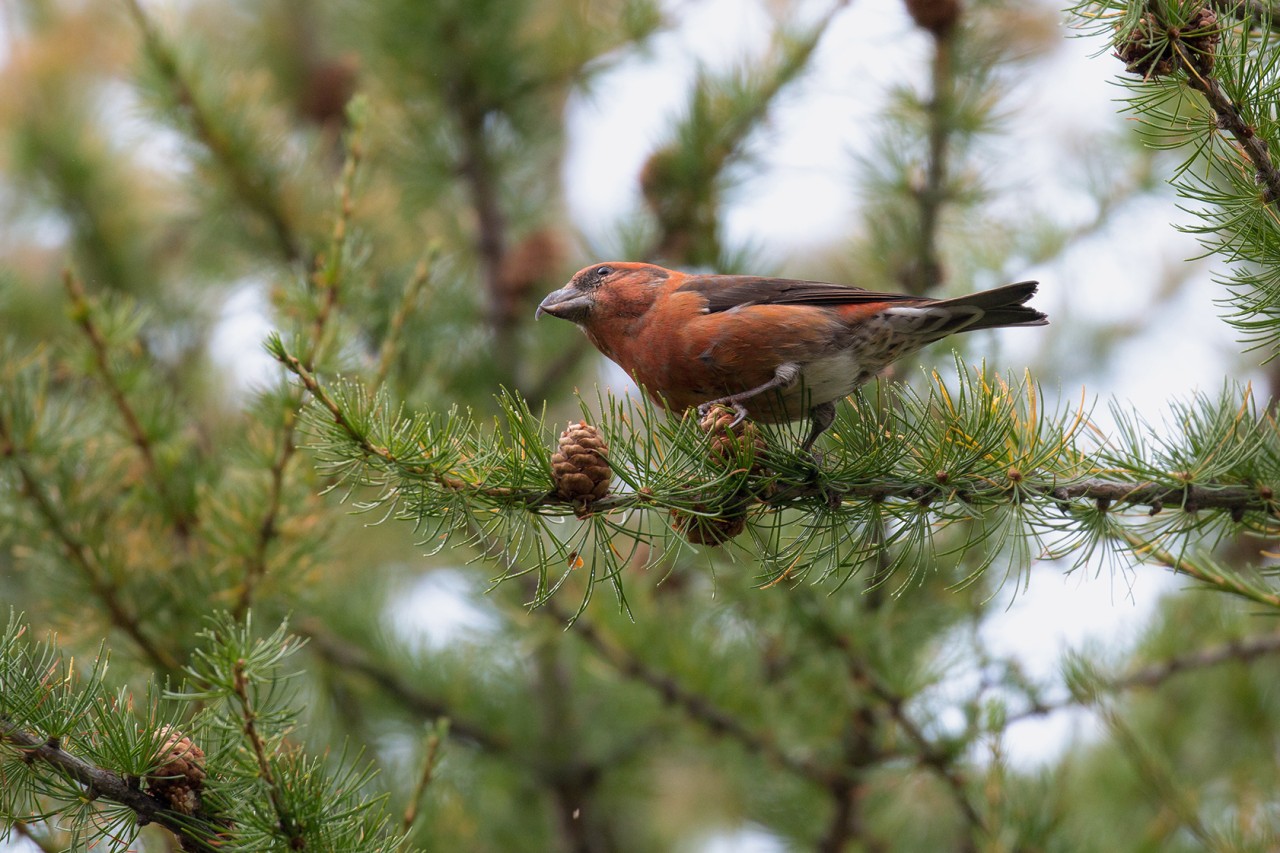
Diversity among birds in the Swiss high mountains is declining, as a joint study by UZH and the Swiss Ornithological Institute confirms.
Analysis of data spanning two decades shows that alpine bird communities are less diverse than before and cover fewer ecological functions. This development is likely linked to climate change and shifts in land use.
Ecologists assume that global climate change has a particularly strong effect on animals and plants living in mountain environments — they anticipate changes in the distribution, abundance, and interaction of species. There is evidence that the habitat of some Swiss bird species — such as the tree pipit or the pied flycatcher — has shifted to higher elevations in recent years. How these changes affect the composition of bird communities was not known until now.
Researchers from the Department of Evolutionary Biology and Environmental Studies at the University of Zurich and the Swiss Ornithological Institute have now investigated this question. Their work was based on data collected over the past twenty years by volunteer ornithologists. The study revealed a negative trend: the bird communities of the Swiss Alps are undergoing a process of biotic homogenisation along the elevational gradient — meaning they are becoming increasingly similar to one another and losing diversity.
Functional diversity is important
The simplest measure of diversity in a bird community is the number of species represented within it. Beyond that, however, the functional diversity of a community also provides valuable information. “Different species use resources in different ways and interact with the environment differently,” says postdoctoral researcher and lead author of the study, Vicente García-Navas. “Not all species play an equally important role in the ecosystem. The loss of one particular species can be more damaging than the loss of several others.” Specialists such as certain woodpecker species are especially important, he notes, because their tree cavities are needed by other birds and small mammals as nesting sites and shelters.
To measure this functional diversity of bird communities, García-Navas and his team compiled one hundred different traits for each bird species, covering body structure, diet, habitat, and much more. This allowed them to determine the diversity of functions within the various bird communities along the elevational gradient and to assess how the picture has changed over the past two decades.
Specialists in the high mountains are declining
The analyses revealed that the upper tree line represents a functional barrier between two groups: from the agriculturally dominated lowlands up to the mountain forests, similar bird communities exist, with species such as the yellowhammer, common whitethroat, and blackcap. Above that, in the treeless high mountains, communities are made up of species adapted to life in open terrain. For example, they eat fewer caterpillars or, like the rock ptarmigan, build their nests on the ground.
The analysis also showed, however, that this distinctive functional diversity of alpine communities has declined in recent years. “Our study shows that mountain specialists are increasingly at risk of being displaced,” says ecology professor Arpat Ozgul, a co-author of the study. Key factors driving this include the reduction of habitats, the difficulty of finding optimal habitats at higher elevations, and the upward encroachment of generalist species.
The triumph of the generalists
This increase in generalists such as robins and pied flycatchers may also be the reason for the downward trend in so-called beta diversity: as the study also found, the species composition of the various alpine communities is becoming increasingly similar, with ever fewer variations.
«Overall, the results suggest that the dual effect of global warming and the abandonment of traditional land management is leading to an impoverishment of bird communities in the Alps,» says García-Navas. The latter contributes to the spread of shrubs and the upward shift of the treeline. Urgent conservation measures and an adaptation of land management practices are therefore needed.