Wild Garlic: Herald of Spring with Healing Powers
From mid-March, it can be smelled and seen again in the forest: wild garlic is back.

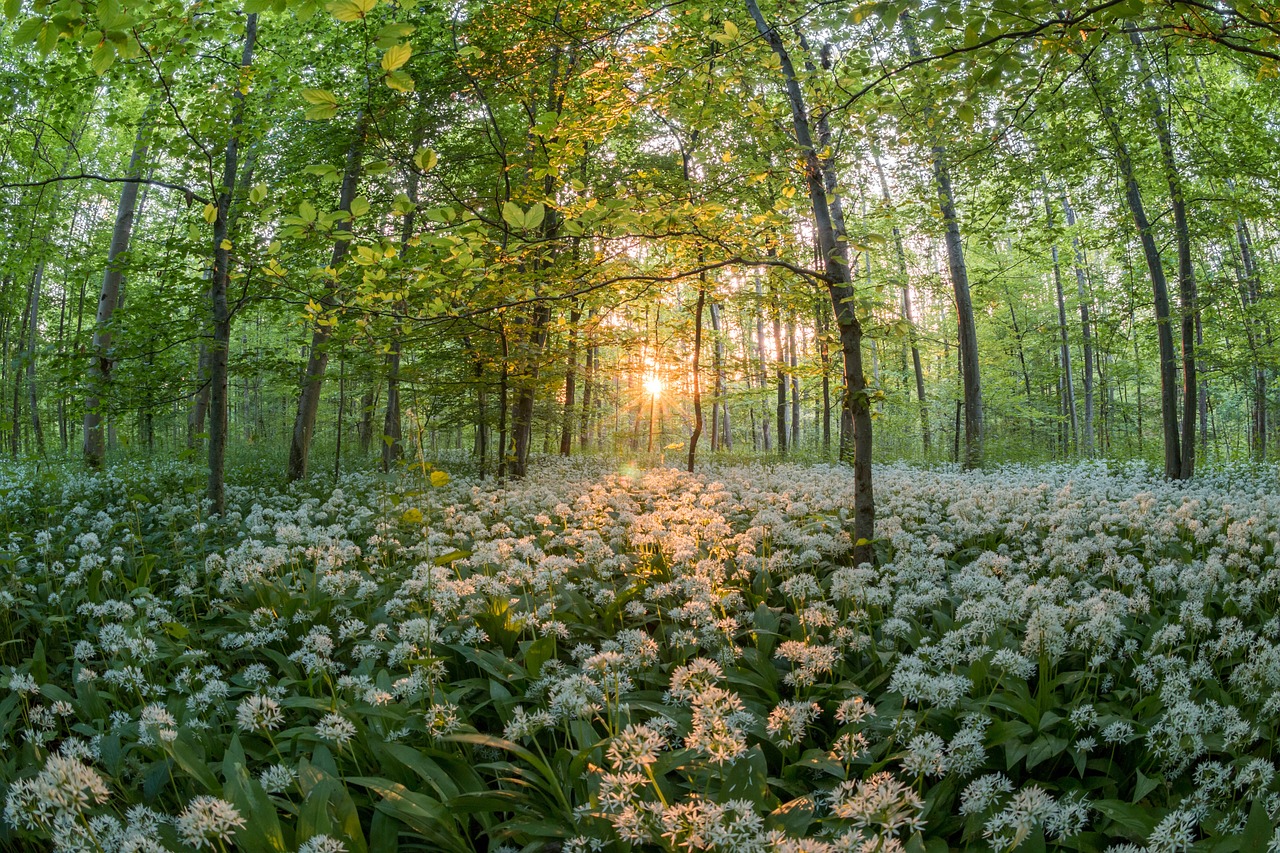
Spring brings new life to forests and meadows: outside, snowdrops and crocuses are sprouting — as is wild garlic.
Those with a keen nose will recognise it by its characteristic garlic scent. This is also what distinguishes wild garlic from the poisonous autumn crocus and lily of the valley, which it closely resembles. When in doubt, the rule is: hands off, as there are repeatedly cases of serious poisoning due to confusion, which can even prove fatal.
A Short Season
Anyone picking wild garlic should ideally only harvest quantities that can be processed and consumed immediately. The leaves lose their freshness quickly, and the essential oils dissipate rapidly as well. Before using wild garlic in the kitchen, it should always be thoroughly washed — as with forest berries, there is otherwise a risk that the fox tapeworm pathogen may enter the food. Once wild garlic begins to flower — which occurs around the beginning of May — the short season is over, as the leaves lose their flavour.
Countless Wild Garlic Products
Wild garlic is related to chives, garlic and onions. Much like its relatives, it is used primarily as a seasoning. It works well in salads, soups, cream sauces, mixed with quark to accompany jacket potatoes, or as pesto with pasta. In recent years, wild garlic has become something of a phenomenon, with countless products available to buy in spring — from wild garlic ravioli and wild garlic cheese to wild garlic bratwurst, there is something for every taste. Learn more about plant-based nutrition here.
Wild garlic is said to have antibacterial properties. It is reputed to help ward off a spring cold or aid recovery from one. Wild garlic also contains high levels of vitamin C and A, as well as iron. This combination makes it an ideal remedy against iron deficiency.
Bear's Herb
Wild garlic spinach or forest garlic are other names for wild garlic (ramsons). But how did the bear end up in the name? Clearly, it is not only in German-speaking regions that it carries this name. The Latin name is Allium ursinum, in French it is called Ail des ours, in Italian Aglio dell'orso, and in English Bear's garlic. Various theories exist. One of them holds that wild garlic is the first food bears eat after hibernation. Another claims that wild garlic was named after the equally powerful bear due to its potent and medicinal properties. More fascinating articles can be found in our category Education.
| You can help all animals and our planet with compassion. Choose empathy on your plate and in your glass. Go vegan. |
More on the subject of recreational hunting: The scientific evidence is presented in the overview Studies on the Effects of Recreational Hunting.
The position of IG Wild beim Wild: IG Wild beim Wild rejects recreational hunting. Our model is the canton of Geneva, which has managed without recreational hunting since 1974: without hunting seasons, without hunting dogs, without driven hunts, without high seats, without the animal cruelty and crime that go hand in hand with hunting season elsewhere. What has worked there for over fifty years disproves every position paper by JagdSchweiz. An association that bases its policy on claims it refutes in its own documents is not a professional organisation, but a factory for misinformation.