What Gives Hares a Stomachache: A Study on Digestive Problems
Recent research in human and veterinary medicine has demonstrated how greatly the microbiome — the composition of all microbiota in the gut — influences the health of its host animal. It is known, for example, that a wide range of specific factors such as age, sex, body condition, genetics, and host phylogeny shape the microbiota of an individual.

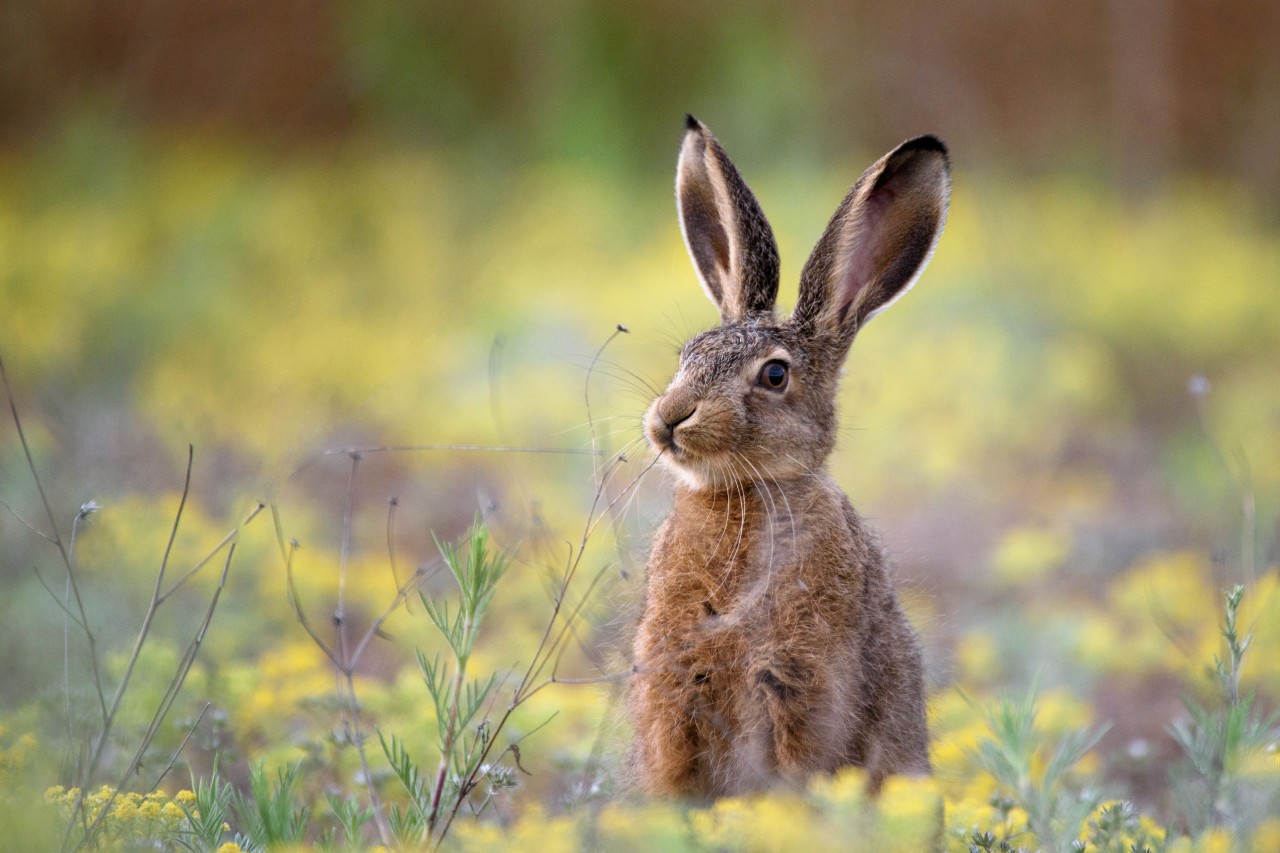
Diseases of the digestive tract are being detected in the European brown hare with increasing frequency. The cause is often changes in the gut flora — the community of microorganisms known as the microbiome. Until now, little was known about what drives these changes. A study just published by Vetmeduni Vienna reveals for the first time that habitat-related environmental factors may be responsible for shifts in the composition of gut bacteria.
The research team at Vetmeduni Vienna, comprised of scientists from the Research Institute of Wildlife Ecology, examined the microbiota of three different hare populations living in distinct locations as part of the study.
Environmental factors influence the gut flora of hares
As the results show, geographic location — and the environmental factors potentially associated with it — has a considerably greater influence on the composition of the microbiota than host factors. Study leader Gabrielle Stalder comments: “This pilot study is of great scientific significance, as the results allow new hypotheses to be derived that may explain what population fluctuations can result from intestinal health issues in European hares. Our goal was to establish a broad foundation for generating hypotheses at the interface of gut health and land use with respect to the European hare and potentially other species affected by rapid change or intensive use of their habitat. This represents information that has hitherto been lacking, but is critically important for understanding how environmental factors can affect the microbiome and, consequently, the health of European hares and wildlife in general.“
The European Hare – Widespread, Yet Regionally Threatened
The European hare (Lepus europaeus) is a widespread and ecologically important wildlife species found throughout Europe. Despite being classified as “least concern” in terms of population status by the International Union for Conservation of Nature (IUCN), a significant population decline has been recorded in various regions over the past 50 to 60 years, leading to a “near threatened” or “threatened” status on national Red Lists. A range of factors — including unfavourable climatic conditions, predators, and several disease outbreaks — have contributed to this troubling trend. However, the greatest threat to this species is likely intensive modern agriculture, followed by hunting.
„The fragmentation of habitats, the mechanisation of agriculture, monocultures, unpredictable food availability, and the use of pesticides and fertilisers may have a particularly pronounced impact on species such as the European hare, as they restrict their diet to a small number of highly energy-rich plant species. Furthermore, hares are known to be highly sensitive to changes and imbalances in their diet, which can disrupt the gut flora and lead to gastrointestinal disorders that may even prove fatal”, says Gabrielle Stalder.
More on the subject of recreational hunting: In our dossiers on recreational hunting gather fact-checks, analyses and background reports. The scientific evidence is presented in the overview Studies on the Effects of Recreational Hunting.
The position of IG Wild beim Wild: IG Wild beim Wild rejects recreational hunting. Our model is the canton of Geneva, which has managed without recreational hunting since 1974: without hunting seasons, without hunting dogs, without driven hunts, without high seats, without the animal cruelty and crime that go hand in hand with hunting season elsewhere. What has worked there for over fifty years disproves every position paper by JagdSchweiz. An association that bases its policy on claims it refutes in its own documents is not a professional organisation, but a factory for misinformation.